 Save
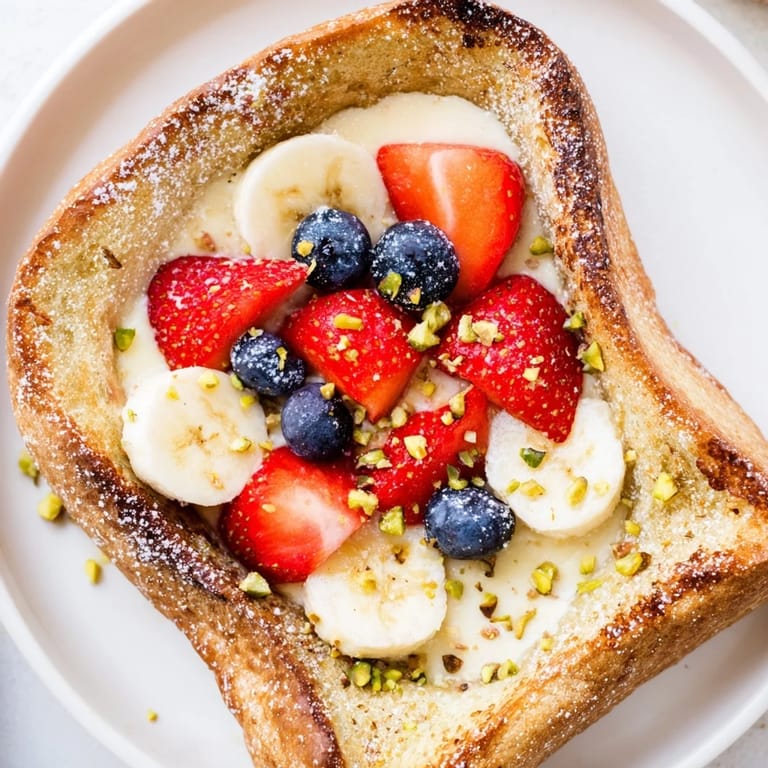
Save I discovered this recipe on one of those mornings when I had guests arriving in an hour and my usual pancake routine felt tired. Scrolling through my phone, I landed on viral yogurt toast and thought, why not? The result was so stunning—golden bread cradling this creamy custard center, jeweled with fresh fruit—that my friends asked for the recipe before they even sat down. Now it's become my go-to when I want to impress without spending all morning in the kitchen.
Last summer I made this for my sister's surprise birthday brunch, and she literally teared up because it was so pretty on the plate. I remember laughing at myself for worrying it might be too simple—turns out simple done right is exactly what people remember.
Ingredients
- Thick-cut brioche or challah bread: The heartier crumb holds the custard without falling apart, and the slight sweetness plays perfectly with the yogurt.
- Greek yogurt: Use full-fat if you can find it—the creaminess makes a real difference, and it's more forgiving when baking than lighter versions.
- Egg: This is what sets the custard and keeps it from being soupy; one large egg is the sweet spot.
- Honey or maple syrup: I lean toward honey for a delicate flavor, but maple syrup adds a deeper note if that's your mood.
- Vanilla extract: A whisper of vanilla lifts the whole thing without making it taste like dessert.
- Fresh strawberries, blueberries, and banana: Choose fruit at its peak of ripeness—the better your fruit, the better your toast.
- Powdered sugar and nuts: Optional but worth it; they add a final flourish that makes people feel cared for.
Tired of Takeout? 🥡
Get 10 meals you can make faster than delivery arrives. Seriously.
One email. No spam. Unsubscribe anytime.
Instructions
- Heat your oven and prep your stage:
- Preheat to 375°F and line a baking sheet with parchment paper so nothing sticks and you can slide everything off easily.
- Create the wells:
- Lay your bread slices down and use the back of a spoon to gently press a shallow pocket into the center of each slice, being careful not to puncture the bottom. This is your vessel for the custard, so take a breath and go slowly.
- Make the custard magic:
- Whisk together the Greek yogurt, egg, honey, and vanilla until it's completely smooth and pourable. If you see lumps, keep whisking—this moment determines whether your custard will be silky or grainy.
- Fill and top:
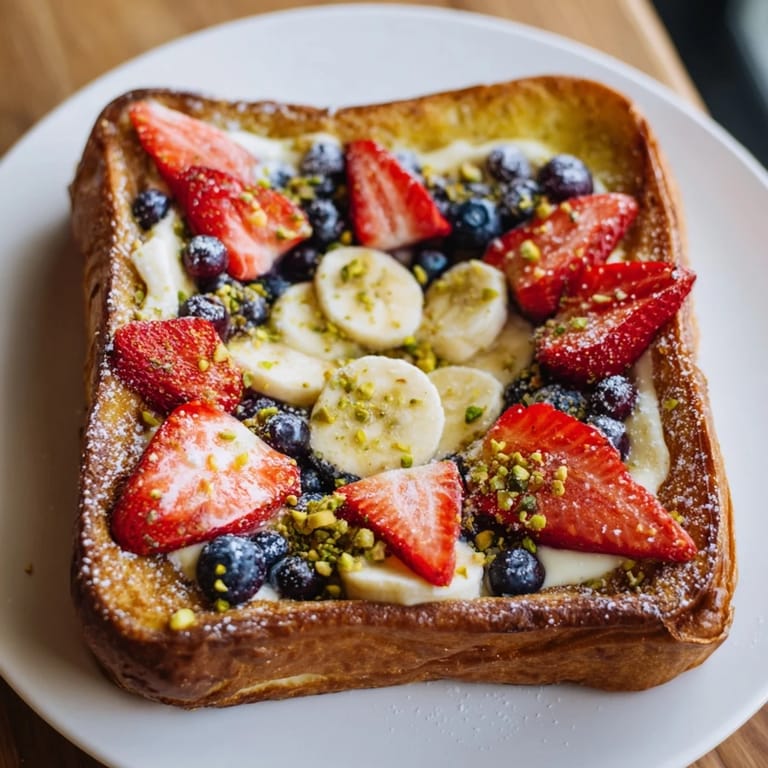
- Spoon the custard into each well, dividing it evenly, then arrange your fruit on top in whatever pattern makes you happy. I always do berries first, then banana slices, but there's no wrong way.
- Bake until set:
- Slide into the oven for 12 to 15 minutes—you're looking for the custard to be just set (it should have a slight jiggle, not be soupy) and the bread edges to be turning golden. Don't overbake or the custard gets rubbery.
- Finish and serve:
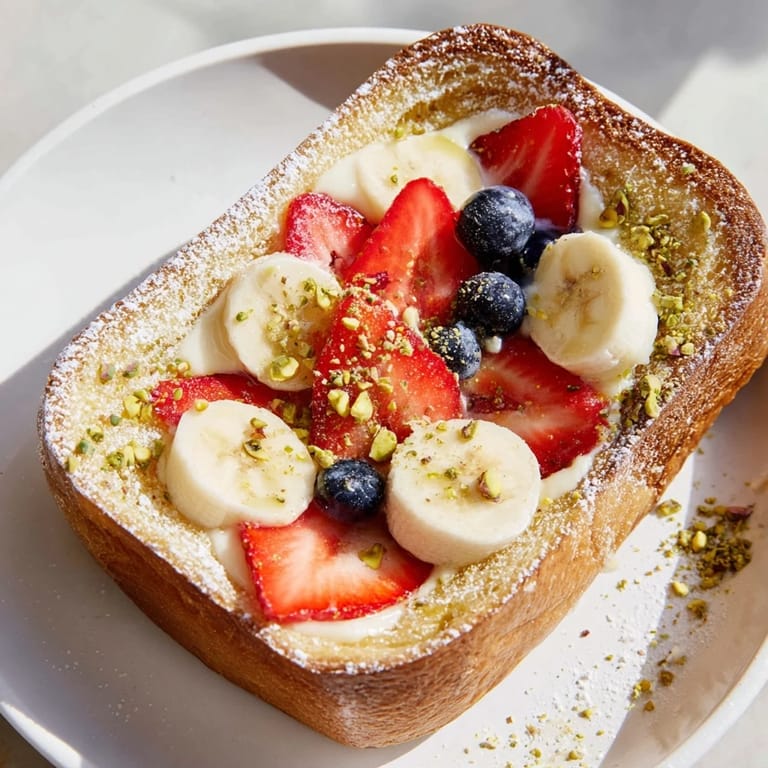
- Let cool for a minute or two, then dust with powdered sugar and scatter nuts if using. The warmth matters—cold yogurt toast loses some of its appeal, so serve while still slightly warm.
 Save
Save There was this one time I made this for myself on a quiet Tuesday morning, no one else around, and I sat by the window with my coffee just watching the steam rise off the warm toast. Something about the combination of creamy, fruity, and lightly sweet made me realize that cooking doesn't have to be for an audience to feel meaningful.
Fruit Flexibility and Seasonality
This recipe shines because it adapts to what's available and in season. In spring I use fresh raspberries and strawberries; come summer, thin slices of peach or nectarine are incredible; in fall, I've done sliced figs with a drizzle of extra honey. The custard is neutral enough that whatever fruit you choose feels intentional rather than like a substitute. Pick fruits at their ripest—that's when they'll taste best and add moisture and brightness to every bite.
Making It Your Own
Once you nail the basic version, the fun begins. I've added a pinch of cardamom to the custard, a crack of sea salt on top, even a swirl of almond butter in the well before the fruit. Some mornings I skip the sugar dusting if the fruit is sweet enough, and other times I go full indulgence with extra honey drizzled over everything. The beauty is that the structure is forgiving enough to handle your experiments without falling apart.
Storage and Reheating
Yogurt toast is absolutely best enjoyed fresh and warm, but life happens and sometimes you'll have leftovers. Wrap cooled slices in foil and reheat gently in a toaster oven at 300°F for a few minutes until warmed through—the microwave will make it soggy, so resist. The bread will soften as it sits, which is actually not terrible if you're into a more custard-forward experience, but the textural contrast is definitely better on day one.
- Store any leftover custard separately if you're prepping ahead, as the bread will absorb moisture overnight.
- If you want to make the custard the night before, whisk it up, cover, and refrigerate—it actually helps the flavors meld.
- Fruit is best added right before baking so it stays bright and doesn't release too much juice into the bread.
 Save
Save This recipe has become my way of saying I care without it feeling like a chore, and that's the whole point. Make it, share it, enjoy it warm.
Recipe FAQs
- → What type of bread works best for this dish?
Thick-cut breads like brioche or challah are ideal as they hold the custard well and bake to a golden crust.
- → Can I substitute the fruit toppings?
Yes, you can use raspberries, peaches, mango, or any fresh fruit you prefer to customize the flavor.
- → Is there a dairy-free alternative for the custard?
Using coconut yogurt and a flax egg allows for a dairy-free version that still bakes well.
- → How do I prevent the bread from becoming soggy?
Creating a shallow well in the bread helps contain the custard, and baking ensures the edges become crisp while the center stays creamy.
- → What are some serving suggestions?
Serve warm with a dusting of powdered sugar and a sprinkle of chopped pistachios or almonds for added texture and sweetness.