 Save
Save The first time I made tahdig, I was standing in my friend Maryam's kitchen in Tehran, watching her mother work with practiced hands that seemed to know exactly when to turn down the heat without looking at a clock. She showed me how the magic happens at the bottom of the pot, where rice meets butter and yogurt in a slow transformation into something golden and crackling. That crispy crust, she said, was the whole reason families gathered around the table. Years later, I still chase that exact sound when I lift the lid.
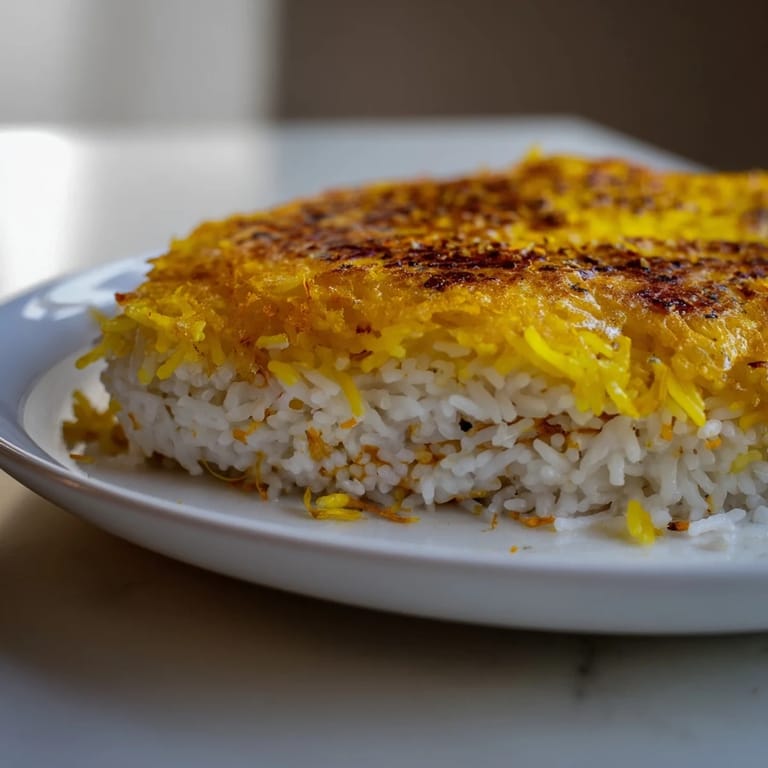
I made this for my partner on a quiet Sunday morning after he mentioned missing his grandmother's cooking. When I inverted that pot and the golden tahdig slid onto the platter in one perfect, crackling sheet, he got quiet in a way that told me everything. We ate it slowly, the sound of rice crust breaking between our teeth filling the small kitchen.
Ingredients
- Basmati rice (2 cups): The long grains stay separate and fluffy, which matters more than you'd think when you're building layers that need to stay distinct.
- Salt (1 tablespoon): Use this during soaking to begin seasoning the rice evenly from the start.
- Saffron threads (1/4 teaspoon): Toast them gently before steeping if you have a moment, they release their golden color and floral perfume more fully.
- Hot water (2 tablespoons): Keep it near boiling to properly steep the saffron.
- Plain Greek yogurt (4 tablespoons): The tanginess adds depth and helps create that crispy, slightly caramelized crust.
- Vegetable oil and unsalted butter (2 tablespoons each): The combination of fat creates the right balance for browning without burning.
- Ground turmeric (1/2 teaspoon, optional): Adds warmth and a gentle earthiness that complements saffron beautifully.
- Ground black pepper (1/2 teaspoon): Season to your preference, it hides in the rice but adds a quiet sophistication.
Tired of Takeout? 🥡
Get 10 meals you can make faster than delivery arrives. Seriously.
One email. No spam. Unsubscribe anytime.
Instructions
- Prepare your rice:
- Rinse the basmati under cold water until the water runs clear, watching for that moment when the water stops turning milky. Soak it in salted water for at least 30 minutes, this relaxes the grains and seasons them throughout.
- Parboil with intention:
- Bring a large pot of water to a rolling boil and add the drained rice, cooking for just 5 to 6 minutes until the grains are tender outside but still slightly firm in the center. This takes practice to time right, but you're aiming for rice that bends but doesn't break.
- Steep the saffron:
- Grind the threads between your fingers into a small bowl and pour hot water over them, letting them sit undisturbed for 10 minutes while they release their color and flavor. You'll watch it turn golden, almost magical.
- Build your crust mixture:
- Combine the yogurt with a tablespoon of that precious saffron water, the turmeric if using it, and about a cup of the parboiled rice. Mix gently but thoroughly so the yogurt coats each grain evenly.
- Heat your vessel:
- In a heavy-bottomed pot over medium heat, warm the oil and melted butter together until they shimmer slightly. You want it hot enough to hear a whisper when you pour in the yogurt mixture, but not so hot it spatters.
- Lay down the foundation:
- Spread that yogurt-rice mixture evenly across the bottom of the pot, creating an even layer that will become your tahdig. Press it gently but don't pack it.
- Build the layers:
- Gently spoon the remaining rice over the yogurt layer, mounding it slightly toward the center. Drizzle the rest of the saffron water over the top and poke a few small holes with a wooden spoon handle so steam can escape.
- Steam with patience:
- Wrap your pot lid in a clean kitchen towel to trap all the steam, then cover tightly. Cook over medium heat for 10 minutes until you hear gentle crackling at the bottom, then lower the heat to low and let it cook undisturbed for 35 to 40 minutes. Trust the process, don't peek.
- Rest and serve:
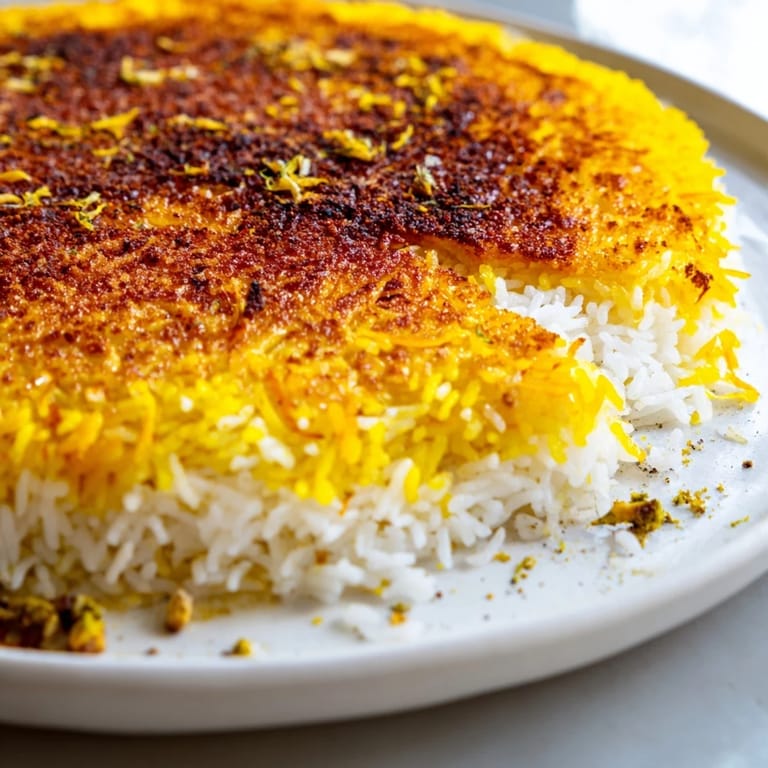
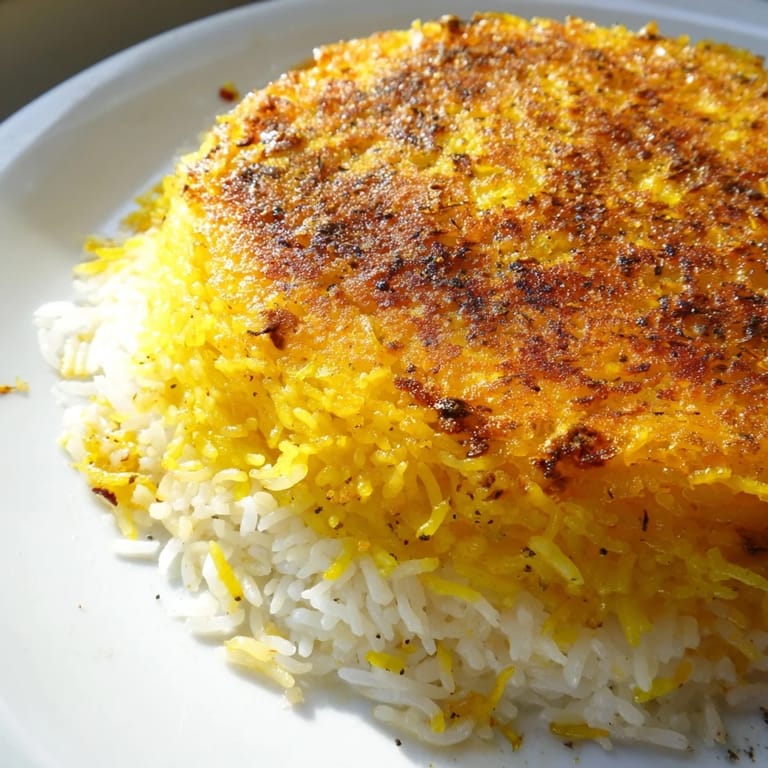
- Remove from heat and let the rice rest for 5 minutes to settle and cool slightly. Carefully run a thin knife around the edges, then invert the whole pot onto a serving platter so that crackling golden tahdig is facing up. The drama of this moment is half the magic.
 Save
Save There's a moment that happens every single time I make this, right when I'm carefully running a knife around the edges of that pot and listening for any crackling to stop. It's when I realize that food this beautiful and this delicious can come from something so ordinary as yogurt and rice and the simple willingness to pay attention.
The Science of Saffron
Saffron isn't just for flavor in this dish, it's doing the real work of painting both the rice and your expectations golden before you even start cooking. The threads contain compounds that release their color slowly in hot water, and that's exactly why you steep them separately instead of throwing them directly into the pot. When you mix even a small amount into the yogurt layer, it starts a gentle caramelization that builds on itself during the cooking process.
Why the Towel Matters
The towel wrapped around your lid is doing invisible but critical work, it's absorbing condensation that would otherwise drip back onto your precious tahdig and turn it from crispy to soggy. I learned this the messy way, standing in front of a pot of perfect rice with a soggy bottom, wondering what went wrong. Now I always grab a clean kitchen towel and wrap it snugly before covering, it's the small act that makes the difference between rice that's merely good and rice that's unforgettable.
Variations and Additions
Once you master the yogurt-rice tahdig, you can experiment with the base layer, some cooks use thinly sliced potatoes that get golden and starchy, others layer in pieces of flatbread that crisps beautifully. The aromatics are endlessly customizable too, cardamom pods or a cinnamon stick added to the boiling water transforms the whole dish into something more perfumed and complex. Finish with a scatter of bright barberries or fresh herbs if you want color and tartness.
- Try adding a pinch of rose water to the saffron steep for an extra floral note that feels luxurious.
- If you don't have Greek yogurt, regular yogurt works but drain it in cheesecloth for 30 minutes first to remove excess moisture.
- Make extra tahdig mixture if you love the crispy layer, you can always use more on the bottom and use it to bind together any leftover rice the next day.
 Save
Save Making tahdig is an act of presence, of listening to your rice and respecting the patience it asks for. When you sit down to eat, you're tasting not just technique but the care you took to build something golden and lasting.
Recipe FAQs
- → What is tahdig?
Tahdig is the golden, crispy crust formed at the bottom of the pot when cooking rice, prized for its texture and flavor.
- → How do you achieve a crispy tahdig layer?
Layering a saffron-yogurt mixture under parboiled rice, then cooking on low heat with butter and oil creates the signature crispiness.
- → Can turmeric be omitted?
Yes, turmeric is optional and adds subtle color and aroma but can be left out without affecting the main texture.
- → What kind of rice is best?
Basmati rice is ideal for its fluffy grains and ability to absorb flavors while maintaining separation after cooking.
- → How to prevent sticking or burning?
Using a heavy-bottomed pot with oil and butter, and cooking on low heat with the lid wrapped in a towel helps prevent burning.
- → Are there variations in the tahdig layer?
Yes, thin potato slices or flatbread can replace the yogurt-rice layer for different textures and flavors.