 Save
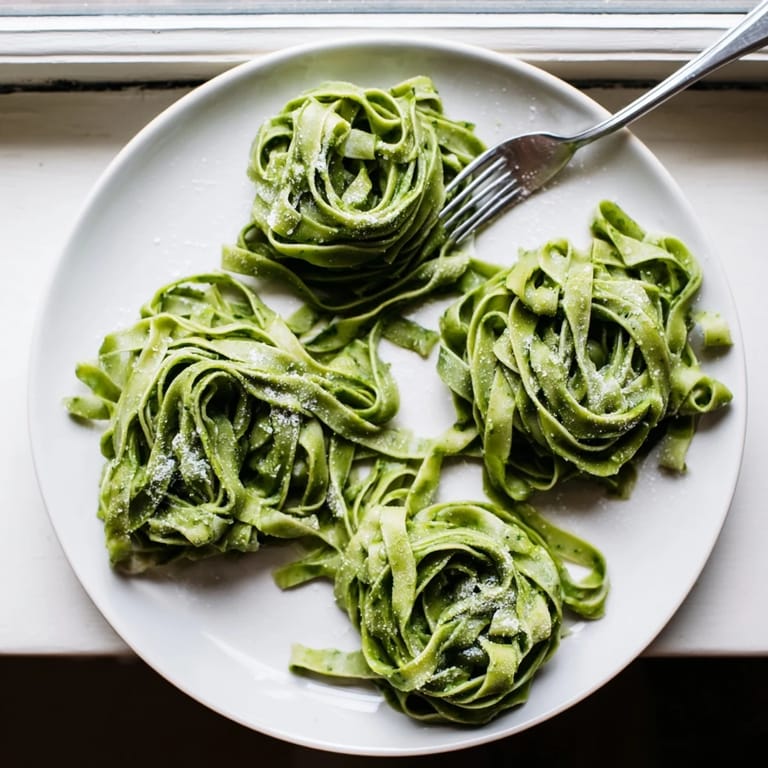
Save The first time I made green pasta, I was terrified it would turn out like mushy spinach disguised as noodles. My hands were stained bright green and my kitchen looked like a scene from a cooking disaster movie, but when those first fettuccine hit the boiling water, something magical happened. The pasta held its shape, cooked up tender but with that perfect bite that only fresh dough can achieve, and suddenly I understood why Italian nonnas have been making this for generations.
Last spring, my daughter helped me make this dough for her birthday dinner. She was absolutely fascinated by the process of turning green mush into beautiful, elastic dough, and she proudly told everyone at the table that she made the pasta herself. Now she asks for green pasta whenever shes had a tough week at school, something about the cheerful color and the satisfaction of creating something with her hands seems to reset her mood.
Ingredients
- Fresh baby spinach: The baby leaves are more tender and blend smoother than mature spinach, giving you that silky texture without any fibrous bits
- Italian 00 flour: This finely ground flour creates a more tender dough than all purpose, though you can substitute in a pinch
- Semolina flour: Optional but adds a lovely texture and helps the pasta hold its shape better during cooking
- Eggs: Room temperature eggs incorporate more easily into the flour mixture
- Fine sea salt: Enhances flavor without the gritty texture of coarser salts
Tired of Takeout? 🥡
Get 10 meals you can make faster than delivery arrives. Seriously.
One email. No spam. Unsubscribe anytime.
Instructions
- Prepare the spinach:
- Blanch the spinach leaves in boiling water for just 30 seconds until they collapse, then immediately plunge into cold water to stop the cooking and preserve that bright green color
- Remove excess moisture:
- Squeeze the spinach really thoroughly, getting out as much water as possible, then blend until completely smooth
- Create the well:
- Mound your flours and salt on a clean work surface, using your fingers to create a deep well in the center like a little volcano
- Combine and incorporate:
- Add the eggs and spinach puree to the well, gradually whisking the flour from the edges into the center until a shaggy dough begins to form
- Knead to perfection:
- Knead the dough for 8 to 10 minutes until it becomes smooth and silky, adding just a tiny bit of flour or water as needed to get the right consistency
- Let it rest:
- Wrap the dough tightly and let it rest at room temperature for 30 minutes, allowing the gluten to relax for easier rolling
- Shape your pasta:
- Roll the dough using a pasta machine or rolling pin, then cut into your desired shapes, from fettuccine to ravioli squares
- Cook to perfection:
- Boil the fresh pasta in salted water for just 1 to 2 minutes until it floats and is tender but still has a slight bite
 Save
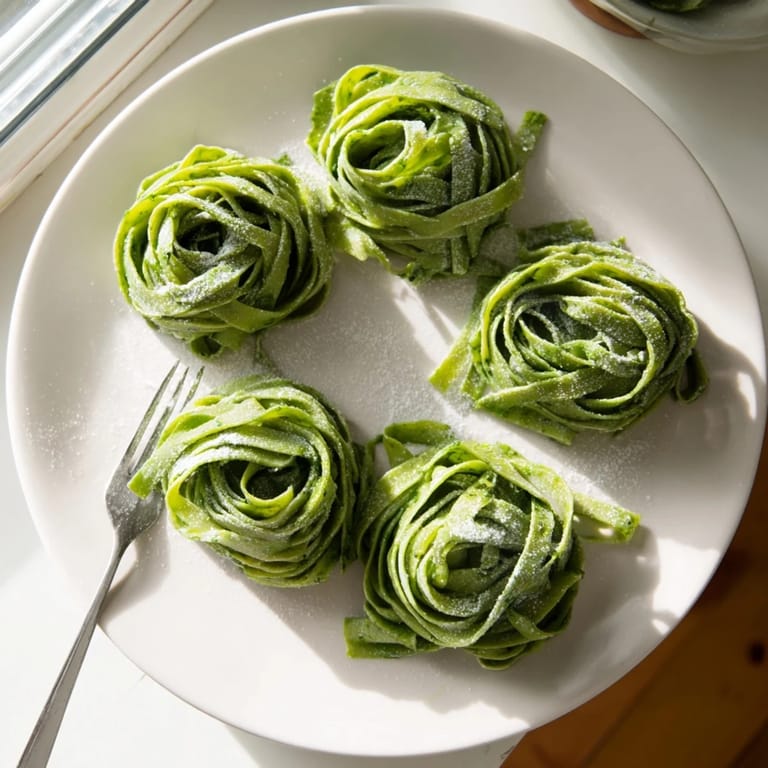
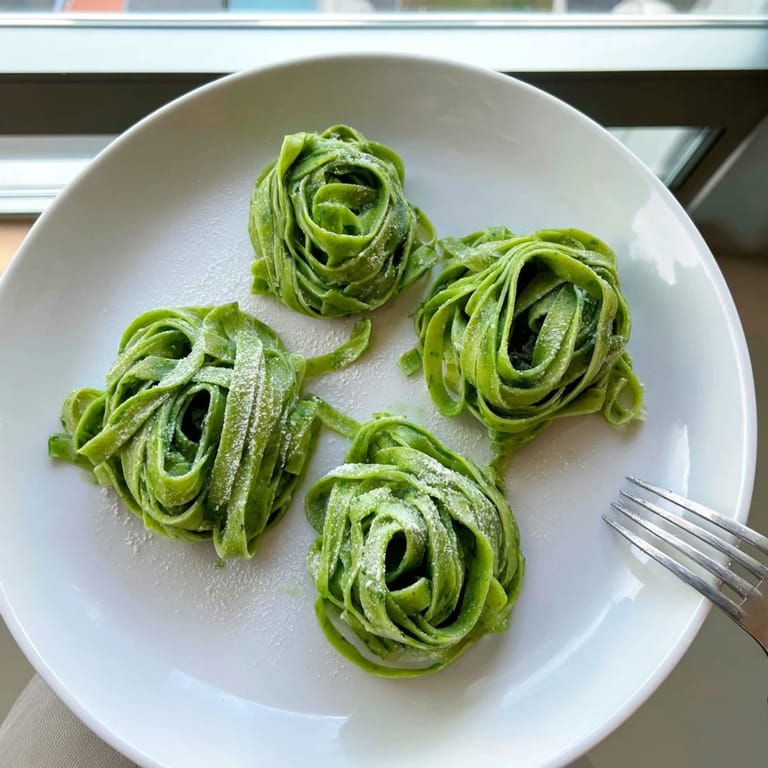
Save This pasta has become my go-to for dinner parties because it looks impressive but is actually quite straightforward to make. I love serving it with a simple brown butter and sage sauce that really lets the green color shine, watching guests faces light up when they realize the pasta is homemade.
Rolling Tips
Start with the dough at the widest setting on your pasta machine and gradually work your way thinner. If the dough feels sticky, dust lightly with flour, but do not overdo it or you will change the texture of your final pasta.
Flavor Variations
A pinch of freshly grated nutmeg in the dough adds a subtle warmth that pairs beautifully with the spinach. You can also add a tablespoon of fresh herbs like basil or parsley to the spinach puree for an extra layer of flavor.
Storage and Make Ahead
The dough can be wrapped tightly and refrigerated for up to 24 hours, actually developing a slightly better texture from the rest time. You can also freeze cut pasta shapes on a baking sheet, then transfer to a freezer bag for up to a month, cooking directly from frozen.
- Always bring refrigerated dough to room temperature before rolling
- Dust cut pasta with semolina instead of flour to prevent sticking without adding extra starch
- Remember that fresh pasta cooks much faster than dried, so watch it carefully
 Save
Save There is something deeply satisfying about making your own pasta, turning simple ingredients into something extraordinary with just your hands and a bit of time. I hope this green pasta finds its way into your regular rotation and brings as much joy to your table as it has to mine.
Recipe FAQs
- → Why blanch spinach before making pasta dough?
Blanching wilts the spinach and breaks down cell structure, making it easier to puree smoothly. It also removes bitter compounds and helps preserve the vibrant green color during cooking.
- → Can I use frozen spinach instead of fresh?
Frozen spinach can work but requires thorough thawing and excessive squeezing to remove moisture. Fresh baby spinach yields superior texture and more vibrant color in the finished pasta.
- → Why is 00 flour preferred for pasta dough?
Italian 00 flour is finely ground with moderate protein content, creating silky smooth pasta with the right balance of elasticity and tenderness. It produces professional-quality results.
- → How long should I knead the dough?
Knead for 8-10 minutes until smooth and elastic. This develops gluten structure, ensuring the dough holds together during rolling and maintains texture when cooked. Proper kneading prevents tearing.
- → Can I make this dough in advance?
Yes, wrap dough tightly in plastic and refrigerate up to 24 hours. Bring to room temperature before rolling. The resting period actually improves texture and makes the dough easier to work with.