 Save
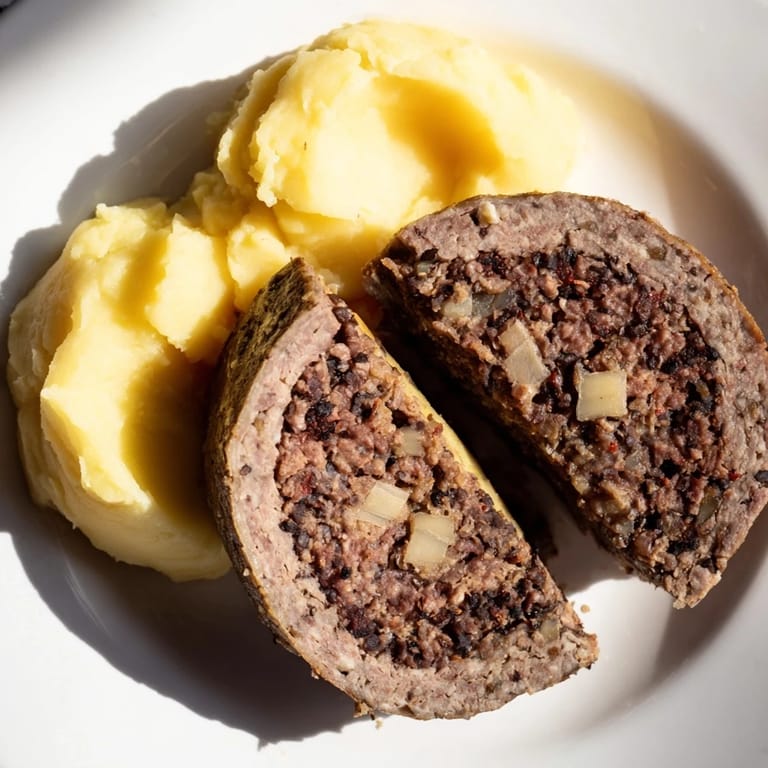
Save My first proper haggis came on a cold January evening at a friend's Burns Night gathering, where I sat nervously eyeing the traditional Scottish pudding before me. There was something both intimidating and magnetic about it—the dark, spiced filling peeking through the casing, the way steam rose when my friend sliced into it with theatrical ceremony. I'd heard all the jokes about what goes into haggis, but one bite changed everything: the savory depth of the spiced offal, the earthiness of the toasted oats, the way the suet kept everything impossibly tender. Since that night, I've learned that haggis isn't something to fear—it's something to respect and celebrate, just as the Scots have done for centuries.
The first time I served homemade haggis to my Scottish partner's family, I was secretly terrified they'd taste the hesitation in my cooking. But when their eyes lit up after that first forkful, and someone actually asked for my recipe, I realized I'd done something right—I'd honored the dish by taking it seriously, by not cutting corners or trying to make it "accessible" to people who might be squeamish. That meal turned into a full evening of stories about haggis eaten in Edinburgh, at Highland gatherings, and in childhood kitchens. It became clear that haggis isn't just food; it's a thread connecting people to place and family.
Ingredients
- Sheep's heart, liver, and lungs (500g): The traditional offal blend creates the authentic flavor and texture—these organs become beautifully tender when properly simmered, and their mineral richness is irreplaceable. If sourcing offal feels daunting, ask your butcher in advance; most will set some aside for you.
- Beef or lamb suet, finely chopped (200g): Suet is the silent hero that keeps haggis moist and tender from the inside; it melts into the mixture during cooking and creates that luxurious, cohesive texture nothing else can replicate.
- Steel-cut oats, toasted (150g): Toasting them first brings out a subtle nuttiness and prevents the haggis from becoming gluey—this small step genuinely transforms the final dish.
- Medium onions, finely chopped (2): They soften during cooking and add sweetness that balances the savory spices and earthy offal, creating depth rather than harshness.
- Beef stock (250ml): This binds everything together and carries all the flavors through the cooking process; use good quality stock if you can, as it lifts the entire dish.
- Ground black pepper, coriander, nutmeg, and allspice: These spices are the signature of haggis—the warming notes of nutmeg and allspice combined with the brightness of coriander create that distinctive, crave-worthy flavor you can't quite name.
- Sheep's stomach or large sausage casing: A traditional casing connects you to centuries of Scottish cooking; if you can't source it, a pudding basin works just as well and actually makes serving easier.
- Potatoes and turnips (500g each) with butter: Neeps and tatties are the perfect foil to haggis's richness—their mild sweetness and creamy texture let the haggis shine without overwhelming the plate.
Tired of Takeout? 🥡
Get 10 meals you can make faster than delivery arrives. Seriously.
One email. No spam. Unsubscribe anytime.
Instructions
- Prepare the offal:
- Rinse the heart, liver, and lungs under cold running water until the water runs clear, which removes any remaining blood and makes the final flavor cleaner and less metallic. Place them in a large pot, cover generously with cold water, bring to a rolling boil, then reduce to a gentle simmer and let them cook for 1–2 hours until they're completely tender—you should be able to break a piece easily between your fingers.
- Mince and combine:
- Once the offal has cooled enough to handle, mince or finely chop it (a food processor makes this easier) and combine it in a large bowl with the finely chopped suet, toasted oats, onions, and optional minced meat, stirring until everything is evenly distributed. The mixture should feel cohesive and smell deeply savory—if it seems too dry, you can add a splash of the reserved cooking liquid.
- Season to depth:
- Pour in the beef stock and add all the spices and salt, stirring thoroughly until the mixture is well combined and slightly moist but still holds together—it shouldn't slosh around in the bowl. Take a small spoonful and taste it now (you can cook a tiny bit in a pan first if you're nervous), adjusting seasoning as needed since haggis benefits from bold, confident seasoning.
- Fill the casing:
- If using a sheep's stomach, rinse it thoroughly inside and out and carefully spoon the mixture into it, leaving a finger's width of space at the top to allow for expansion during cooking. Secure both ends tightly with kitchen twine—if using a pudding basin instead, simply spoon the mixture in and cover the top tightly with foil.
- Steam with patience:
- Place the filled casing or basin into a large pot of gently simmering water, ensuring the water comes about halfway up the sides but doesn't cover the top (you want steam to cook it, not boiling water). Simmer gently for exactly 2 hours, occasionally checking that the water level hasn't dropped too far and topping up with more boiling water if needed.
- Finish the sides:
- About 30 minutes before the haggis is done, start your neeps and tatties—boil the potatoes and turnips separately in salted water until each is completely tender and easily pierced with a fork. Drain them well, then mash each with butter, salt, and pepper until creamy, keeping them warm until serving.
- Rest and serve:
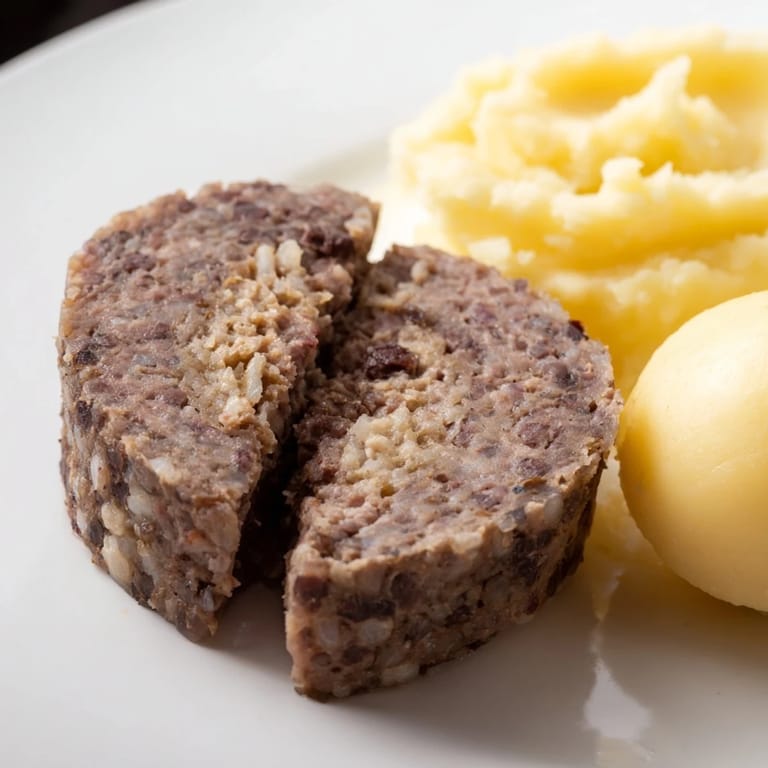
- Carefully remove the haggis from the pot and let it rest for a few minutes before slicing—this allows the filling to set slightly so it holds together beautifully when cut. Slice it open dramatically at the table if you're serving guests, revealing the spiced filling inside, and serve immediately alongside mounds of creamy neeps and tatties.
 Save
Save The moment when a guest—usually someone skeptical about eating haggis—takes that first cautious bite and their face softens with surprise is something I never get tired of witnessing. It's the moment they realize that tradition and reputation matter far less than the actual experience of flavor on their tongue, and that trying something unfamiliar with an open mind can lead somewhere beautiful.
Why Haggis Matters
Haggis represents something that modern cooking often overlooks: the wisdom of using every part of an animal respectfully and creating something magnificent from it. There's no waste, no pretension, just ingredient-driven cooking at its most honest. When you make haggis, you're not following a trend or trying to impress anyone with technique—you're participating in a centuries-old conversation about resourcefulness, flavor, and the connection between land, animals, and table. That kind of cooking feels increasingly rare and increasingly worth preserving.
Sourcing and Substitutions
Finding sheep's offal can feel like a challenge in many places, but it's worth the effort—call ahead to your butcher or visit a shop specializing in Scottish or traditional European meat. If offal is truly unavailable, you can substitute with a blend of beef and lamb mince, though the flavor will be milder and less distinctive. Some cooks add a touch of beef liver if they can source it, as liver adds that deep, savory note without requiring the full range of organs.
Beyond Burns Night
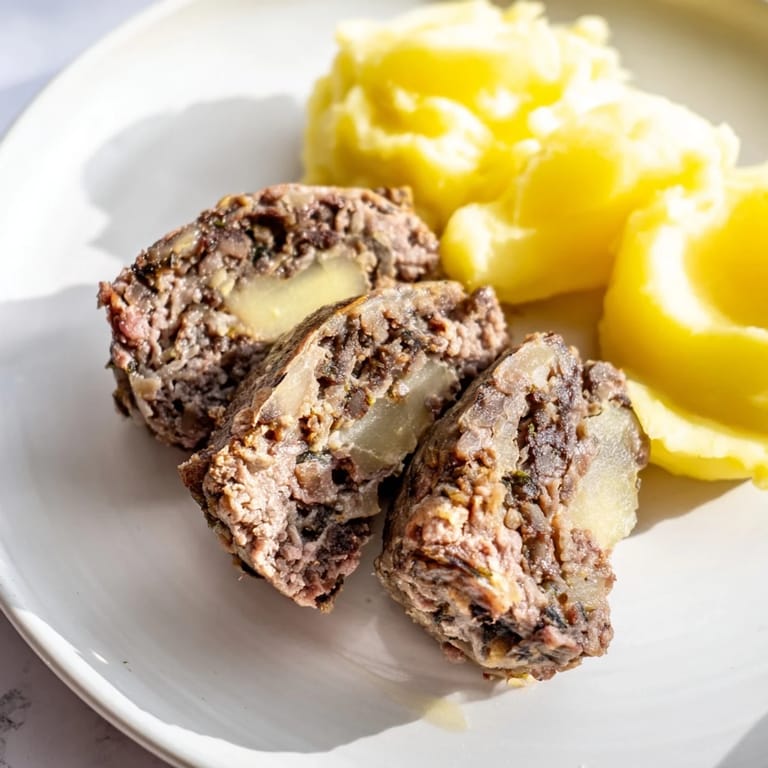
While haggis is most famous as a Burns Night centerpiece, it deserves to be eaten year-round—it's the kind of warming, deeply satisfying dish that makes sense on cold evenings whenever they arrive. Serve it with a glass of Scottish whisky if you like, or pair it with a rich red wine that can stand up to its bold flavors. Some people drizzle it with a whisky cream sauce, while others prefer it plain so nothing masks the work you've done to build those spices and flavors.
- Cold haggis can be sliced and pan-fried until crispy for breakfast with eggs and toast.
- Leftover neeps and tatties make wonderful side dishes for roasted meats throughout the week.
- Haggis freezes remarkably well for up to three months, so you can make a batch and have it ready for unexpected gatherings.
 Save
Save Making haggis is an act of courage and generosity all at once—courage to embrace something unconventional, and generosity toward the tradition you're honoring. Every time you slice into it and serve it to people you care about, you're saying that you believe in the value of that tradition, and somehow, that belief makes it taste even better.
Recipe FAQs
- → What meats are used in this traditional Scottish dish?
The dish uses a combination of sheep's heart, liver, and lungs or substitutes like lamb or liver mince, combined with suet and sometimes additional minced lamb or beef for texture.
- → How are the oats prepared before adding to the mixture?
Steel-cut oats are toasted to enhance their flavor before being combined with the other ingredients.
- → What is the traditional cooking method for this dish?
The mixture is typically encased in a cleaned sheep's stomach or placed in a pudding basin, then gently simmered in boiling water for about two hours.
- → What side dishes complement this hearty dish?
It is commonly served with neeps (turnips) and tatties (potatoes) which are boiled, mashed with butter, and seasoned with salt and pepper.
- → Are there alternatives to using offal for a milder flavor?
Yes, offal can be replaced with a mix of beef and lamb mince for a milder taste, and vegetarian versions use pulses, mushrooms, and vegetable suet.