 Save
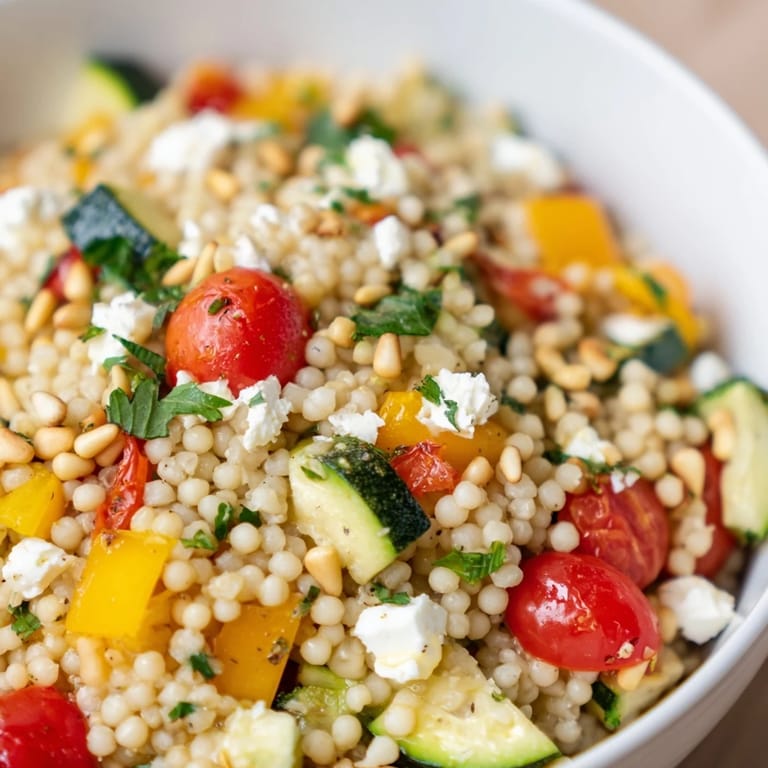
Save My kitchen counter was cluttered with half-empty spice jars when a friend texted asking what to bring to a potluck that wasn't pasta salad. I opened the fridge, spotted a lonely zucchini and some peppers about to turn, and decided to roast everything with couscous. The result was so bright and satisfying that three people asked for the recipe before dessert even came out. Now it's my go-to whenever I need something that looks impressive but doesn't actually require much skill.
I once made this for a backyard gathering in late summer when the tomatoes were so ripe they were almost too soft to slice. The vegetables came out of the oven with charred edges and the whole kitchen smelled like caramelized onions and lemon. Someone who claimed they didn't like couscous went back for seconds. That's when I realized this dish has a way of converting people without any effort on my part.
Ingredients
- Zucchini: Dice it into even pieces so it roasts uniformly and doesn't turn mushy on one end while staying raw on the other.
- Red and yellow bell peppers: The mix of colors makes the dish look alive, and roasting brings out their natural sweetness in a way that raw peppers never achieve.
- Red onion: Cut into wedges instead of dicing so they hold their shape and develop those beautiful caramelized edges in the oven.
- Cherry tomatoes: Halve them so they release their juices and mingle with the olive oil, creating a light sauce that coats the couscous.
- Olive oil for roasting: Don't skimp here, it's what helps the vegetables brown and prevents them from steaming instead of roasting.
- Couscous: Use regular couscous, not Israeli or pearl, since it fluffs up quickly and absorbs the dressing without getting gummy.
- Vegetable broth: This adds a subtle depth that water alone can't provide, but if you only have water, a pinch of extra salt will do.
- Lemon juice and zest: The zest is where the bright, floral flavor lives, so don't skip it even if you're tempted to use only the juice.
- Dijon mustard: A small spoonful emulsifies the dressing and adds a gentle tang that balances the sweetness of the roasted vegetables.
- Garlic: Mince it finely so it distributes evenly in the dressing without leaving anyone with an overpowering bite.
- Honey or maple syrup: Just enough to round out the acidity of the lemon without making the dish taste sweet.
- Fresh parsley and mint: Parsley is essential for freshness, mint is optional but adds a surprising cool note that makes the salad feel more complex.
- Feta cheese: Crumble it over the top at the end so it stays creamy and doesn't melt into the warm couscous.
- Toasted pine nuts or almonds: Optional, but they add a nutty crunch that makes each forkful more interesting.
Tired of Takeout? 🥡
Get 10 meals you can make faster than delivery arrives. Seriously.
One email. No spam. Unsubscribe anytime.
Instructions
- Preheat and prep the oven:
- Set your oven to 425°F and line a baking sheet with parchment paper to prevent sticking and make cleanup easier. This high heat is what gives the vegetables those crispy, caramelized edges.
- Toss and roast the vegetables:
- Combine the zucchini, bell peppers, red onion, and cherry tomatoes with olive oil, salt, and pepper, then spread them in a single layer on the baking sheet. Roast for 20 to 25 minutes, stirring halfway through so everything browns evenly and nothing burns on the bottom.
- Prepare the couscous:
- Bring the vegetable broth to a boil, then stir in the couscous, olive oil, and salt before removing the pan from the heat. Cover it tightly and let it sit for 5 minutes, then fluff with a fork to separate the grains and keep it light.
- Make the lemon dressing:
- Whisk together the lemon juice, zest, olive oil, Dijon mustard, minced garlic, honey, salt, and pepper in a small bowl until smooth and emulsified. Taste it and adjust the seasoning, it should be bright and slightly tangy.
- Combine everything:
- In a large bowl, toss the fluffy couscous with the roasted vegetables, parsley, and mint if using, then pour the dressing over and mix gently until every grain is coated. The warmth of the vegetables and couscous will help the dressing soak in.
- Finish and serve:
- Sprinkle the crumbled feta and toasted nuts over the top just before serving so they stay distinct and don't get soggy. Serve it warm or let it cool to room temperature, both ways taste equally good.
 Save
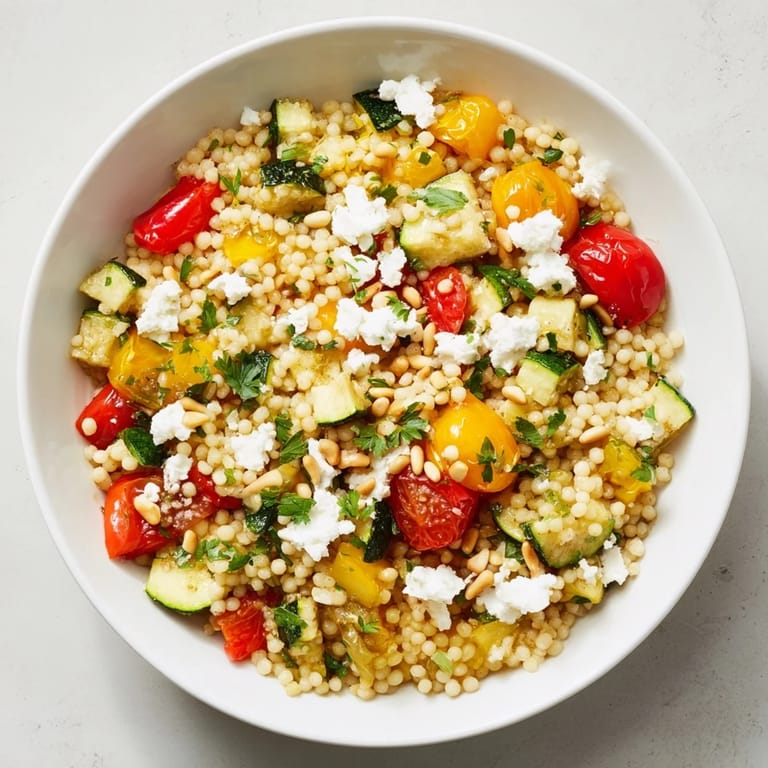
Save There was an evening when I made this for myself after a long day and ate it straight from the bowl on the couch. The combination of warm roasted vegetables, fluffy couscous, and that sharp lemon dressing felt like the kind of comfort food that didn't weigh me down. It reminded me that not every satisfying meal needs to be complicated or planned days in advance.
Making It Your Own
You can swap the vegetables based on what's in season or what needs to be used up, eggplant, asparagus, or butternut squash all roast beautifully with the same method. If you want more protein, toss in a can of drained chickpeas during the last 10 minutes of roasting or serve it alongside grilled halloumi. For a vegan version, skip the feta or use a plant-based crumble, and replace the honey in the dressing with maple syrup. The dish is forgiving and adapts easily to whatever your pantry or dietary needs require.
Serving and Storing
This salad works as a standalone lunch, a hearty side for grilled chicken or fish, or part of a bigger spread at a potluck. It holds up well at room temperature for a few hours, which makes it perfect for picnics or gatherings where you can't keep things chilled. Leftovers can be refrigerated for up to two days, though the couscous will absorb more dressing and the vegetables will soften slightly. If you plan to eat it cold, let it sit out for 10 minutes before serving so the flavors wake up again.
What to Watch For
The biggest mistake is under-roasting the vegetables, they should have some charred edges and soft centers, not just warmed through. Make sure your oven is fully preheated before the baking sheet goes in. If your couscous turns out gummy, you either used too much liquid or didn't fluff it soon enough after steaming. The dressing should taste bold on its own because it mellows once it coats the couscous and vegetables.
- Use a large enough bowl for tossing so the dressing distributes evenly without making a mess.
- Taste the salad after mixing and adjust with more lemon juice, salt, or olive oil if it feels flat.
- Toast the nuts in a dry skillet for a few minutes before adding them, it makes their flavor much more pronounced.
 Save
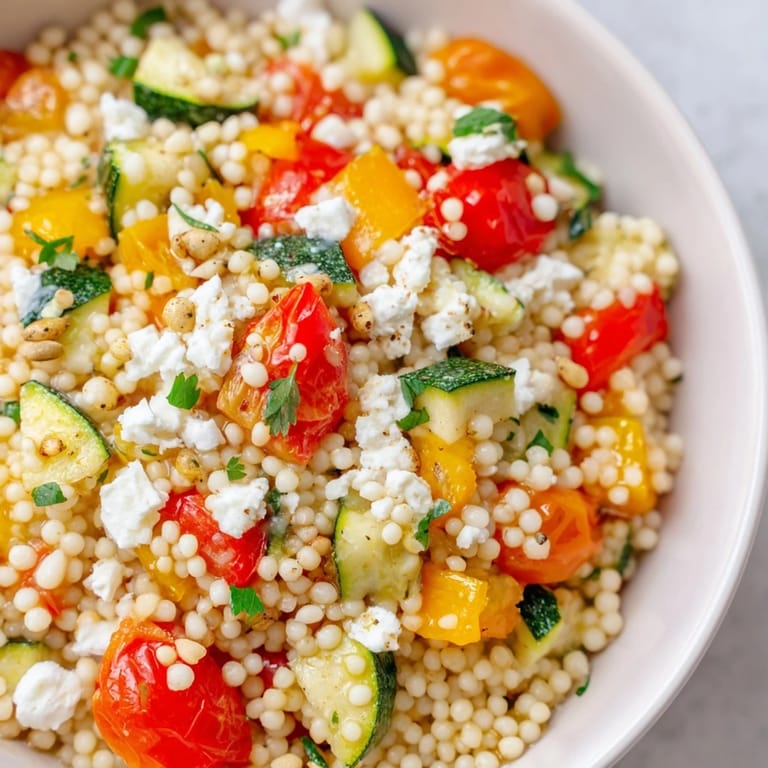
Save This is the kind of recipe that quietly becomes part of your regular rotation without you even noticing. It's simple, adaptable, and always tastes like you put in more effort than you actually did.
Recipe FAQs
- → Can I prepare this salad in advance?
Yes, the salad keeps well refrigerated for up to 2 days. Store couscous and roasted vegetables separately from the dressing if preparing ahead, then combine and toss just before serving to maintain the best texture and flavor.
- → How do I make this vegan-friendly?
Simply omit the feta cheese or substitute it with a plant-based alternative. The lemon dressing and all vegetables are naturally vegan, making this easy to adapt for plant-based diets.
- → What vegetables can I substitute?
Feel free to swap in seasonal vegetables like eggplant, summer squash, asparagus, or mushrooms. Roast any vegetables with olive oil and seasonings for 20-25 minutes until tender and caramelized for the best results.
- → How can I add more protein to this dish?
Consider adding chickpeas, grilled halloumi, grilled chicken breast, or white beans. You can also serve it alongside grilled fish or simply increase the nuts and feta portions for added protein.
- → Is couscous gluten-free?
Traditional couscous contains gluten. If you need a gluten-free version, substitute with quinoa, millet, or certified gluten-free couscous. Also check your vegetable broth label to ensure it's gluten-free.
- → Can I serve this salad warm or cold?
Absolutely! This salad is delicious served warm, at room temperature, or even slightly chilled. Choose based on your preference and the season—warm is lovely in cooler months, while room temperature or chilled works best in summer.