 Save
Save I discovered the magic of an Italian farmhouse board one autumn afternoon in Tuscany, sitting under a sprawling oak tree with my host's family. There were no fancy plating techniques or culinary pretense—just honest, generous handfuls of aged cheese, draped cured meats, and rough-torn bread scattered across weathered wood. That simple gathering taught me that sometimes the most memorable meals aren't about perfection; they're about abundance, quality ingredients, and the joy of sharing without overthinking.
I remember setting this board down for a small dinner party last spring, and watching my friends' faces light up before anyone even tasted anything. One guest immediately started composing bites—a sliver of Taleggio draped over a piece of cured meat, bread cradling an olive. Within minutes, the whole table was engaged in this gentle, playful ritual of building and sharing. That's when I realized this dish isn't really about the ingredients; it's about creating permission to slow down together.
Ingredients
- Parmigiano-Reggiano, 200 g, broken into chunks: This is the backbone of the board. Look for authentic wheels aged at least 24 months—the crystals inside are what make it feel special on your tongue. Breaking rather than slicing it gives that rustic, generous feeling that makes people want to dig in.
- Pecorino Toscano, 200 g, cut into wedges: Sharper and more assertive than Parmigiano, this sheep's milk cheese adds complexity. The wedges make it easy for guests to take what they want without the formality of a knife.
- Taleggio, 150 g, torn into pieces: This is the soft, creamy heart of your board. Its mild, fruity flavor and slightly elastic texture offer relief between the harder, more intense cheeses. Tearing it (rather than cutting cleanly) embraces the rustic aesthetic.
- Prosciutto di Parma, 150 g, loosely piled: The quality of this cured meat matters tremendously. Look for delicate pink slices with visible marbling. Pile it loosely so people can pull individual slices; dense stacking makes it feel less inviting.
- Finocchiona salami, 120 g, thickly sliced: This Tuscan specialty has fennel seeds that give unexpected brightness. Slice it thick enough that it doesn't tear—about a quarter-inch is ideal.
- Coppa, 120 g, in rustic folds: The fat marbling and deep color of this cured pork add visual drama and rich flavor. Arrange it so the folds catch the light, almost like you're displaying a piece of silk.
- Rustic Italian bread, 1 large loaf: Buy something with real crust and structure—ciabatta, pane toscano, or a sourdough works beautifully. Tear it by hand just before serving so the interior stays tender. Rough, uneven pieces feel more inviting than neat cubes.
- Castelvetrano olives, 1 cup: These green Sicilian olives are buttery and mild. Don't substitute with sharp Kalamatas here; the sweetness balances the saltiness of the cured meats.
- Sun-dried tomatoes in olive oil, 1 cup, drained: These concentrated bursts of flavor and chewy texture add another dimension. Draining them prevents the board from becoming oily, but save that oil for drizzling.
- Marinated artichoke hearts, 1 cup, quartered: The acidity and slight bitterness cut through the richness. Quartering them makes them easier to eat directly from the board.
- Fresh grapes or figs, 1 small bunch, halved: This might seem like a small detail, but the slight sweetness and juiciness they provide is essential to the balance. Fresh fruit lifts the whole board and gives your palate somewhere to reset.
- Extra-virgin olive oil, 1/4 cup: This is your finishing touch. A good one with peppery notes brings everything into focus. Drizzle it right before serving so it glistens.
- Fresh rosemary sprigs: Beyond garnish, these fragrant herbs add an aromatic element that speaks to the Mediterranean countryside. The aroma does as much work as the flavor.
- Coarse sea salt and cracked black pepper: Don't underestimate these final seasons. They're what turn a nice board into an impressive one.
Tired of Takeout? 🥡
Get 10 meals you can make faster than delivery arrives. Seriously.
One email. No spam. Unsubscribe anytime.
Instructions
- Start with the anchor cheeses:
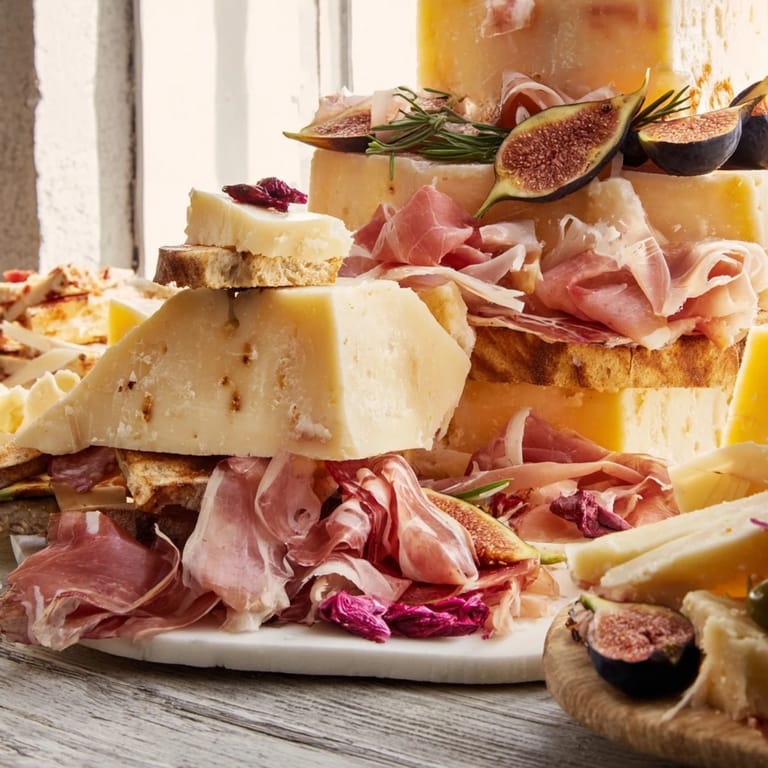
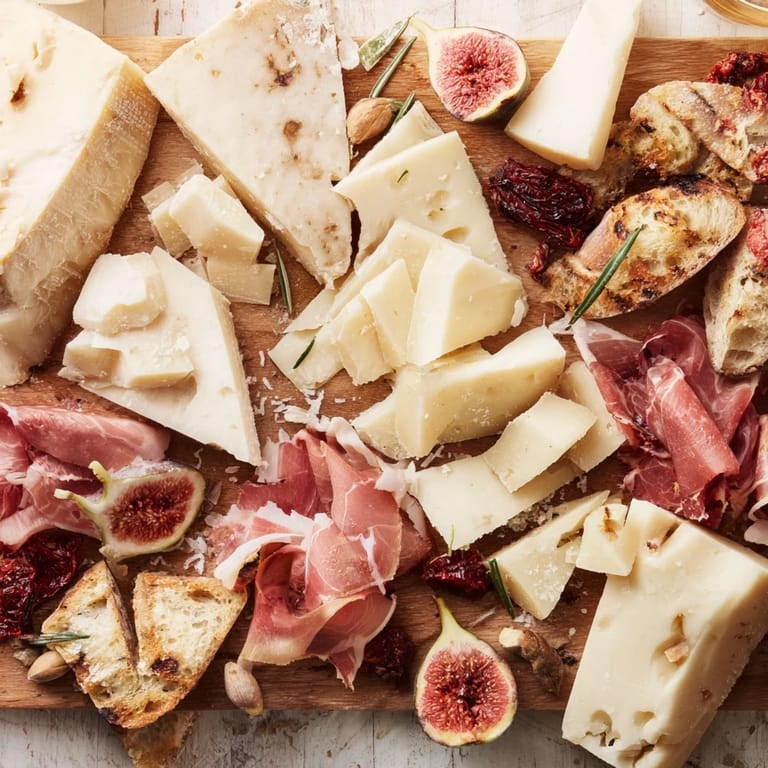
- Find a large wooden board—wood matters because it's warm and forgiving, unlike marble or ceramic. Begin by clustering the broken Parmigiano-Reggiano on one side, creating irregular chunks that catch the light. Place the Pecorino wedges nearby, then tear the Taleggio into soft, casual pieces. Think of this as creating small islands rather than rows. There should be plenty of white space visible; you're not trying to cover every inch.
- Layer in the cured meats with intention:
- Take your prosciutto and, with gentle hands, crumple and pile it loosely in another section. Let it have volume and air rather than lying flat. Arrange the finocchiona slices in overlapping waves—like you're creating a texture map for the eye. Fold the coppa back on itself so the folds create shadow and dimension. Step back frequently to look at the composition. It should feel abundant but not chaotic.
- Scatter the bread thoughtfully:
- Tear the bread into rough pieces of varying sizes. Tuck some pieces between the cheese, lean a few against it. The bread should look like it just happened to land there, which is the opposite of how you're actually carefully placing each piece.
- Fill the negative space with color and variety:
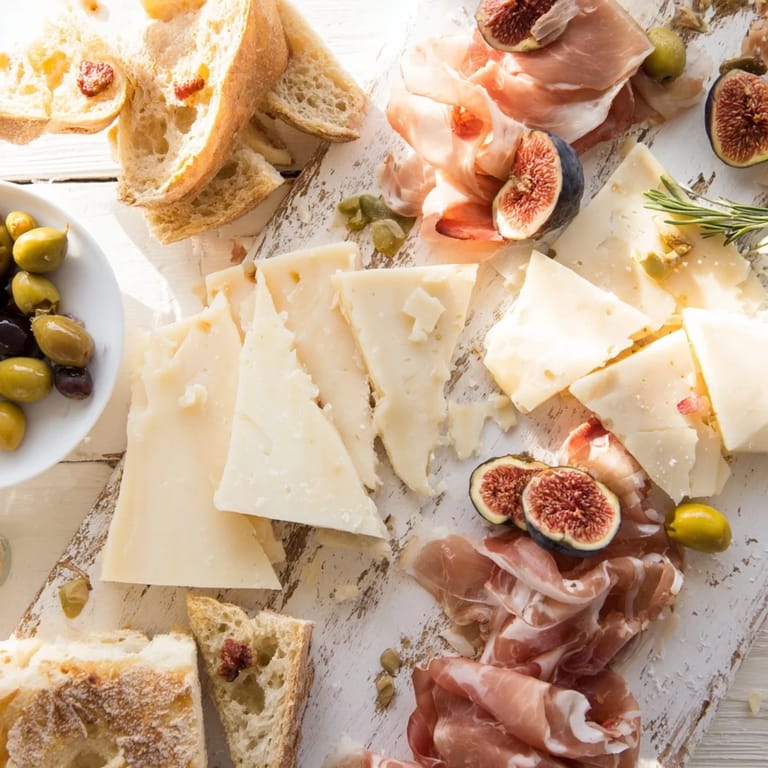
- Pile the Castelvetrano olives in a small cluster. Create another small mound of sun-dried tomatoes. Scatter the artichoke hearts. Place the grapes or figs halves strategically—their deep red or purple provides visual contrast. Your board should now look like a landscape with distinct regions, each inviting exploration.
- Finish with oil, herbs, and seasoning:
- Drizzle the olive oil gently over the bread and across some of the cheese—you'll see it bead up on the cheese surfaces, which is exactly right. Tear fresh rosemary sprigs and scatter them. The moment you do this, your board will smell like Italy. Finally, sprinkle coarse sea salt and cracked pepper across everything with a generous hand. These final touches are what signal to your guests that this is intentional, thoughtful, and worth savoring.
- Serve with joy:
- Bring the board to the table with pride. Set it down and step back. The moment before anyone tastes anything is part of the beauty—let people look and appreciate the composition before the feasting begins.
 Save
Save Years later, I realized that the most meaningful part of that Tuscan afternoon wasn't the cheese or the wine—it was that there was room for conversation. No one was worried about eating correctly or making a mess. We simply pulled, tore, shared, and talked for hours. That's what this board does: it removes the barriers between people and their food, and between people and each other.
Building Your Perfect Flavor Journey
Think of this board as a flavor progression rather than a random assortment. Start with the milder Taleggio and Castelvetrano olives to prepare your palate. Move into the sharper Pecorino and sun-dried tomatoes to deepen the experience. End with bites that combine the aged intensity of Parmigiano with rich cured meats and fresh fruit. This natural rhythm keeps every bite feeling fresh and prevents your palate from becoming overwhelmed. Encourage your guests to play with combinations: prosciutto draped over creamy Taleggio, a crust of bread topped with Parmigiano shards and a single olive, fresh grapes paired with assertive salami. There's no wrong way, only discovery.
Cheese Selection: The Heart of the Matter
The three cheeses here were chosen to offer textural and flavor contrast: hard and crystalline, semi-soft and fruity, soft and creamy. But this isn't dogma. If Taleggio isn't available, Robiola or even fresh burrata works beautifully. Swap the Pecorino for Asiago if that's what you find. The principle that matters is balance—include at least one hard aged cheese for depth, one soft cheese for texture contrast, and one medium cheese that bridges them. Visit a good cheese counter and ask the person working there what's at its peak right now. They'll often have recommendations that will make your board distinctly yours.
Seasonal Variations and Thoughtful Swaps
This board is a framework, not a prescription. In summer, trade the sun-dried tomatoes for fresh cherry tomatoes. Add fresh peaches if they're in season—their juiciness against aged Parmigiano is transcendent. In autumn, scatter roasted hazelnuts or walnuts, and swap grapes for fresh figs when you can find them. Winter is the time to indulge in more robust aged cheeses and add honeycomb or quince paste. The key is respecting what's in season: better to have fewer ingredients that are at their peak than many mediocre ones. One last thought: if you're making this for someone with allergies, keep detailed notes of where everything came from, and set up a separate small board so your guests with sensitivities can enjoy the experience too.
- Roasted nuts add unexpected richness without changing the essential character of the board.
- Pickled vegetables like pickled onions or pickled carrots add brightness and are easier to source than you might think.
- Good salted butter or soft burrata can become your secret weapon for guests who prefer dairy to cured meats.
 Save
Save This board is really just an excuse to sit together and linger. Serve it with good wine, crusty bread (yes, more bread), and people you want to stay a while. The food matters, but the gathering matters more.
Recipe FAQs
- → How do I arrange the cheeses and meats?
Break cheeses into rustic chunks and wedges, pile the cured meats loosely in layered folds to create a natural, inviting presentation.
- → What breads work best on this board?
Use a large rustic Italian loaf like ciabatta, torn into rough pieces for ideal texture and appearance.
- → Can I substitute the cheeses or meats?
Yes, you can swap cheeses like Gorgonzola or Asiago and choose other cured meats to suit your taste preferences.
- → What accompaniments enhance the flavors?
Olives, sun-dried tomatoes, marinated artichoke hearts, and fresh grapes or figs enhance complexity and balance.
- → Any tips for seasoning and garnish?
Lightly season with coarse sea salt and cracked black pepper, drizzle extra-virgin olive oil, and garnish with fresh rosemary sprigs.