 Save
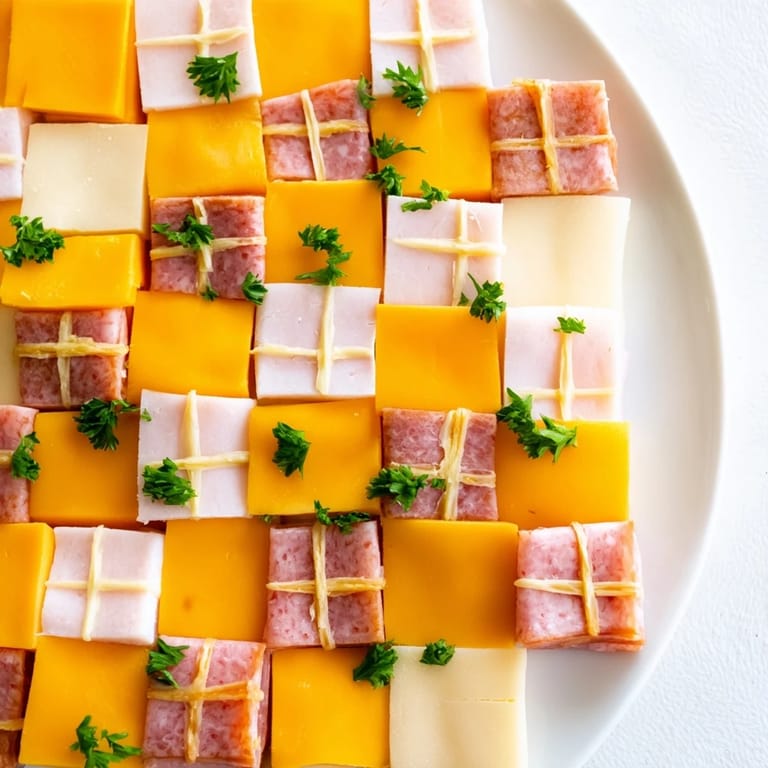
Save I discovered this dish at a friend's dinner party where someone had arranged meats and cheeses on a board with such playful precision that it felt more like edible art than appetizer. The mustard lines connecting everything reminded me of thread on a quilt, and I realized right then that the best entertaining dishes are the ones that make people smile before they even taste them. It's been my go-to ever since for moments when I want to impress without the stress.
My sister brought this to a potluck one summer, and three different people asked for the recipe before anyone had even finished their first plate. What struck me most was watching people linger around the board, not rushing to fill their plates but actually taking time to admire it. That's when I understood that presentation isn't pretentious when it comes from a genuine place of wanting to share something thoughtful.
Ingredients
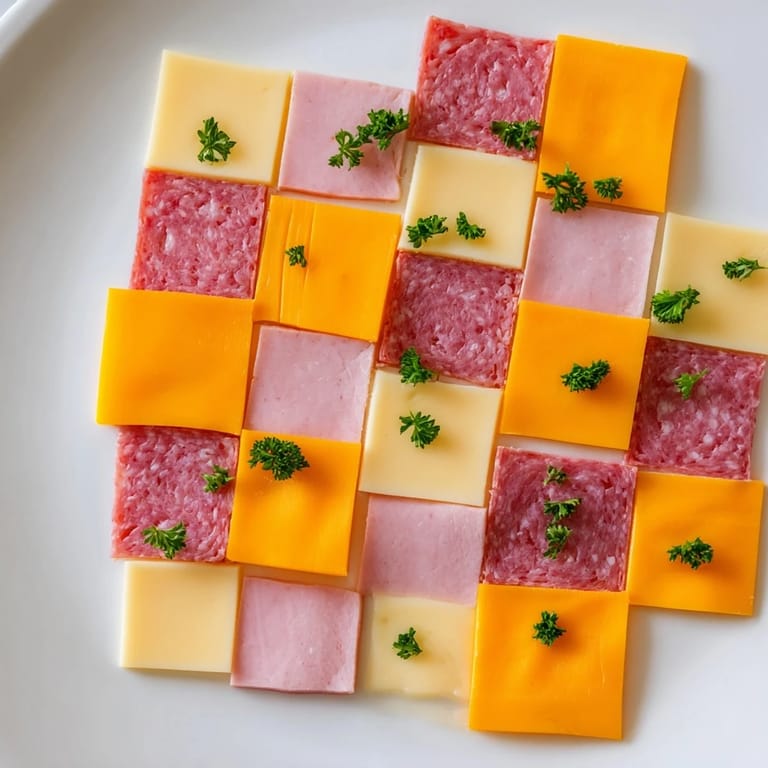
- Smoked turkey breast: Use quality deli counter turkey that's sliced thin but substantial enough to cut into clean squares without tearing.
- Salami: Choose a variety with good color contrast; the deeper reds make the pattern more visually striking.
- Ham: Fresh, quality ham holds its shape better than thin-sliced packages and adds genuine flavor rather than just salt.
- Swiss cheese: The holes create natural visual interest, and the mild nutty flavor bridges well between other ingredients.
- Sharp cheddar: Don't skip the sharpness; it cuts through the richness and gives the board personality.
- Provolone: The semi-firm texture slices beautifully and its slight tang balances the saltier meats.
- Whole grain mustard: The visible seeds add texture and a rustic charm to your stitching lines.
- Dijon mustard: Smoother and more refined, it creates visual contrast when you alternate with whole grain.
- Fresh parsley or chives: A tiny handful adds color without overpowering; it's optional but makes the board feel intentional.
Tired of Takeout? 🥡
Get 10 meals you can make faster than delivery arrives. Seriously.
One email. No spam. Unsubscribe anytime.
Instructions
- Cut everything to size:
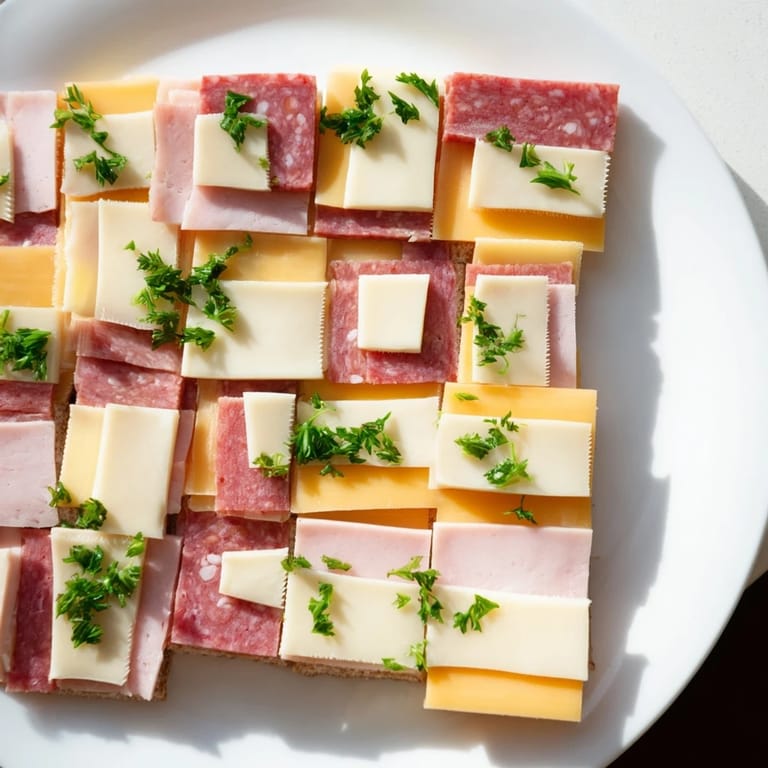
- Use a sharp knife on a clean board to cut meats and cheeses into uniform 2-inch squares, working methodically so each piece is roughly the same size. This uniformity is what makes the patchwork pattern actually read as intentional rather than random.
- Build your pattern:
- Start from one corner of your serving platter and alternate meats and cheeses in a checkerboard or loose patchwork layout, leaving about a quarter-inch of space between each square. Step back occasionally to see if the colors balance and adjust as you go.
- Stitch with mustard:
- Fill a squeeze bottle or piping bag with whole grain mustard and draw thin lines between the squares like thread on fabric, then switch to Dijon for the next set of lines. The contrast between the two mustards is what makes this feel playful rather than just organized.
- Finish and serve:
- Scatter a small handful of fresh parsley or chives across the top if you're using it, then set out toothpicks or small forks within arm's reach. Serve immediately while everything is at its best texture.
 Save
Save What I love most about this dish is how it transforms a gathering into something more playful. There's an honesty to it—no pretense, just beautiful ingredients arranged with care and a sense of humor.
Flavor Pairings That Work
The magic of this board is that salty, savory ingredients become brighter when you add the sharp bite of mustard and the cool smoothness of cheese. I learned to think about each square as its own small experience rather than just pieces on a board, which means strategically placing your favorite meat-cheese combinations where you know guests will notice them first. Trust your instincts about what flavors speak to you; that's usually what will speak to others too.
Making It Your Own
Once you master the basic pattern, you start seeing all the possibilities. I've added roasted red peppers, sun-dried tomatoes, and different cheese varieties depending on the season or what I find at the market that day. The board becomes a reflection of what excites you right now, which is exactly how the best entertaining dishes should work.
Serving and Storage Secrets
This dish is best served immediately after assembly, when the meats are still tender and the cheeses haven't started to soften. If you need to prepare ahead, arrange everything except the mustard stitching, then add those artistic lines just before guests arrive.
- Arrange your board on a beautiful surface that makes the colors pop—white marble or a dark wood board frames the colors differently than ceramic.
- Set out small plates and napkins nearby because people will definitely come back for seconds once they realize how easy it is to eat while mingling.
- Keep toothpicks or small forks handy so guests feel welcome diving in whenever they're ready.
 Save
Save This little appetizer has taught me that entertaining doesn't need to be complicated to feel special. It just needs to be made with intention and a little bit of playfulness.
Recipe FAQs
- → How should the meats and cheeses be cut?
All meats and cheeses should be sliced into uniform 2-inch squares to ensure a neat and consistent patchwork pattern.
- → What types of mustard work best for the decorative lines?
Whole grain and Dijon mustards are ideal for piping lines between squares, providing tangy flavor and a textured appearance.
- → Can I prepare this in advance?
It is best served immediately to maintain freshness, but ingredients can be pre-cut and stored separately until assembly.
- → Are there suggested variations to add more color?
Yes, incorporating roasted vegetable squares or alternative cheeses can brighten the arrangement and introduce variety.
- → What garnishes complement this assortment?
Freshly chopped parsley or chives sprinkled atop add a fresh herbal note and enhance presentation.