 Save
Save I still remember the first time I assembled a Mediterranean mezza platter for unexpected guests on a warm summer evening. My friend had just returned from a month traveling through Greece, and instead of a formal dinner, we wanted something that felt like those long, leisurely meals on a sun-soaked terrace. I gathered whatever beautiful ingredients I could find, arranged them in colorful clusters on an old wooden board, and watched as people lingered over the platter for hours, sharing food and stories. That evening taught me that sometimes the most memorable meals aren't about complexity—they're about abundance, simplicity, and the joy of eating together.
Years later, I realized this platter had become my go-to for every celebration. Whether it was a holiday gathering, a book club meeting, or just Friday night friends, people always gravitated toward it first. Something about the variety and visual appeal made it feel special—like I'd given them access to a Mediterranean market, right there on my table.
Ingredients
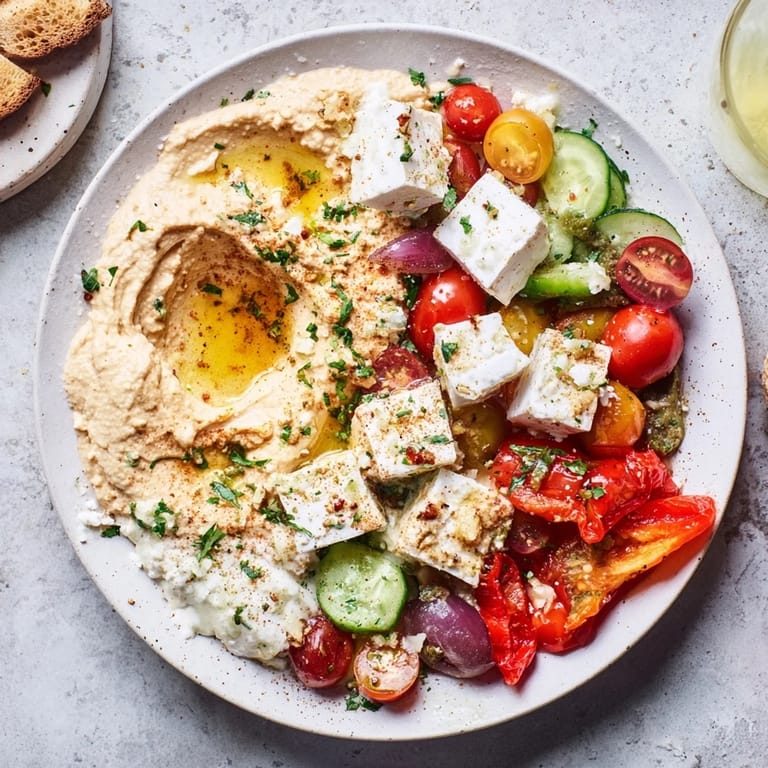
- Classic hummus: The creamy foundation that anchors your platter. I learned to drizzle a little extra olive oil on top when serving—it not only looks beautiful but keeps it from drying out.
- Baba ganoush: This smoky eggplant dip brings earthiness and depth. If you're making it from scratch, let those charred eggplants cool before blending—patience makes all the difference.
- Tzatziki: Cool, herbaceous, and the perfect foil to richer elements. The cucumber should be finely grated and squeezed dry so the dip stays thick and creamy.
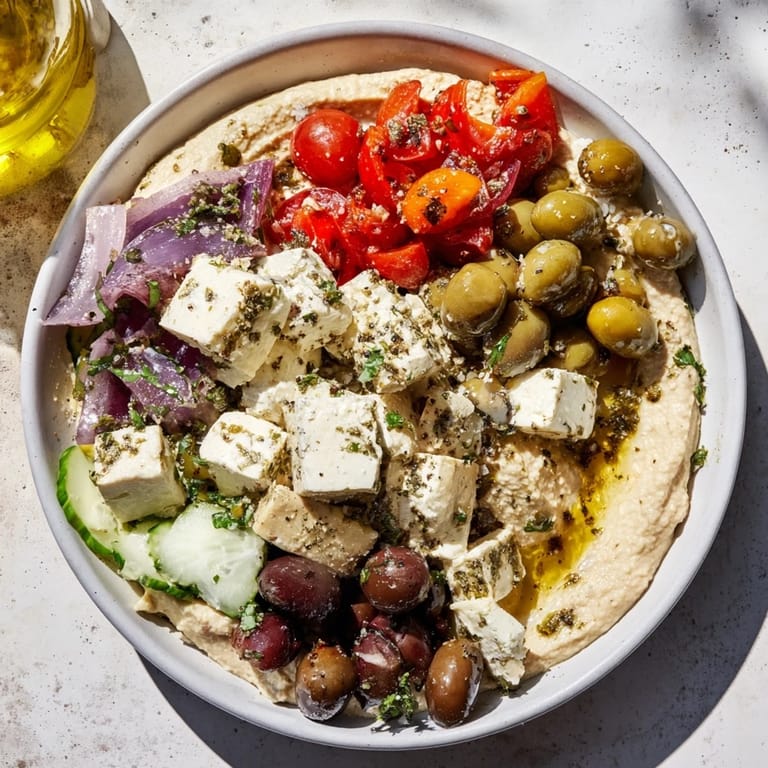
- Feta cheese, cut into rustic cubes: Don't overthink the cutting—those imperfect chunks actually look more inviting. Feta's briny tanginess is essential to the whole experience.
- Cherry tomatoes, halved: Halving them exposes more surface area and looks more generous on the platter. Choose the ripest ones you can find.
- Cucumber, sliced into rounds: Keep the skin on for color and nutrients. A mandoline makes quick work of this, but a sharp knife works just fine.
- Assorted olives: The mix of Kalamata, green, and Castelvetrano creates texture and flavor contrast. I prefer olives that are pitted—it's more guest-friendly.
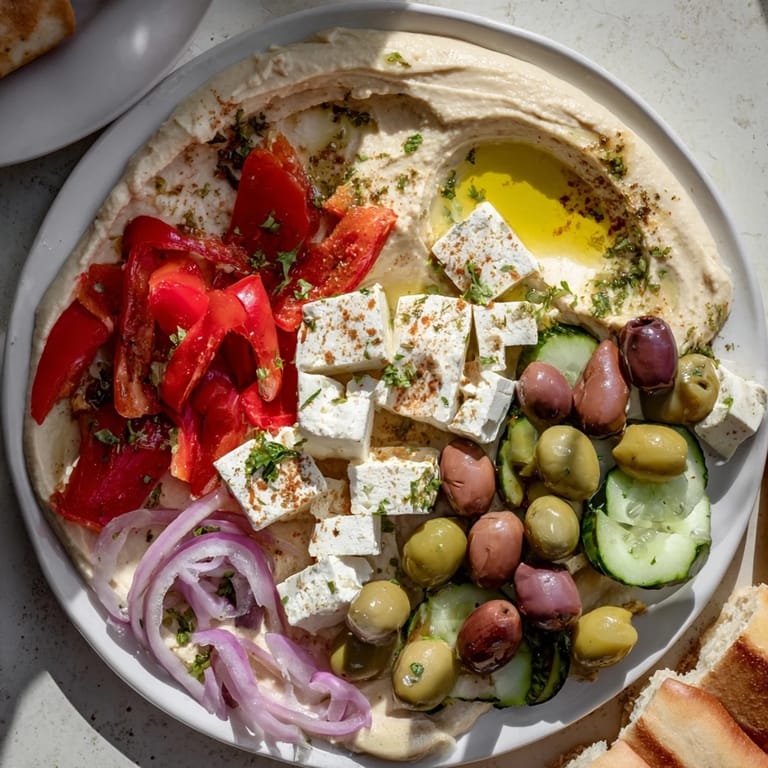
- Roasted red bell pepper, sliced: Jarred ones are perfectly fine and save you 15 minutes. The sweetness plays beautifully against salty cheeses and olives.
- Red onion, thinly sliced: A thin slice of raw red onion adds a sharp, fresh bite that elevates every combination.
- Pita breads, cut into triangles: Toast them lightly if you like them crisp, or leave them soft—both work. They're the vehicle that holds everything together.
- Fresh parsley and mint: These herbs brighten everything. Tear them roughly with your hands just before serving so they stay vibrant.
- Extra-virgin olive oil: This isn't just an ingredient—it's a finishing touch that ties the whole platter together. Use one you love to taste on its own.
- Sumac or zaatar, optional: A pinch adds a subtle tartness and visual intrigue. If you can't find them, fresh lemon zest works beautifully.
Tired of Takeout? 🥡
Get 10 meals you can make faster than delivery arrives. Seriously.
One email. No spam. Unsubscribe anytime.
Instructions
- Create your dip anchor:
- Start by placing three small bowls or creating three distinct mounds of hummus, baba ganoush, and tzatziki around a large platter. Think of these as your compass points—they'll guide how you arrange everything else. Leave plenty of space between them; a crowded platter feels cluttered, not abundant.
- Build the cheese moment:
- Cluster your feta cubes in one spot, maybe nestled between two dips. The contrast of white against the tan and purple of the dips is part of the visual magic.
- Scatter vegetables in organic clusters:
- This is where it gets fun. Rather than spreading things evenly, gather cherry tomatoes in one area, cucumbers in another, olives in their own little mound. The irregular, generous clusters look more inviting and make it easier for guests to grab what they want.
- Fan your bread around the edges:
- Pita triangles should feel accessible and ready to use. Leaning them against the platter's edge or creating a small pile nearby means they're always in reach.
- Scatter optional additions:
- If you're using artichoke hearts, dolmas, or pine nuts, drop them into small clusters throughout the platter. They create pleasant surprises as people explore.
- Crown it with oil and herbs:
- Now comes the part that transforms good into gorgeous. Drizzle your best olive oil generously over the dips, the cheese, and even some of the vegetables. Watch how the light catches the oil and makes everything shimmer. Scatter parsley and mint over the top, dust with sumac if using, and finish with a pinch of sea salt and fresh pepper.
- Present with intention:
- Step back and look at your platter. If it feels like a beautiful landscape of colors and textures, you've done it right. Serve immediately while everything is fresh and vibrant.
 Save
Save I'll never forget watching my grandmother's eyes light up when I served this platter at her birthday dinner. She'd spent her life in a small village outside Athens, and she'd been skeptical of my cooking. But when she saw this spread, she smiled and said, "You understand now. This is how we eat." That moment meant everything to me—it wasn't about perfection, it was about honoring a way of eating that's really about community and sharing.
The Art of the Platter
Building a beautiful mezza platter is less about following rules and more about understanding balance. You want color variety—the deep purple of Kalamata olives against the bright green of Castelvetrano, the white of feta against the coral of tomatoes. You want textural contrast too—creamy dips next to crisp vegetables, soft bread beside crunchy olives. The most important thing I've learned is to trust abundance. A full platter feels celebratory; a sparse one feels hesitant. Don't be shy with the quantities. People love knowing there are options, and anything left over makes great lunch the next day.
Making It Your Own
The beauty of a mezza platter is that it's a canvas for your preferences and what's in season. In spring, I add fresh radishes and spring peas. In summer, when tomatoes are at their peak, I use more of them. I've added roasted chickpeas for crunch, fresh cheese like burrata for creaminess, and even grilled halloumi when I want something more substantial. The dips don't have to be homemade—I'm a firm believer that using high-quality store-bought hummus and baba ganoush is perfectly smart. What matters is that you're bringing together ingredients you love and arranging them in a way that makes you happy.
Pairing and Serving Suggestions
This platter thrives alongside a crisp white wine—think Greek Assyrtiko or a bright Italian Pinot Grigio. A light rosé works wonderfully too, especially on warm evenings. Beyond wine, serve this with time—this isn't finger food to rush through. It's meant to be lingered over, picked at, discussed. The conversations that happen around a mezza platter always seem deeper somehow, more connected. I've found that setting out small plates, napkins, and forks encourages people to stay longer and enjoy more thoughtfully.
- A crusty bread on the side never hurts, even with pita included—some people love loading up an actual sandwich.
- Fresh lemon wedges squeezed over vegetables add brightness and cut through the richness beautifully.
- If you're making this in advance, keep the herb garnish and olive oil drizzle for the very last moment—that's when the platter truly comes alive.
 Save
Save Every time I set out a Mediterranean mezza platter, I'm reminded that the best meals aren't about complicated techniques or exotic ingredients—they're about gathering good things and sharing them generously. This platter has fed my family through seasons, brought strangers together, and made ordinary Fridays feel like small celebrations.
Recipe FAQs
- → What are common dips included in a Mediterranean mezza platter?
Classic dips often featured are hummus, baba ganoush, and tzatziki, providing creamy and flavorful elements.
- → Which cheeses pair well with Mediterranean appetizers?
Rustic cubes of feta cheese are traditional and complement fresh vegetables and dips well.
- → How can I make the platter gluten-free?
Use gluten-free flatbread instead of pita to accommodate gluten sensitivities.
- → How to enhance the platter for more variety?
Adding marinated artichoke hearts, dolmas, or toasted pine nuts can introduce extra flavor and texture.
- → What herbs are typically used to garnish the platter?
Fresh parsley and mint leaves are commonly scattered on top, adding aromatic freshness.