 Save
Save My neighbor Dina invited me into her kitchen on a humid afternoon, and within minutes I understood why her family gathered around the table every Friday night. She was making kibbeh, and the way she moved through each step—fingers wet, the meat mixture warming in her palms—made it look like meditation. I watched her seal those torpedo shapes with practiced ease, and I knew I had to learn. Now, whenever I make this Lebanese classic, I can almost hear her humming while the oil crackles.
The first time I made kibbeh for my own table, I fried half and baked the other half to compare, and my partner looked at me like I'd lost my mind. But that experiment taught me something: the baked version is lighter, while the fried version has this shatteringly crisp shell that's pure comfort. I served both with thick yogurt and a simple salad, and everyone went back for seconds, debating which method was superior. I've stopped choosing sides since then—both deserve a place on the table.
Ingredients
- Fine bulgur wheat: This is the backbone of your dough, providing structure and a slightly nutty texture. Rinse it well and let it soften completely, or your kibbeh will crack when you shape it.
- Lean ground beef or lamb: Lamb brings more authentic flavor and richness, but beef works beautifully if that's what you have. The lean part matters—too much fat makes the dough greasy and harder to handle.
- Ground allspice: Don't skip or reduce this; it's the soul of the dish, warming and slightly sweet.
- Cinnamon: Use just enough to whisper in the background, never to dominate.
- Pine nuts: They toast slightly as the filling cooks and add a buttery richness that elevates the whole dish.
- Olive oil: Use a good quality oil for brushing if you're baking, as it affects the final golden color and flavor.
Tired of Takeout? 🥡
Get 10 meals you can make faster than delivery arrives. Seriously.
One email. No spam. Unsubscribe anytime.
Instructions
- Prepare the bulgur:
- Rinse the bulgur under cold water until the water runs clear, then drain well. Let it sit undisturbed for 10 minutes—this softening step is non-negotiable, or you'll fight with the dough later.
- Mix the dough:
- Combine the softened bulgur, ground meat, chopped onion, and spices in a large bowl. Knead it like bread dough, adding cold water a tablespoon at a time until it becomes smooth and slightly sticky. This usually takes 3 to 5 minutes of real kneading.
- Make the filling:
- Heat olive oil in a skillet and soften the onions first—they should be almost translucent before you add the meat. Once the meat is cooked through and broken into tiny pieces, stir in the pine nuts and spices, letting them toast for a minute or two until fragrant.
- Cool the filling:
- Spread it on a plate or shallow bowl to cool for a few minutes—warm filling makes the dough sticky and hard to seal.
- Shape with wet hands:
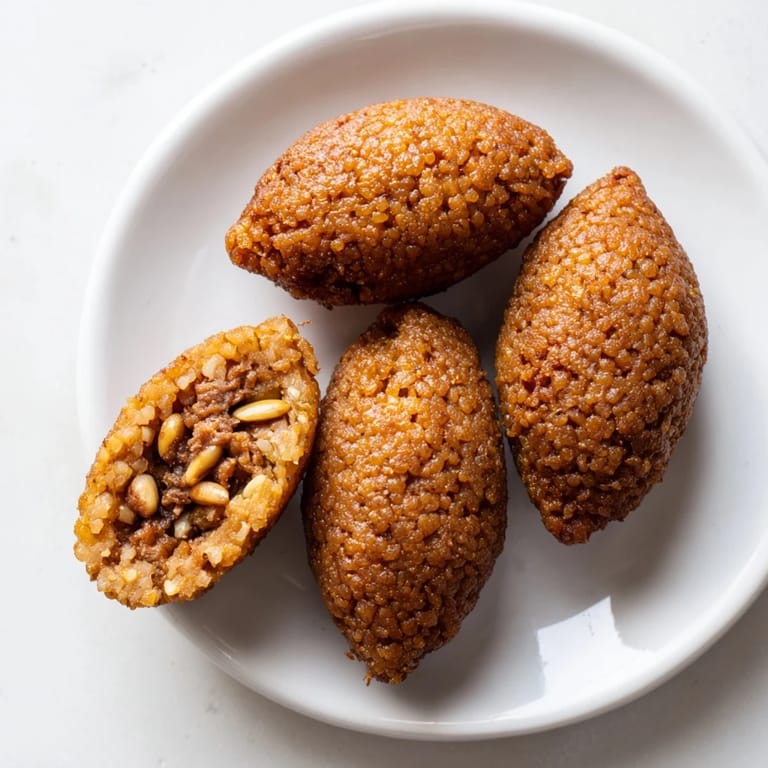
- Dip your hands in cold water and take a golf ball-sized piece of dough. Flatten it in your palm to create a thin shell, add a teaspoon or two of filling in the center, then pinch and seal the edges by gently shaping it into a torpedo or football. It should feel like a firm, sealed pocket.
- Fry for crispness:
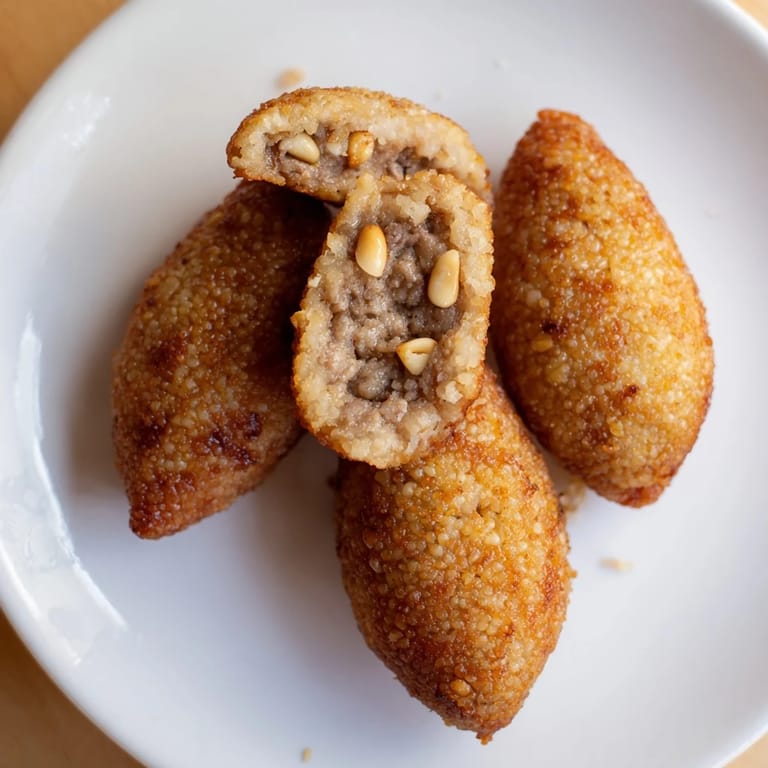
- Heat vegetable oil to 180°C (350°F)—a thermometer is your friend here. Fry the kibbeh in batches for 4 to 5 minutes until they're deep golden brown, then drain on paper towels immediately.
- Bake for lightness:
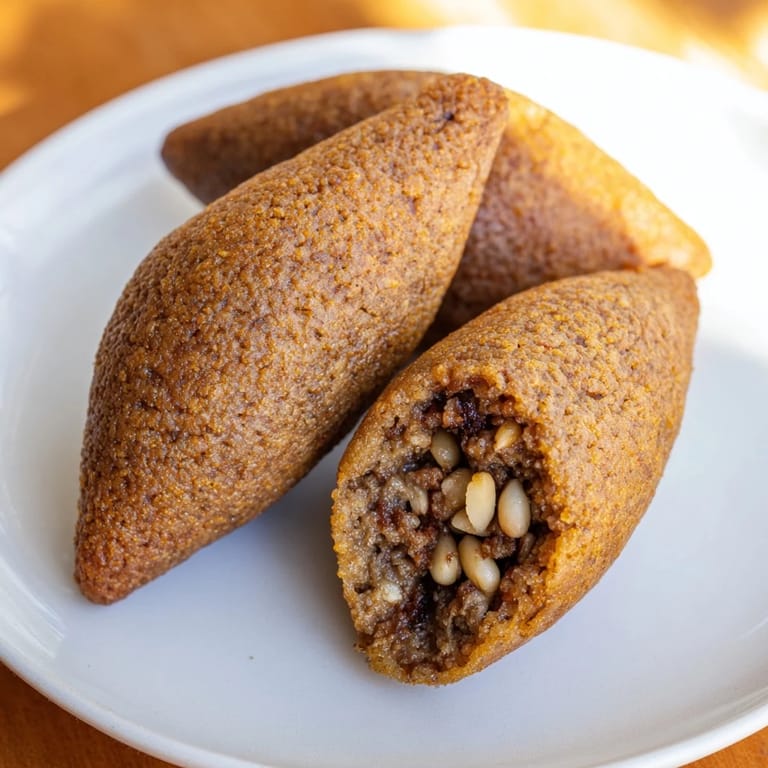
- If you prefer baking, brush the shaped kibbeh with olive oil, place them on parchment-lined baking sheets, and bake at 200°C (390°F) for 25 to 30 minutes, turning halfway through. They'll develop a beautiful golden crust without the oil.
 Save
Save One quiet morning, I made a double batch of kibbeh and froze them unbaked, thinking I was being clever. Two weeks later, I pulled them out and fried them straight from the freezer, and they turned out perfectly—maybe even better, because the exterior crisped up while the inside stayed moist. It was a happy accident that changed how I think about entertaining. Now I always keep a stash in the freezer, ready for unexpected guests or a moment when I need something that tastes like home.
Why Frying Versus Baking Matters
The cooking method changes the entire experience. Frying gives you that shattering, almost audible crunch when you bite into it, the kind that sends little golden shards cascading down your shirt. Baking is quieter and lighter, less theatrical but still deeply satisfying. Neither is wrong—they're just different moods. I've found that frying is perfect when you're cooking for a crowd who expects the traditional, celebratory version, while baking suits a weeknight when you want the flavor without the oil splatter.
Serving and Storage
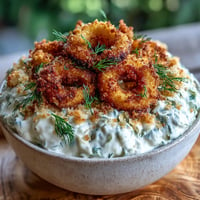
Kibbeh sings when served warm with thick yogurt—the cooling creaminess against the warm spice is magical. A simple salad of tomatoes, cucumbers, and fresh herbs on the side balances the richness beautifully. If you've made a big batch, you can refrigerate cooked kibbeh for up to three days and reheat them gently in a 160°C oven for about 10 minutes to restore the crispness.
- Tahini sauce mixed with lemon juice and garlic is another traditional companion that adds brightness and tang.
- Freeze unbaked kibbeh in a single layer on a baking sheet, then transfer to a freezer bag—they'll keep for up to three months and cook perfectly from frozen.
- If you're making a vegetarian version, cooked lentils mixed with sautéed mushrooms and the same spices make a surprisingly delicious and hearty filling.
The Small Moments That Matter
The beauty of making kibbeh by hand is in the repetition—each shape you form becomes a little more natural than the last. Your fingers learn the right amount of pressure, the right thickness for the shell, the moment when it's sealed properly. This dish teaches you to slow down and trust your hands.
 Save
Save This is the kind of recipe that rewards practice and patience. Make it once, and you'll want to make it again.
Recipe FAQs
- → What is kibbeh made of?
Kibbeh primarily consists of bulgur wheat mixed with finely ground meat and spices, shaped around a seasoned minced meat and pine nut filling.
- → How do I achieve the right texture for kibbeh dough?
Soak fine bulgur in cold water then knead it with ground meat and spices, adding cold water gradually to form a smooth, cohesive dough that holds shape well.
- → What cooking methods work best for kibbeh?
Kibbeh can be deep-fried in vegetable oil for a crisp exterior or baked brushed with olive oil for a golden, lighter finish, both delivering great flavor and texture.
- → Can pine nuts be substituted in the filling?
Yes, alternatives like chopped walnuts or almonds can be used to provide a similar richness and crunch in the filling.
- → What sides complement kibbeh well?
Yogurt or tahini sauce and fresh salads balance the rich flavors and offer a refreshing contrast alongside kibbeh.