 Save
Save My neighbor Maria handed me a jar of guava paste one afternoon, still warm from her kitchen, and I understood immediately why this stuff is legendary in Latin American households. The aroma alone—bright, almost floral, with this underlying sweetness—made me want to learn how to make it right then. What started as curiosity became an obsession when I realized this ruby-colored paste could transform a simple cheese board into something elegant, or sneak into a pastry and make everyone ask what that incredible flavor was.
I made this for the first time on a quiet Saturday morning, and my kitchen filled with this intoxicating guava smell that had my partner wandering in every ten minutes asking what I was doing. By hour two of stirring, my arm was tired but the paste had turned into this glossy, deep pink miracle that clung to the spoon like it had finally found its purpose. When we spread it on crackers with a chunk of Manchego that evening, the whole room went quiet in that way that only happens when food tastes exactly right.
Ingredients
- Ripe guavas (1 kg or 2.2 lbs): The foundation of everything—look for guavas that yield slightly to pressure and smell fragrant, not hard or pale. If they're underripe, they'll be too tart; overripe ones can become mushy and lose their character.
- Granulated sugar (450 g or 2 1/4 cups): This is your balance point, and you can adjust based on how sweet your guavas are and your taste preference. The sugar also acts as a preservative, which is why this paste keeps so well.
- Fresh lemon juice (2 tbsp): This isn't just flavor—the acid cuts through the sweetness and brightens the guava's natural tartness, making the final paste taste more alive.
- Water (120 ml or 1/2 cup): Just enough to help the guavas break down during the initial cooking without diluting their flavor.
Tired of Takeout? 🥡
Get 10 meals you can make faster than delivery arrives. Seriously.
One email. No spam. Unsubscribe anytime.
Instructions
- Prep your guavas:
- Wash them under cold water, trim the bumpy ends, and cut into quarters. You can remove the seeds now if you want a smoother paste, but it's optional—the food mill will do most of the work anyway.
- Cook them soft:
- Toss the quarters into a large saucepan with the water, bring it to a boil over medium heat, then cover and let it simmer for 15 to 20 minutes until the guavas collapse easily when pressed with a spoon. The kitchen will smell incredible at this point.
- Strain into puree:
- Once cooled slightly, press everything through a food mill or push it through a fine mesh strainer, discarding the seeds and skins. This is where patience pays off—don't rush it, or you'll end up with a lumpy paste.
- Calculate your sugar:
- Measure your guava puree and use roughly equal parts sugar (a little less if your guavas are very sweet). This ratio keeps everything balanced and gives you a paste that sets properly without being cloying.
- Combine and cook:
- Return the puree to the pot with the sugar and lemon juice, then set it over low heat. This is where the magic happens—you'll spend 40 to 50 minutes stirring almost constantly, watching it transform from loose and watery to thick and glossy.
- Watch for the pull-away moment:
- The paste is ready when it starts pulling away from the sides of the pot as you stir and holds its shape on a spoon like a thick jam. Don't rush this step or your paste will be runny; don't go too far or it'll be tough.
- Set it in a pan:
- Pour the hot paste into a parchment-lined loaf pan or baking dish, smooth the top with a spatula, and let it cool completely at room temperature—this usually takes 2 to 3 hours.
- Unmold and slice:
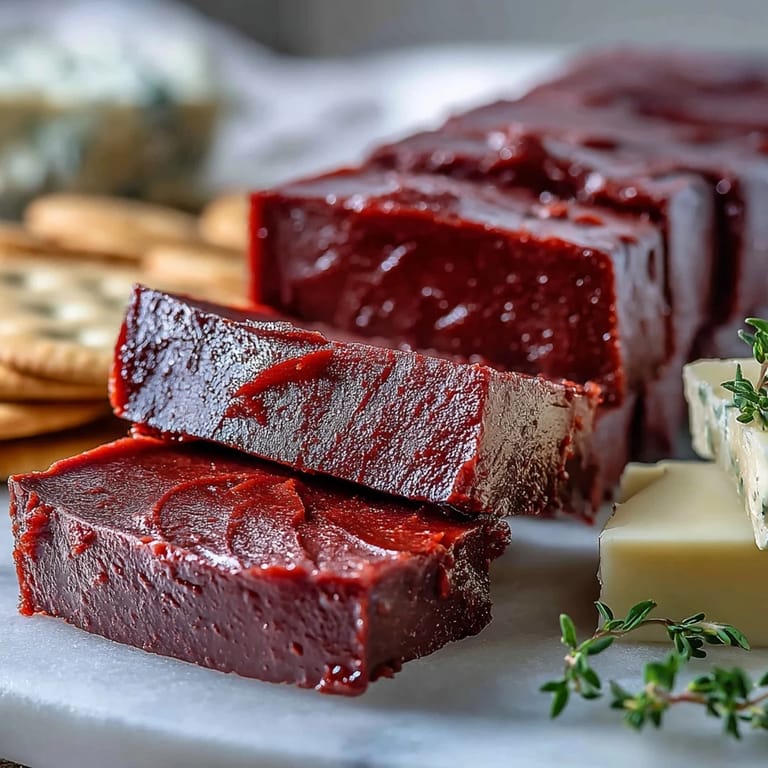
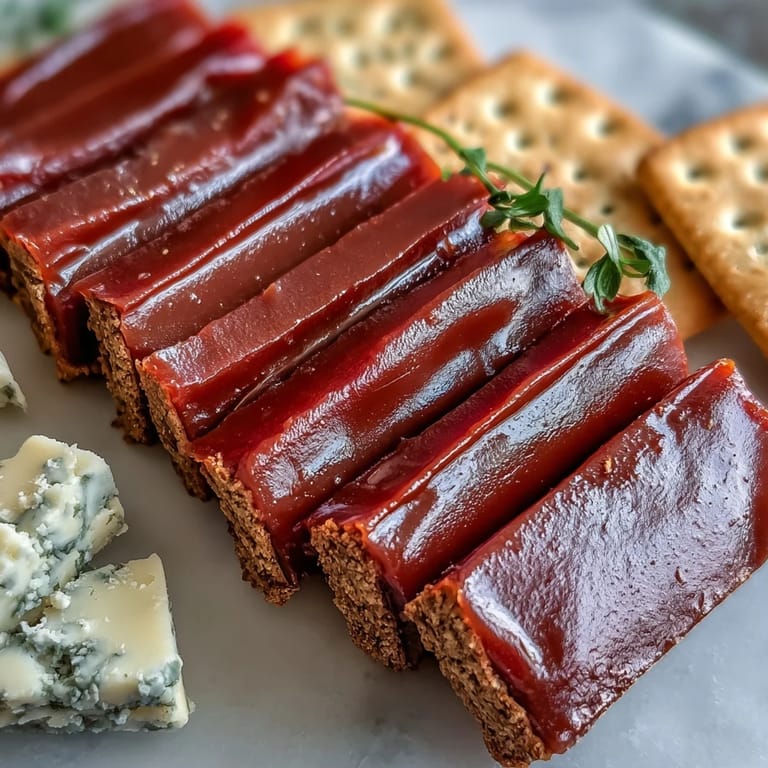
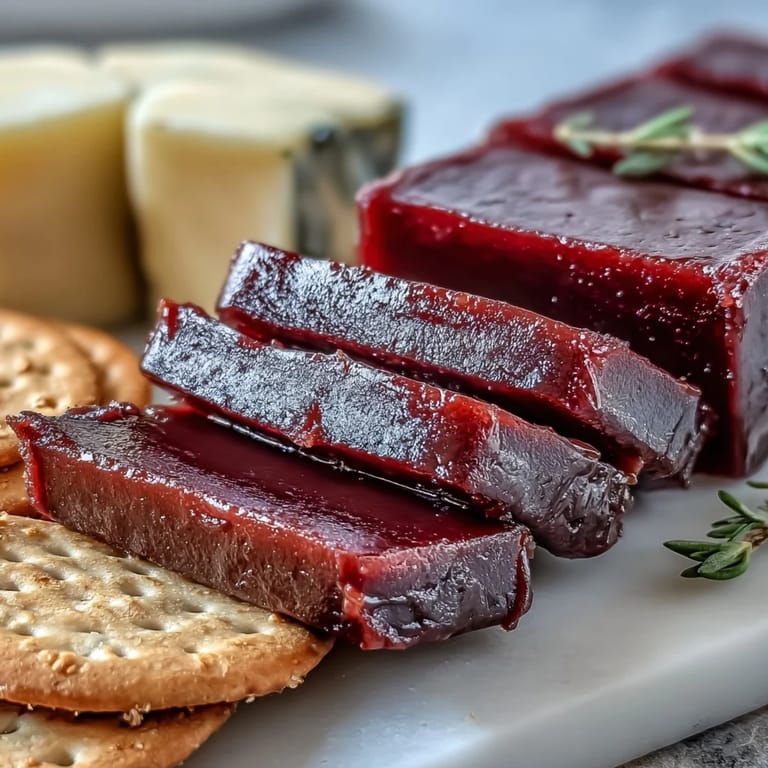
- Once firm, run a knife around the edges, flip it onto a cutting board, and slice into squares or rectangles. It should be dense and sliceable but still tender.
 Save
Save There's a moment, about thirty minutes into the stirring, when you catch the first real whiff of caramelized guava and realize you've crossed a threshold—this isn't just cooked fruit anymore, it's becoming something preserved and purposeful. That's when I knew this recipe was worth keeping in my life.
The Art of Stirring
The constant stirring isn't busywork—it's what prevents the bottom from burning and ensures the paste thickens evenly. I learned this the hard way by trying to speed things up, only to end up with a batch where the edges were thick as taffy while the center was still loose. Use a wooden spoon or a heatproof spatula, and keep a steady rhythm; your arm will thank you later when the results are perfect.
Pairing and Serving Ideas
This paste is remarkably versatile, which is part of its magic. With Manchego cheese and good crackers, it becomes an elegant appetizer; spread between pastry sheets and baked, it becomes a showstopper dessert; swirled into yogurt or cream cheese, it elevates a simple breakfast into something special. The slight tartness means it won't overwhelm delicate flavors, so it plays well with almost everything.
Storage and Keeping
Once sliced, store your guava paste in an airtight container in the refrigerator where it will keep for up to three months—though it rarely lasts that long in my house. The sugar acts as a natural preservative, so this is one of those rare homemade items that actually gets better as it sits, deepening in flavor and becoming even more dense and sliceable.
- Let it cool completely before storing to avoid condensation inside the container.
- If you live somewhere humid, add a sheet of parchment between the layers to prevent sticking.
- You can also wrap individual pieces in parchment and freeze them for up to six months.
 Save
Save Making guava paste taught me that some of the most elegant foods come from the simplest ingredients and the most patient hands. Once you've made it once, you'll understand why Maria shares jars of it like edible gold.
Recipe FAQs
- → How do I get a smooth texture in the guava paste?
Strain the cooked guava pulp through a fine mesh strainer or use a food mill to remove seeds and skins for a silky texture.
- → Can I adjust the sweetness of the paste?
Yes, adjust the amount of sugar according to the sweetness of your guavas to achieve the desired balance.
- → What is the best way to store the guava paste?
Keep it in an airtight container refrigerated, where it will last up to three months.
- → How long should I cook the guava mixture?
Simmer over low heat for 40-50 minutes, stirring constantly until thick and glossy.
- → What dishes pair well with this guava paste?
It complements cheese boards, crackers, pastries, and desserts beautifully.