 Save
Save My aunt kept a jar of guava cheese on her kitchen shelf, tucked behind the everyday jams, and I didn't understand its purpose until I tasted it—a spoonful of concentrated sunshine with an edge of tartness that made my mouth water. She'd made it every season when the guavas came in, transforming those fragrant pink fruits into something almost jewel-like, something that deserved its own moment. Now when I make it, I'm chasing that same magic, that quiet satisfaction of turning simple fruit into something people linger over.
I served this to a neighbor who'd never had guava cheese before, and she ate three pieces while standing at my kitchen counter, asking questions the whole time about whether she could make it without the butter or double the lime. By the end of our conversation, she was convinced she needed to visit a proper market to find the right guavas, and I realized that's when food becomes more than just sustenance—it becomes a reason to try something new.
Ingredients
- Ripe guava (800 g, about 4 cups), peeled, deseeded, and chopped: Choose guavas that yield slightly to pressure and smell intensely aromatic; pink or white varieties both work, though pink tends to be sweeter and more visually stunning in the finished candy.
- Water (1/2 cup): This helps the guavas break down evenly during the initial simmer and prevents the fruit from catching on the pan bottom.
- Granulated sugar (450 g or 2 1/4 cups): The sugar does the heavy lifting here, both preserving and concentrating the guava flavor; taste your fruit first and adjust down slightly if it's already very sweet.
- Fresh lime juice (2 tbsp): This brightens everything and prevents the candy from tasting one-dimensional or cloying; fresh juice matters more than bottled.
- Unsalted butter (2 tbsp, plus extra for greasing): Added at the very end, the butter gives the cheese a subtle gloss and silky finish that transforms the texture from merely thick to genuinely luxurious.
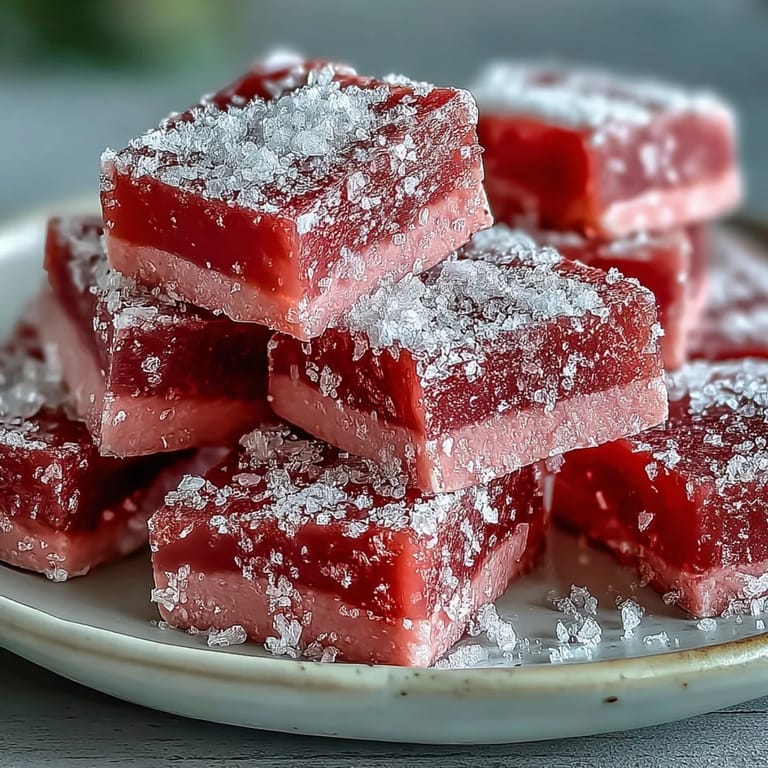
- Superfine sugar (1/4 cup, optional): If you coat the pieces, it adds a subtle crunch and visual appeal that looks intentional, like you've dressed them up for company.
Tired of Takeout? 🥡
Get 10 meals you can make faster than delivery arrives. Seriously.
One email. No spam. Unsubscribe anytime.
Instructions
- Prepare your pan:
- Butter an 8x8-inch square baking pan thoroughly, then line it with parchment paper, leaving an overhang on two sides so you can lift the finished candy out like a slab. This step takes thirty seconds and saves you from wrestling with a hot, sticky mass.
- Cook the guavas until tender:
- Place chopped guava and water in a saucepan and simmer over medium heat, stirring occasionally, until the fruit completely softens and breaks apart easily—about 15 minutes. The kitchen will smell like a tropical breeze, and you'll know it's done when there are no firm pieces left.
- Puree and strain:
- Transfer the cooked guava to a blender or food processor and blend until absolutely smooth, then push the puree through a fine mesh sieve to catch any remaining seeds or tough fibers. This step feels tedious but guarantees a silky texture in your finished candy, not a grainy one.
- Measure and return to heat:
- Measure out 2 cups of the puree (discard any excess or save it for another use) and return it to a heavy-bottomed saucepan over medium heat. The heavy pan matters because it distributes heat evenly and prevents scorching on the bottom.
- Add sugar and lime, then stir constantly:
- Add sugar and fresh lime juice to the puree, stirring constantly with a wooden spoon or heatproof spatula, scraping the sides and bottom regularly. The mixture will go from loose puree to jammy, then gradually thicken and darken as the moisture evaporates and the natural sugars concentrate.
- Cook until it pulls away from the sides:
- Keep stirring as the mixture thickens, watching for the moment when it visibly pulls away from the pan sides and holds its shape when you drag a spoon through it—this usually takes 30 to 40 minutes total. When you draw your spoon across the bottom, you should see the pan bottom for a moment before the mixture flows back to fill the gap.
- Add butter and cook until glossy:
- Stir in the butter and continue cooking for another minute or two, stirring until the mixture is glossy, thick, and utterly cohesive. The butter will make the color deepen slightly and add a richness that's subtle but unmissable.
- Transfer to the pan immediately:
- Working quickly while the mixture is still hot, pour it into your prepared pan and smooth the top with a spatula, pressing gently to fill any air pockets. Speed matters here because the cheese begins to set as it cools, so you want it in the pan before it becomes unwieldy.
- Cool completely:
- Let the pan sit at room temperature for at least 1 hour (longer if your kitchen is warm) until the cheese is completely firm and cool to the touch. Patience here ensures clean cuts later.
- Cut into pieces:
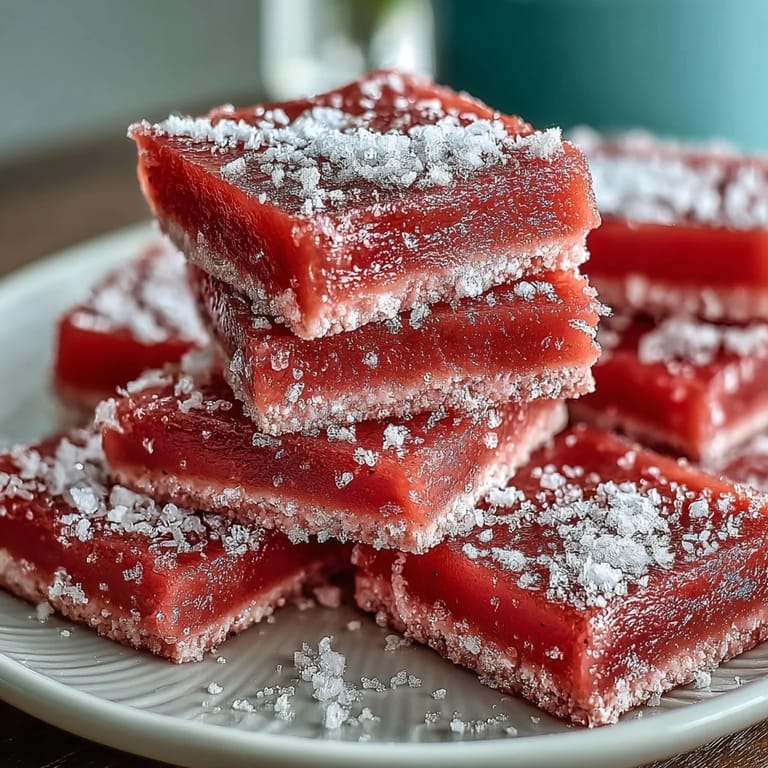
- Lift the slab out using the parchment overhang, then cut into 1-inch squares or diamonds using a sharp knife that you've lightly greased or dipped in warm water to prevent sticking. A hot knife produces cleaner cuts than a cold one.
- Optional coating:
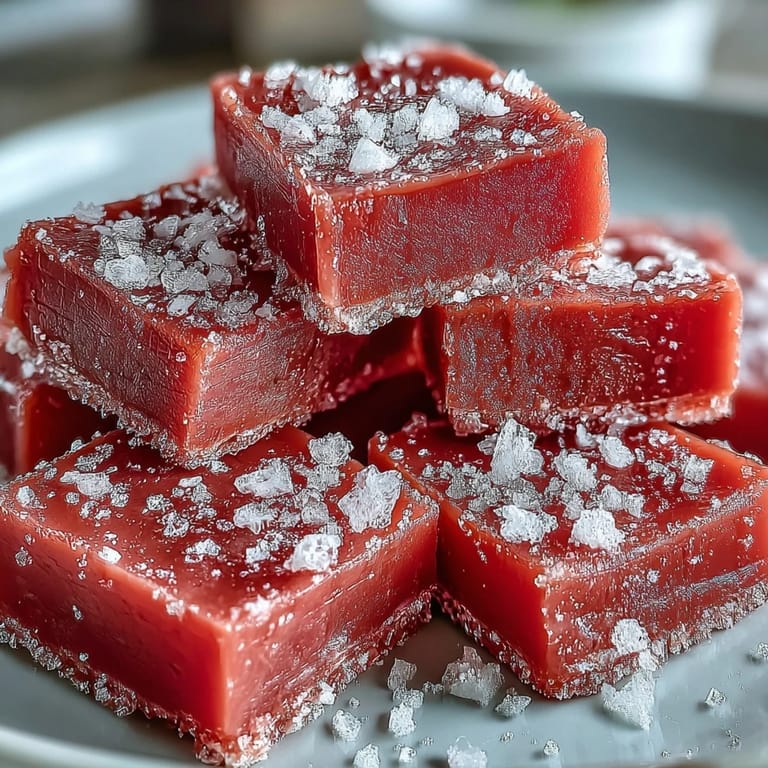
- If desired, roll each piece in superfine sugar to coat lightly, brushing off any excess. This adds a subtle crunch and makes them look like they came from a proper confectioner.
 Save
Save There's a moment toward the end of cooking when the guava cheese transforms from something that looks like jam into something that moves like taffy, and that's when you know you've done it right. It's not a moment you can rush or predict exactly, which is partly why making it feels like a small achievement.
Choosing Your Guavas
The success of this candy hinges entirely on starting with ripe, fragrant guavas, so hunt them down at a market where you can actually smell them before buying. Pink guavas tend to be sweeter and more forgiving, while white varieties are tangier and require a lighter hand with sugar; either works beautifully, but knowing which you have lets you adjust the recipe to your preference rather than fighting against the fruit's natural character.
The Science of Setting
Guava cheese sets through a combination of natural pectins in the fruit, heat, sugar, and time—it's not gelatin or cornstarch doing the work, just fruit and patience. If your first batch doesn't set quite firm enough, it's usually because either the guavas were too wet, the cooking time was too short, or the room was very humid; jotting down notes helps you dial it in next time, and honestly, even a slightly softer batch tastes delicious on soft cheese or stirred into yogurt.
Storage, Serving, and Why This Keeps
Kept in an airtight container at room temperature, guava cheese stays fresh and fragrant for up to two weeks, though it rarely lasts that long because people keep finding reasons to eat a piece. Serve it with tea, slice it thin alongside soft cheeses like mascarpone or queso fresco, or simply eat it with a tiny spoon the way my aunt does.
- Cut pieces can be individually wrapped in parchment if you're gifting them, which somehow makes them feel even more special.
- A thin slice served alongside sharp cheese transforms an ordinary cheese board into something that tastes intentional and thought-through.
- If you're serving at a dessert platter, arrange the pieces on a small plate with a small spoon so guests know it's meant to be eaten slowly, in small bites.
 Save
Save Making guava cheese connects you to something old and deliberately slow, a practice that exists in many tropical kitchens and deserves to exist in yours. Once you've made it, you'll understand why my aunt kept that jar on her shelf like treasure.
Recipe FAQs
- → What type of guava works best?
Ripe pink or white guava, peeled and deseeded, provides the best natural sweetness and color.
- → Can I adjust the sweetness level?
Yes, sugar quantities can be modified depending on the guava's natural sweetness and personal preference.
- → How do I achieve the right texture?
Cooking the mixture until it pulls away from the pan and becomes glossy ensures a firm yet tender setting.
- → Is butter necessary in the mixture?
Butter enriches the texture and flavor but can be substituted with vegan alternatives if needed.
- → How should the finished squares be stored?
Store in an airtight container at room temperature for up to two weeks to maintain freshness.
- → Can the pieces be coated?
Yes, rolling the set squares in superfine sugar adds a pleasant, delicate coating.