 Save
Save I'll never forget the first time I stepped into a small bistro near the Panthéon in Paris, where the owner casually assembled a cheese board right in front of me like it was the most natural thing in the world. She moved with such unhurried grace, fanning slices of Comté and Brie across a white plate as if painting a canvas. That moment taught me that elegance isn't about complexity—it's about intention, quality ingredients, and the confidence to let them speak for themselves. Years later, I recreate that experience at home whenever I want to remind myself that sometimes the most sophisticated meals are the simplest ones.
I served this platter to friends on a Saturday afternoon, and I watched something magical happen—everyone slowed down. They stopped rushing through conversation and actually tasted things, pairing cheese with bread with such mindfulness. One friend closed her eyes while eating the Brie with honey. That's when I realized this wasn't just food; it was permission to pause and appreciate.
Ingredients
- 2 long fresh French baguettes: The foundation of everything. Look for a baguette with a crispy crust and an airy crumb—you want those diagonal slices to be sturdy enough to hold toppings but tender inside. Slice them just before serving so they stay fresh and don't dry out.
- 150 g Brie cheese, sliced and fanned: This is your creamy anchor. The softness of good Brie melts slightly on warm bread, which is pure magic. Keep it cool until the last moment and slice with a warm knife for clean, beautiful pieces.
- 150 g Comté cheese, sliced and fanned: The nutty, complex contrast to the Brie's delicate creaminess. Comté is sturdy enough to slice thin without crumbling, and it ages beautifully on a board. It's the backbone of French bistro elegance.
- 100 g Chèvre (goat cheese), sliced: Tangy and bright, goat cheese adds personality and texture variation. It's slightly crumbly, so handle it gently and present it proudly—those imperfect edges are part of its charm.
- 12 fresh figs or grapes: These provide sweetness, color, and a moment of textural surprise. Fresh figs are incomparably luxurious; their deep purple against pale cheese is visual poetry.
- 50 g unsalted butter, softened: Good butter is a condiment in France, not an afterthought. Let it soften to room temperature so it spreads like silk over warm bread. This is where quality truly matters.
- 2 tbsp high-quality honey: Raw or unpasteurized honey if you can find it—it has more character. Drizzle it over warm bread and soft cheese and let it do the talking.
- 1 tbsp whole grain Dijon mustard: Just enough tang and texture to wake up the palate. The little seeds add intrigue between bites of rich cheese.
- Flaky sea salt and freshly ground black pepper: These aren't just seasonings—they're the punctuation marks that make every bite feel intentional. Use them sparingly; you're enhancing, not masking.
Tired of Takeout? 🥡
Get 10 meals you can make faster than delivery arrives. Seriously.
One email. No spam. Unsubscribe anytime.
Instructions
- Slice your baguettes with intention:
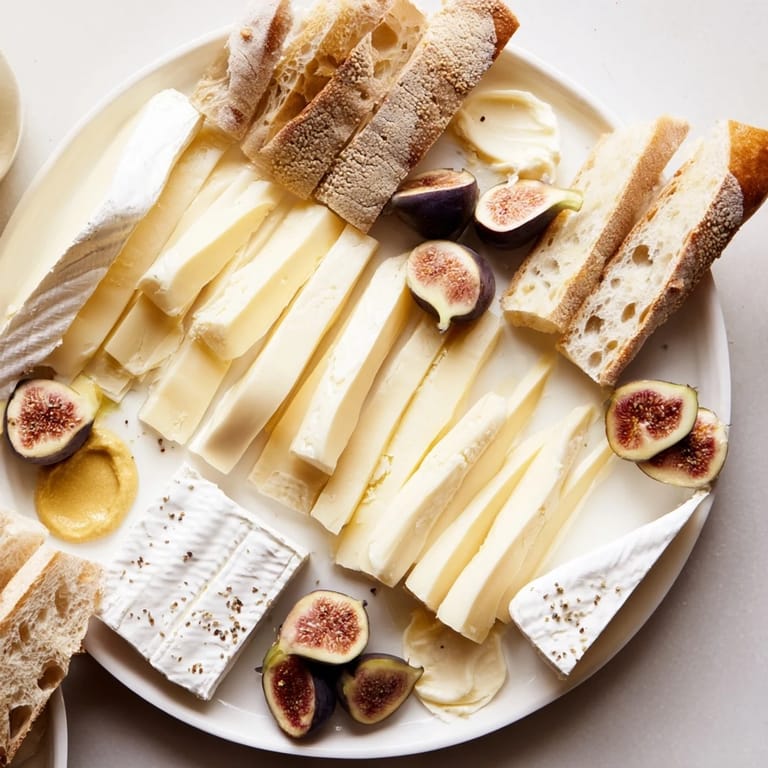
- Using a sharp bread knife, cut the baguettes on a gentle diagonal into slices about a quarter-inch thick. Work slowly and let the knife do the work—you want clean cuts, not crushed bread. Arrange them in a casual line along the edge of your platter, leaving breathing room between each slice. This negative space is what makes it look elegant rather than crowded.
- Fan the cheese like you're showing it off:
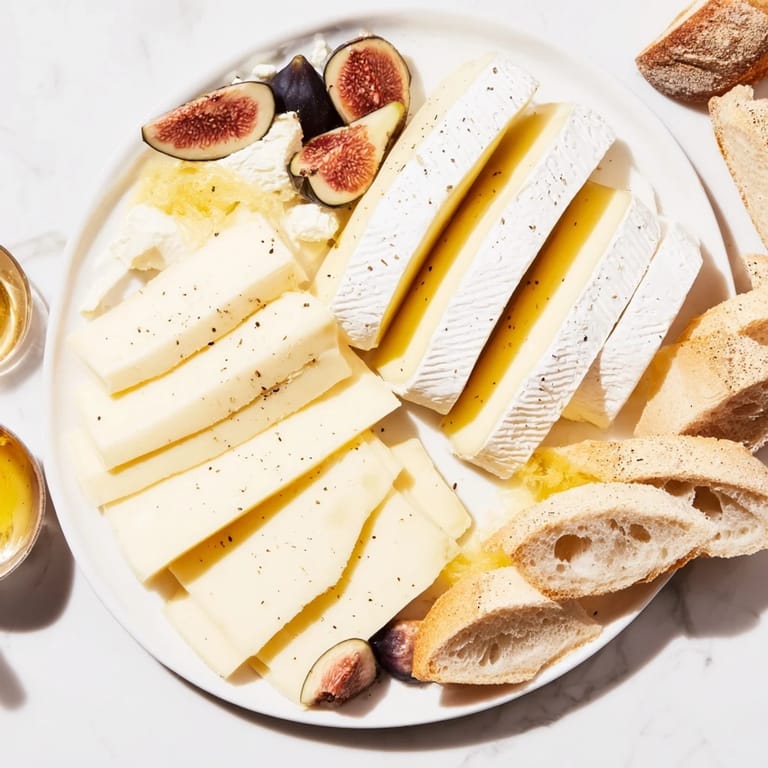
- This is where you get to play artist. Slice the Brie and Comté into thin pieces and overlap them in gentle rows, keeping each cheese separate so the colors and textures are distinct. The fanning motion—overlapping slices in a slight curve—is classical for a reason. It catches light, it looks intentional, and it's easier for guests to grab individual pieces.
- Place the fruit with restraint:
- Cluster your figs or grapes in small groups rather than scattering them everywhere. Maybe 3 or 4 pieces together, positioned to balance the visual weight of the cheese. Think about the empty space on your platter as part of the design, not something to fill.
- Arrange your condiments like finishing touches:
- Put small dollops of softened butter, honey, and mustard in tiny ramekins, or place them directly on the platter in modest, artful amounts. These aren't meant to cover the whole thing—they're accents. A tiny wooden spoon or knife nearby signals that guests should spread, drizzle, and customize their bites.
- Season and serve:
- Give the cheese a light, deliberate sprinkle of flaky sea salt and a few grinds of black pepper. Don't go overboard—you're enhancing, not drowning. Serve immediately while the bread is still at its best and everything is cool and composed.
 Save
Save I realized something years into cooking: a French cheese board isn't about showing off how much you can fit on a plate. It's about creating a moment where time slows down and people actually taste their food. It's about saying, without words, that they're worth the good cheese.
The Art of Arrangement
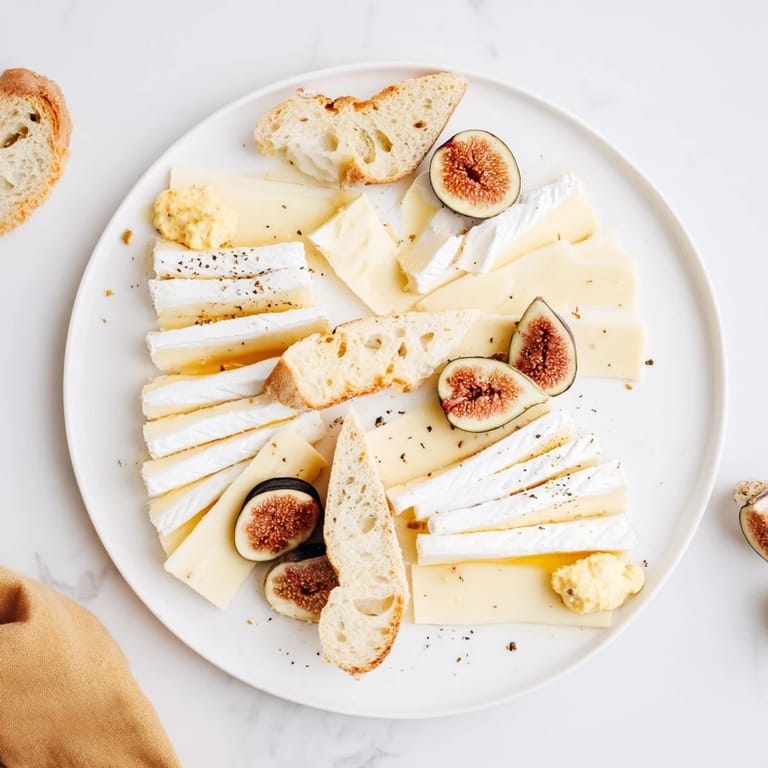
French bistro culture teaches us that how you present food is part of the experience. A chaotic pile of cheese feels casual; a carefully arranged board says you've thought about your guests. Negative space—the empty areas on your platter—is just as important as what you put on it. Start with your bread around the perimeter, which naturally frames everything else. Then place your cheeses in their little sections, almost like dividing a canvas. Leave pockets of white plate visible. This restraint is what separates an elegant board from a crowded one.
Building Your Bite
Here's the joy of this dish: everyone gets to be a creator. A slice of warm bread, a piece of Brie, a tiny dab of honey, a fig—it's about the combination, the balance of richness and sweetness, the temperature contrast. Encourage your guests to experiment. Some will prefer the goat cheese with mustard. Others will layer all three cheeses together. This is how a platter becomes a conversation starter, not just something to eat.
Wine and the Bistro Experience
In Paris, I learned that cheese and wine pairings aren't complicated rules—they're invitations to taste more carefully. A crisp Sancerre cuts through the richness of Brie like a knife through silk. Champagne adds celebration. Even a chilled white Burgundy becomes something special alongside these particular cheeses. Pour the wine just before serving, keep it cold, and watch how the whole meal transforms into something more than just appetizers.
- Sancerre pairs beautifully with the goat cheese's tanginess and the Brie's creaminess
- Champagne or sparkling wine makes everything feel festive without being fussy
- If you prefer non-alcoholic, a crisp sparkling water with lemon is surprisingly sophisticated
 Save
Save This board has taught me that refinement doesn't require complexity. Sometimes the most elegant thing you can do is gather good ingredients, arrange them with care, and let people enjoy them together.
Recipe FAQs
- → What types of cheese work best for this elegant platter?
Soft and semi-hard cheeses like Brie, Comté, and chèvre provide creamy, nutty, and tangy flavor contrasts ideal for balanced taste and texture.
- → How should the baguette be prepared for optimal presentation?
Slice the baguette diagonally into thin, even pieces to create a visually appealing edge on the platter with plenty of negative space.
- → What accompaniments complement the cheese and bread selection?
Fresh figs or grapes add sweetness and freshness, while softened butter, honey, and whole grain mustard offer contrasting creamy and tangy elements.
- → How can I add more elegance to the plating?
Garnishing with fresh herbs like thyme or rosemary and arranging dollops of accompaniments artfully enhances the visual appeal.
- → Are there suitable alternatives to figs or grapes?
Sliced pears or apples can substitute figs to maintain a fresh, fruity balance alongside the cheeses and bread.