 Save
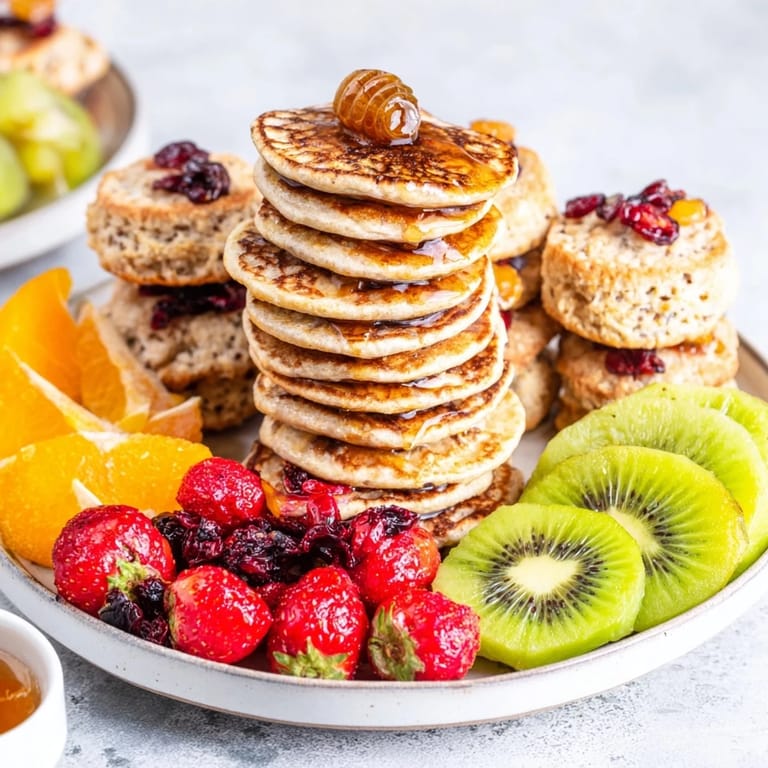
Save I still remember the first time I assembled a brunch board for my friends—it was a lazy Saturday morning when everyone showed up hungry and in no rush to leave. I had these golden mini pancakes cooling on the counter, fresh scones just pulled from the oven, and a rainbow of fruit I'd spent the morning prepping. The moment I arranged it all on my grandmother's old wooden board with that pitcher of syrup in the center, something clicked. This wasn't just breakfast anymore; it was an invitation to slow down, to linger over conversation, to share something made with care. That board became the heart of the table.
There's something magical about watching people's faces light up when they see a beautifully arranged brunch board. My sister flew in from out of town one spring, and instead of taking her to a fancy brunch spot, I made this for her in my kitchen. She photographed every angle before we even sat down, and then we spent three hours just talking and eating, barely making a dent in the spread. That's when I knew this recipe was special—it wasn't about perfection, it was about creating a moment worth savoring.
Ingredients
- All-purpose flour (2 1/2 cups total): The foundation of both pancakes and scones. I learned to measure by spooning and leveling rather than scooping straight from the bag—it makes a real difference in texture. For the scones especially, you want just enough structure to hold everything together without making them tough.
- Granulated sugar (4 tbsp total): A whisper of sweetness that doesn't overwhelm. It keeps both the pancakes and scones tender and gives that golden crust we're after.
- Baking powder and baking soda: These create the lift and fluff. I always double-check the expiration dates—stale leavening agents are the silent sabotage of many baking projects.
- Buttermilk (3/4 cup): This acidic ingredient reacts with the baking soda to create those wonderfully tender pancakes. If you don't have buttermilk, a splash of lemon juice stirred into regular milk works in a pinch.
- Cold unsalted butter (1/4 cup for scones): Keep it genuinely cold—I even chill mine in the freezer for a few minutes. Cold butter creates those delicate, flaky layers everyone dreams about.
- Heavy cream (1/2 cup): This is the secret to scones that are rich but not dense. The fat content creates that perfect crumb structure.
- Eggs (2 large): They bind everything together and add richness. Bring them to room temperature for more even mixing.
- Fresh fruit (5 cups total): Choose what's in season and looks vibrant at your market. Strawberries, kiwis, blueberries, grapes, and oranges create a gorgeous color palette, but ripe peaches, raspberries, or pineapple work beautifully too.
- Pure maple syrup (1/2 cup in a pitcher): Real maple syrup makes all the difference. Pour it into a small pitcher—it's more elegant and easier for guests to serve themselves.
Tired of Takeout? 🥡
Get 10 meals you can make faster than delivery arrives. Seriously.
One email. No spam. Unsubscribe anytime.
Instructions
- Whisk together the pancake base:
- In a mixing bowl, combine your flour, sugar, baking powder, baking soda, and salt. This step is important—take a moment to really break up any lumps. In another bowl, whisk together the buttermilk, egg, melted butter, and vanilla until it's smooth and unified. Pour the wet ingredients into the dry and stir just until combined. Here's the key moment: stop while you still see some small flour streaks. Overmixing develops gluten, which makes pancakes tough. A slightly lumpy batter is your friend.
- Cook the pancakes until they're golden and puffy:
- Heat your nonstick skillet over medium heat and give it a light coating of butter or oil. When a droplet of water sizzles immediately, you're ready. Drop the batter by heaping tablespoonfuls—these should be small and delicate, not diner-sized. Watch them patiently. When the edges look set and bubbles form on top, flip gently and cook the other side until it's deep golden, about 1 to 2 minutes per side. Transfer them to a cooling rack. They'll set as they cool, becoming perfectly tender.
- Prepare the scone dough:
- Preheat your oven to 400°F and line a baking sheet with parchment paper. In a bowl, whisk together flour, sugar, baking powder, and salt. Cut your cold butter into cubes and scatter them over the dry mixture. Now here's where patience matters: use a pastry cutter or your fingertips to work the butter in until the mixture resembles coarse breadcrumbs. You want distinct butter pockets, not a fine powder. In a small bowl, whisk together the heavy cream, egg, and vanilla. Pour this into the dry mixture and stir gently until just combined. If using dried cranberries or chocolate chips, fold them in now.
- Shape and bake the scones:
- Turn the dough onto a lightly floured surface and gently pat it into a 3/4-inch thickness. You're being gentle here—the more you work the dough, the tougher they become. Use a small round cutter or knife to cut into 1-inch rounds or triangles, whichever feels right. Arrange them on the baking sheet, and bake for 10 to 12 minutes until they're golden on top. When they come out of the oven, they should still feel slightly warm and tender, not dense. Let them cool on a rack while you finish everything else.
- Prepare the fruit with care:
- Wash and pat dry all your fruit—moisture is the enemy of a beautiful board. Slice strawberries and kiwis, peel oranges and segment them, halve the grapes. Pat everything dry with paper towels. This step takes time, but it's meditative, and dry fruit looks so much more inviting on the board.
- Assemble your masterpiece:
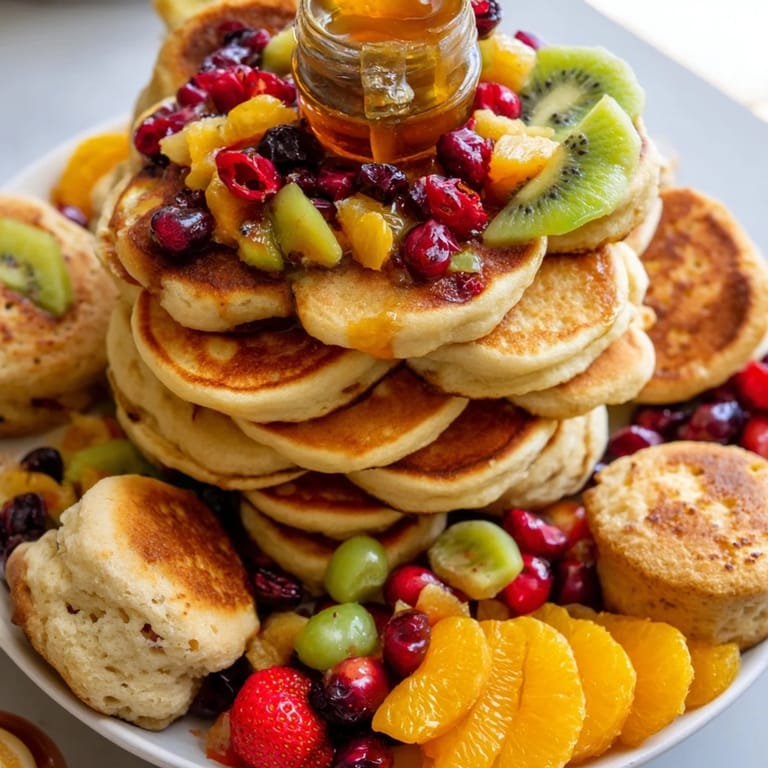
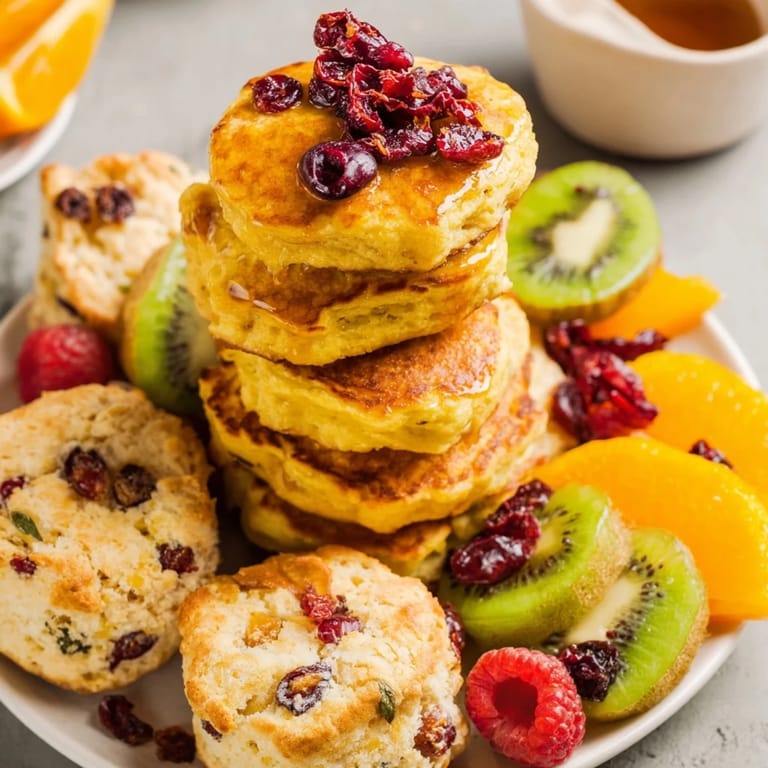
- Find your largest, most beautiful board or platter. Start by arranging the pancakes and scones in gentle, curving lines—think of it like painting with food. Fill the empty spaces with clusters of fruit, grouping colors together for visual drama. Place your small pitcher of maple syrup right in the center. Tuck a few fresh mint leaves around the edges if you have them. Step back and admire your work. You've just created something beautiful and delicious.
 Save
Save One Sunday, my neighbor brought her daughter over, and I made this brunch board. The little girl, who usually picks at her food, was completely enchanted. She wanted to try everything—a tiny pancake, then a piece of kiwi, then a scone. Her mother later told me that was the first time her daughter had voluntarily eaten fruit with enthusiasm. Food becomes memory when it's arranged with intention and served with joy.
Timing and Prep Strategy
The beauty of this recipe is that you can break it into stages without stress. Pancakes can be made 2 hours ahead and reheated gently in a 300°F oven for 5 minutes. Scones are actually better at room temperature and stay fresh for several hours under a loose cloth. The fruit is best prepped an hour or two before serving—any longer and it starts to weep. I usually do the fruit prep while the baked items cool, then everything comes together at the last moment. This approach means you can actually enjoy your guests instead of being trapped in the kitchen.
Making It Your Own
This recipe is a starting point, not a rule. Swap seasonal fruit freely—summer calls for berries and stone fruit, while fall welcomes pears, figs, and pomegranate. Add a spoonful of jam inside the scones if you want richness. Dust the pancakes with cinnamon sugar. Offer honey alongside the maple syrup. Include a small bowl of homemade whipped cream or crème fraîche. Your brunch board should reflect what excites you and what you have on hand. I've made this recipe with everything from fresh raspberries and pistachios to roasted apple slices and candied pecans. Each version tells its own story.
Serving Suggestions and Pairings
This board shines in the context of leisure. Serve it with freshly brewed coffee, mimosas made with sparkling wine and fresh orange juice, or a simple herbal tea. Guests should have small plates, cloth napkins, and the gift of time. I've learned that the board itself is entertainment—the arranging, the selecting, the sharing makes people slow down. No one rushes through a meal when it looks this beautiful. Add a soft playlist in the background, let the morning light do its work, and watch how the moment becomes as nourishing as the food itself.
- Offer small plates so guests can create their own perfect bite combinations.
- Keep extra napkins close—syrup and fresh fruit can be delightfully messy.
- Pour coffee and juice as the meal begins, then let guests refill their own cups as they linger.
 Save
Save Every time I arrange a brunch board, I'm reminded that cooking is really just about creating moments for the people you care about. This recipe is your permission to slow down, to make something beautiful with your hands, and to watch it bring people together. That's the real magic.
Recipe FAQs
- → How can I keep mini pancakes fluffy?
Use buttermilk and avoid overmixing the batter to maintain a light texture. Cook over medium heat until golden on each side.
- → What fruits work best for this brunch board?
Fresh, colorful fruits like strawberries, kiwi, blueberries, grapes, and orange segments add brightness and variety to the platter.
- → Can I substitute gluten-free flour in the scones?
Yes, use a 1:1 gluten-free flour blend to achieve similar texture and flavor in the scones.
- → How should I store leftover scones and pancakes?
Keep them in an airtight container at room temperature for up to two days, or freeze for longer storage.
- → What are some topping options aside from maple syrup?
Consider nut butters, chocolate sauce, yogurt, or whipped cream to complement the flavors on the board.