 Save
Save There's something quietly powerful about arranging food with intention. I was sitting in a gallery café one afternoon, watching a chef meticulously place elements on a long slate board—nothing touching, everything perfectly mirrored—and it struck me that this kind of careful balance could translate to the home table. The Zen Balance became my way of bringing that mindfulness into my own kitchen, a reminder that sometimes the most nourishing meals are the ones we slow down to truly see.
I made this for a friend who was overwhelmed by a chaotic week, and watching her face shift as she approached the board—from distracted to genuinely present—told me everything. She sat there for ten minutes just looking before she ate, and afterward she said it was the first time she'd really tasted her food in days. That's when I knew this wasn't just pretty; it was purposeful.
Ingredients
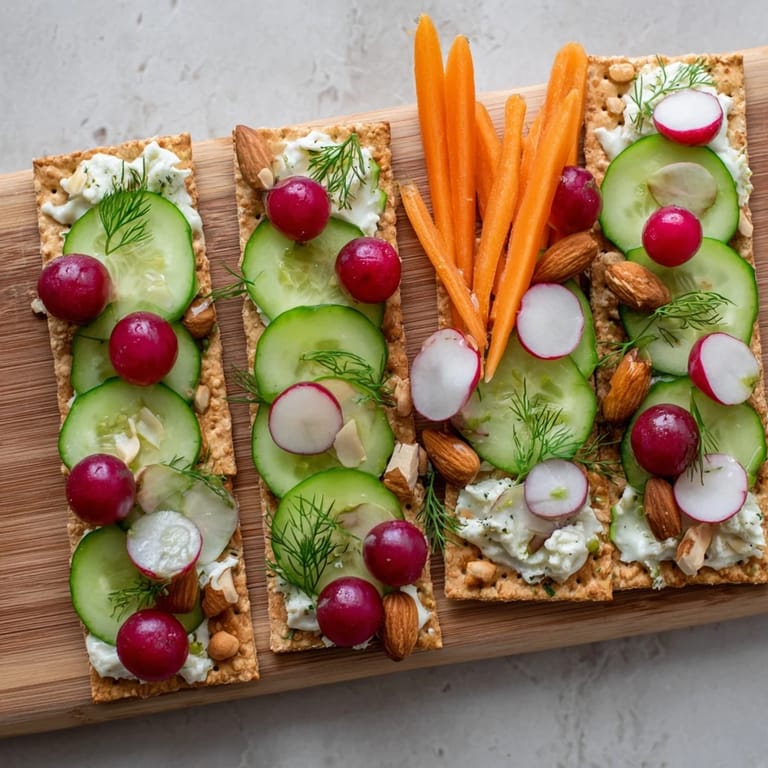
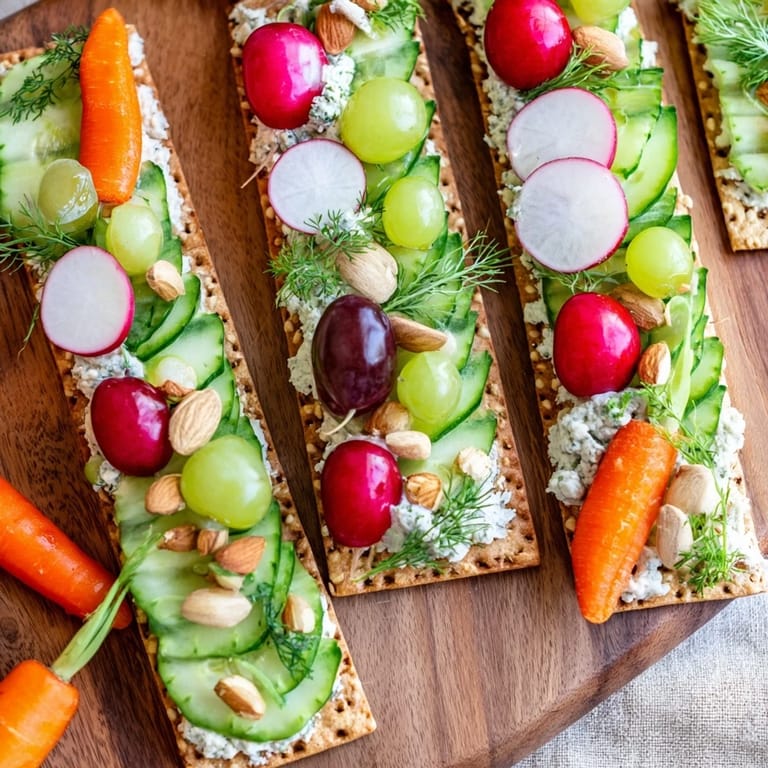
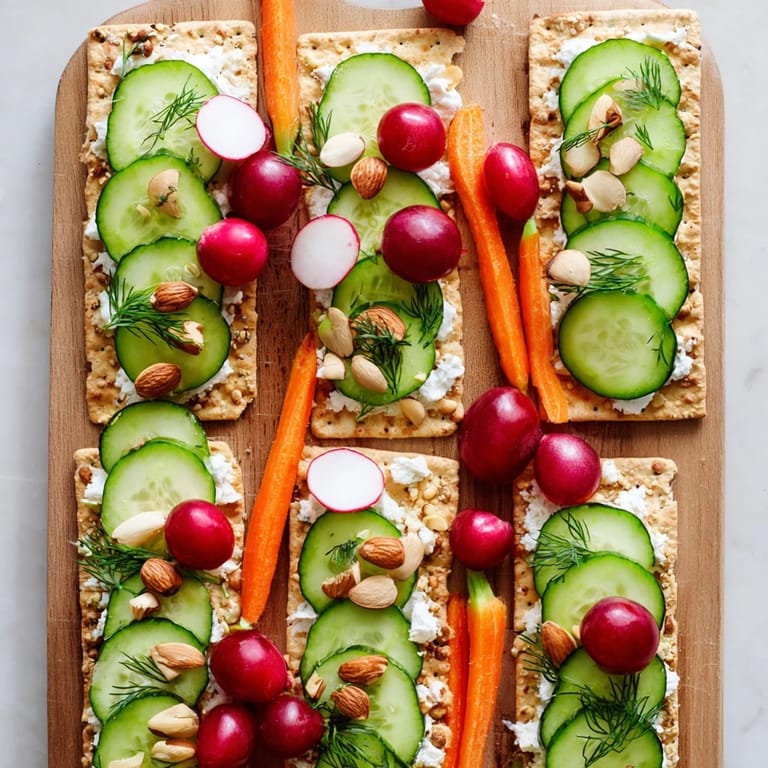
- Fresh cucumber: 8 slices, cool and snappy, they anchor the visual with their pale geometry.
- Baby carrots: 8 whole, their natural sweetness and bright orange create visual warmth.
- Radishes, halved: 8 pieces, peppery and crisp, they add textural surprise and a pop of pink.
- Goat cheese, shaped into small rounds: 60 g, creamy and tangy, shaped into quiet little domes that feel intentional.
- Gluten-free crackers: 8 pieces, they ground the arrangement and provide a gentle crunch.
- Roasted almonds: 30 g, nutty and substantial, they balance the lighter vegetables with depth.
- Seedless red grapes: 8 pieces, jewel-like and sweet, they catch light and draw the eye.
- Fresh herbs for garnish: Chives or dill, they add aroma and soften the edges of the composition.
Tired of Takeout? 🥡
Get 10 meals you can make faster than delivery arrives. Seriously.
One email. No spam. Unsubscribe anytime.
Instructions
- Prepare your canvas:
- Find a long board—wood feels warm, slate feels contemplative—and set it on a stable, clean surface where it can be admired. The length matters; you want clear visual space between the two sides.
- Build the first end:
- Start at one end of the board and create a neat pile: lay down cucumber slices as a base, arrange crackers beside them, then add carrots, radishes halves, grapes, a portion of the goat cheese rounds, and half the almonds. Think of it as building a small edible landscape rather than scattering things randomly.
- Mirror on the opposite end:
- Move to the far end and recreate the exact arrangement using your remaining ingredients—this symmetry is the heart of the piece. Take your time to match angles and spacing; the visual balance is what makes this dish sing.
- Add the finishing gesture:
- Tuck a few sprigs of fresh herb over each pile, letting them cascade naturally. This small act of garnishing transforms arrangement into art.
- Honor the emptiness:
- Leave the center of the board completely bare. This empty space is not an accident; it's where the balance lives, where your eye travels and rests.
 Save
Save There was a moment when my partner looked at the board and then at me, and without saying anything, we both sat down and just breathed for a second. In that silence, I realized food isn't always about hunger—sometimes it's about creating a reason to pause together.
The Art of Visual Restraint
Minimalist plating isn't about doing less; it's about choosing better. Every element on this board earns its place through color, texture, or taste. When I started thinking about food this way—asking myself whether each thing needed to be there—everything I made became more thoughtful. The empty space in the middle isn't wasted; it's the breathing room that lets each element feel important.
Pairing and Serving
Serve this with a crisp white wine like Sauvignon Blanc; the acidity cuts through the creaminess of the cheese and echoes the brightness of the vegetables. Pour slowly, take a moment, and invite whoever you're feeding to do the same. This dish wants to be savored, not rushed through while doing something else.
Variations and Seasons
The beauty of a blank canvas is that you can fill it differently each time. In summer, I swap regular carrots for watermelon radishes cut into thin rounds. In autumn, I add toasted pumpkin seeds and roasted beet chips. Winter calls for pomegranate seeds and candied walnuts. Listen to what's fresh and what feels right.
- For a vegan version, use cultured cashew cheese or your favorite plant-based alternative instead of goat cheese.
- Try colored carrots, watermelon radishes, or microgreens for unexpected visual variation while keeping the concept intact.
- Always check that your gluten-free crackers are certified if you're serving someone with celiac disease.
 Save
Save This dish reminds me that feeding people doesn't always mean doing more. Sometimes the most generous thing you can offer is a moment to slow down and really taste. That's what The Zen Balance does.
Recipe FAQs
- → What ingredients ensure the dish is gluten-free?
The use of certified gluten-free crackers alongside fresh vegetables and nuts ensures the dish remains gluten-free.
- → Can this be made vegan?
Yes, by replacing goat cheese with a plant-based alternative, the dish accommodates a vegan diet while preserving flavor balance.
- → How should the ingredients be arranged?
Ingredients are placed in mirrored piles at opposite ends of a long wooden or slate board, emphasizing symmetry and visual harmony.
- → What herbs work best for garnish?
Fresh herbs like chives and dill add color and aroma without overpowering the delicate flavors of the other ingredients.
- → What beverage pairs well with this platter?
A crisp white wine, such as Sauvignon Blanc, complements the freshness and balance of the ingredients beautifully.