 Save
Save My neighbor stopped by one afternoon with a container of roasted vegetables and asked if I knew what to do with them. I'd been meaning to eat better, and something clicked that day—instead of turning them into a side dish, I built an entire bowl around them. That simple moment of necessity sparked something I've made countless times since, each version slightly different depending on what's in my kitchen.
There's a Tuesday evening I think about often when I made this for my partner after a long week. They sat down, took one bite, and just exhaled—the kind of sigh that meant they didn't have to think about what to eat, it was already nourishing them. That's when I realized this bowl had become my go-to answer for feeding people well without performance.
Ingredients
- Quinoa, brown rice, or farro (1 cup): Choose whichever grain calls to you—quinoa cooks fastest if you're in a hurry, while brown rice has a deeper, nuttier flavor that anchors the entire bowl.
- Water or vegetable broth (2 cups): Broth adds invisible richness without any extra effort, but water works perfectly fine if that's what you have.
- Salt (1/2 tsp for grains): This small amount prevents bland grains and builds flavor from the foundation up.
- Cooked chickpeas (1 cup): Their mild earthiness balances everything, and canned ones are perfectly respectable—just rinse them well.
- Cooked lentils (1 cup): Green or brown lentils hold their shape and add a subtle sweetness that plays nicely with roasted vegetables.
- Red bell pepper, zucchini, red onion, cherry tomatoes, broccoli florets: These aren't sacred—swap in sweet potato, cauliflower, or carrots based on the season or what's already in your crisper.
- Olive oil (2 tbsp): This is what creates those crucial charred edges on the vegetables, so don't skip it.
- Smoked paprika and ground cumin (1 tsp and 1/2 tsp): They whisper warmth and depth without overpowering the fresh taste of the vegetables.
- Fresh parsley, avocado, toasted pumpkin seeds: These garnishes add texture and brightness that make the bowl feel finished rather than assembled.
- Tahini (2 tbsp for dressing): This sesame paste is your secret weapon—it turns a simple bowl into something memorable and creamy without any cream.
- Lemon juice (1 tbsp): The acidity wakes everything up and ties all the flavors together.
Tired of Takeout? 🥡
Get 10 meals you can make faster than delivery arrives. Seriously.
One email. No spam. Unsubscribe anytime.
Instructions
- Fire up the oven:
- Set it to 425°F and let it preheat while you handle the other tasks. A truly hot oven is what gives vegetables those little charred spots that make them taste like they're from a proper kitchen.
- Start your grains:
- Bring salted water or broth to a boil in a saucepan, add your grain of choice, then lower the heat and cover it. Quinoa needs about 15 minutes, brown rice around 40, and farro about 25—they're all done when the liquid is absorbed and each grain is tender. Fluff it with a fork when it's ready.
- Prep the vegetables:
- Toss your diced and sliced vegetables with olive oil, smoked paprika, cumin, salt, and pepper in a large bowl. This is where your hands get involved and everything gets properly coated. Spread them in a single layer on a baking sheet—don't overcrowd them or they'll steam instead of roast.
- Roast until charred:
- Let them spend 20 to 25 minutes in that hot oven, stirring halfway through so they color evenly on all sides. You'll know they're ready when the edges turn dark and the air smells sweet and slightly smoky.
- Warm the legumes gently:
- If you want them warm rather than cold, heat the chickpeas and lentils in a small pan with a splash of olive oil and a pinch of salt for just 2 to 3 minutes. Don't overthink this step—they're already cooked, you're just taking the chill off.
- Make the tahini dressing:
- Whisk together tahini, lemon juice, minced garlic, salt, and pepper in a small bowl, then thin it with water until it drizzles easily. It should be creamy but pourable—add water a splash at a time to get there. Taste it and adjust the lemon or salt until it feels bright.
- Assemble with intention:
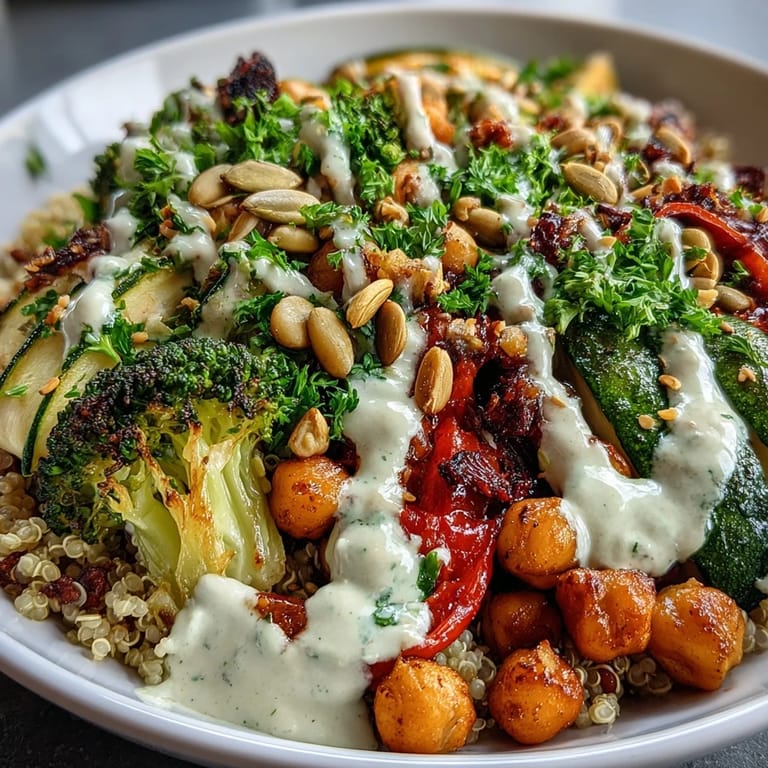
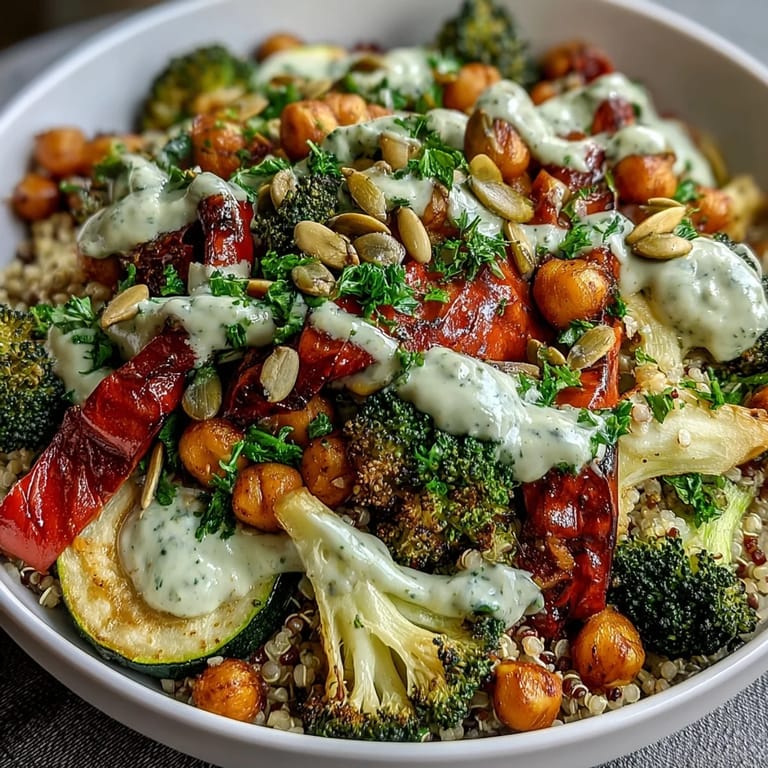
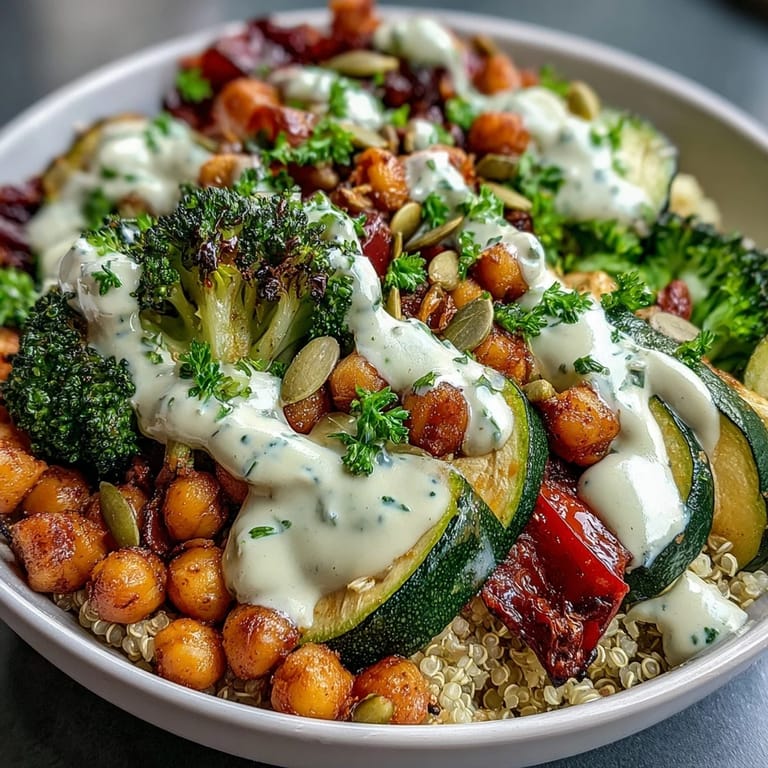
- Divide your cooked grain among four bowls as the base. Top each with roasted vegetables and warm legumes, then drizzle generously with tahini dressing.
- Finish with flourish:
- Scatter chopped parsley across the top, arrange avocado slices, sprinkle toasted pumpkin seeds, and serve with lemon wedges on the side so people can add as much brightness as they want.
 Save
Save I made this bowl for a friend who'd recently gone vegan and was worried about feeling deprived. Watching them realize they were completely satisfied and happy, with no sense of sacrifice, meant more than I expected. That's when it stopped being just a recipe for me.
Why Seasonal Vegetables Matter Here
The beauty of this bowl is that it asks you to pay attention to what's good right now. In spring I load it with asparagus and peas, summer brings zucchini and tomatoes, fall calls for roasted sweet potato and cauliflower, and winter is all about sturdy root vegetables and Brussels sprouts. When you follow the seasons, you're not fighting the ingredient, you're working with it, and the results feel effortless.
The Dressing Does All the Work
I used to think a bowl needed to be complicated to be interesting, but then I realized the tahini dressing is where all the magic lives. That creamy, slightly tart coating transforms simple roasted vegetables into something that tastes like it took thought. It's also why I always make extra—people inevitably ask for more drizzled on top, and it keeps for a week in the refrigerator.
Building Your Perfect Bowl
There's no single right way to make this, which is actually the point. Some days I want more grains to feel fuller, other times I double the vegetables and legumes for something lighter. The framework is flexible enough that you can adapt it every single time and it will always work. What matters most is that you're building something nourishing that tastes good to you specifically.
- If you have leftover roasted vegetables in your fridge, they become the foundation for an instant lunch bowl.
- Toast your pumpkin seeds the night before so they're ready to scatter on top without any last-minute steps.
- Make the tahini dressing ahead because it actually gets better as the flavors meld together.
 Save
Save This bowl has become my answer to the question 'what should I eat?' because it's honest food that doesn't apologize. It nourishes without performance, satisfies without heaviness, and tastes different every time you make it.
Recipe FAQs
- → What grains work best in this bowl?
Quinoa cooks fastest at 15 minutes, brown rice takes about 40 minutes, while farro needs around 25 minutes. All provide excellent texture and absorb the roasted vegetable flavors well.
- → Can I use different vegetables?
Absolutely. Sweet potato, cauliflower, carrots, or eggplant all roast beautifully. The key is cutting vegetables into similar sizes so they cook evenly in the oven.
- → How long does this keep for meal prep?
The components store well separately for 4-5 days. Keep the dressing separate and add fresh garnishes like avocado and pumpkin seeds just before serving.
- → What protein alternatives can I use?
Black beans, white beans, or roasted tofu work wonderfully. For non-vegans, grilled chicken or feta cheese add extra protein while complementing the Mediterranean flavors.
- → Can I make the tahini dressing ahead?
Yes, it keeps refrigerated for up to a week. You may need to thin it with additional water after storage as it thickens when cold.