 Save
Save There's something about assembling this salad that feels like stepping into a sun-dappled meadow. The first time I made it, I was standing at my kitchen counter on a gray afternoon, but as I arranged those golden fruits in the center of all that vibrant green, the whole room seemed to brighten. It became my antidote to winter—not just a salad, but a reminder that color and lightness could exist even on days when the sun wasn't cooperating outside.
I remember making this for a small dinner party last spring when a friend who'd been eating pretty strictly for months came over. When I set it down, she actually paused, then said it looked too pretty to eat—but she had three helpings. That's when I realized this salad bridges something: it's indulgent enough to feel special, honest enough to feel nourishing, and beautiful enough that people slow down to actually taste it.
Ingredients
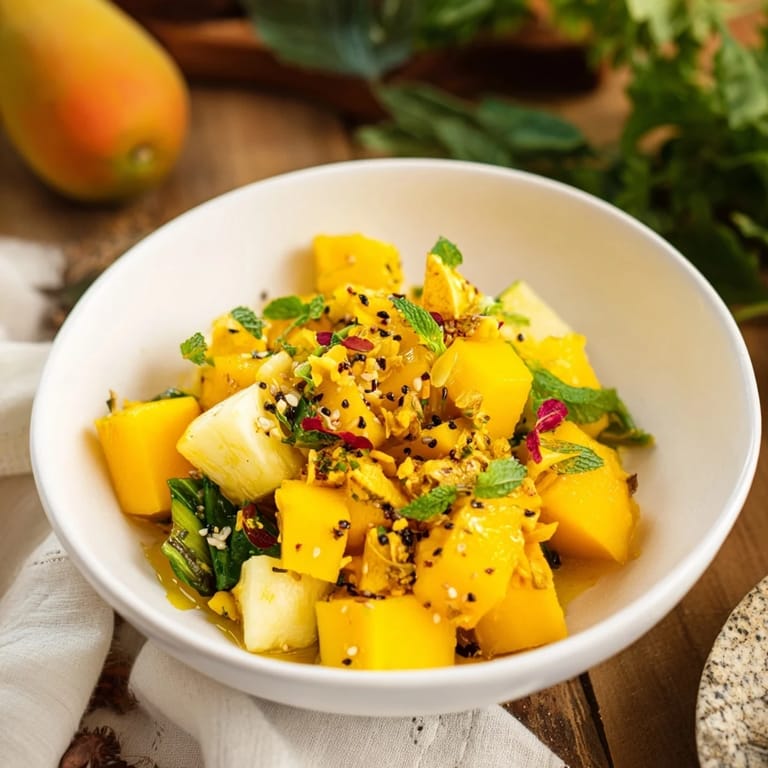
- Ripe mango, diced (1 cup): Use a mango that yields slightly to pressure—this is where the salad gets its sweetness and silky texture.
- Pineapple, diced (1 cup): The acid and tropical brightness that makes everything sing; fresh is non-negotiable here.
- Golden apple, diced (1): A subtle sweetness that won't overpower, and the crunch stays even as you eat.
- Yellow peach, sliced (1): Peaches are optional in the strictest sense, but their soft juiciness creates a moment of contrast that matters.
- Kale, stems removed, finely shredded (4 cups): Shred it thin enough that it becomes silky when massaged, almost delicate despite its reputation for toughness.
- Baby spinach leaves (1 cup): The gentle counterpoint to kale's earthy bite.
- Fresh parsley, chopped (½ cup): Parsley brings a clean, almost peppery note that brightens everything.
- Fresh mint leaves, torn (¼ cup): Don't chop this—tearing releases more of its essential oils and keeps it from bruising.
- Fresh basil leaves, torn (¼ cup): The kind that smells like someone's Italian grandmother's garden.
- Extra-virgin olive oil (3 tablespoons): Quality matters here; you're tasting it directly.
- Fresh lemon juice (2 tablespoons): Squeeze it yourself—bottled changes the entire personality of this dressing.
- Maple syrup (1 tablespoon): Just enough sweetness to make the acid feel balanced, not bitter.
- Dijon mustard (1 teaspoon): An emulsifier that also adds a subtle depth you won't quite identify but definitely taste.
- Sea salt and freshly ground black pepper (½ teaspoon and ¼ teaspoon): Finish grinding the pepper just before use—the aromatics make a real difference.
- Toasted pumpkin seeds (2 tablespoons, optional): If you use them, toast them yourself just until they start to smell nutty; that's when they've given their best.
- Lemon zest (from 1 lemon, optional): One final pop of brightness that feels like the dessert you didn't expect.
Tired of Takeout? 🥡
Get 10 meals you can make faster than delivery arrives. Seriously.
One email. No spam. Unsubscribe anytime.
Instructions
- Bring the dressing to life:
- Whisk together the oil, lemon juice, maple syrup, mustard, salt, and pepper in a small bowl until they transform from separate elements into something glossy and cohesive. The mustard acts as an emulsifier, binding everything together into what feels like liquid gold.
- Soften the kale:
- Pour half the dressing into a large bowl with the shredded kale and massage it for a minute or two—really work it with your hands. You'll feel the kale relax and darken as it drinks in the dressing, becoming tender in a way raw kale never is on its own.
- Build the forest:
- Add the spinach, parsley, mint, and basil to the kale and toss gently until everything is evenly coated and the herbs are distributed throughout. The bowl should smell like a garden at its peak.
- Arrange your landscape:
- Transfer this green mixture to a wide, shallow serving bowl and create a ring around the outer edge, leaving the center open. Think of it as creating a lush frame for what comes next.
- Crown it with gold:
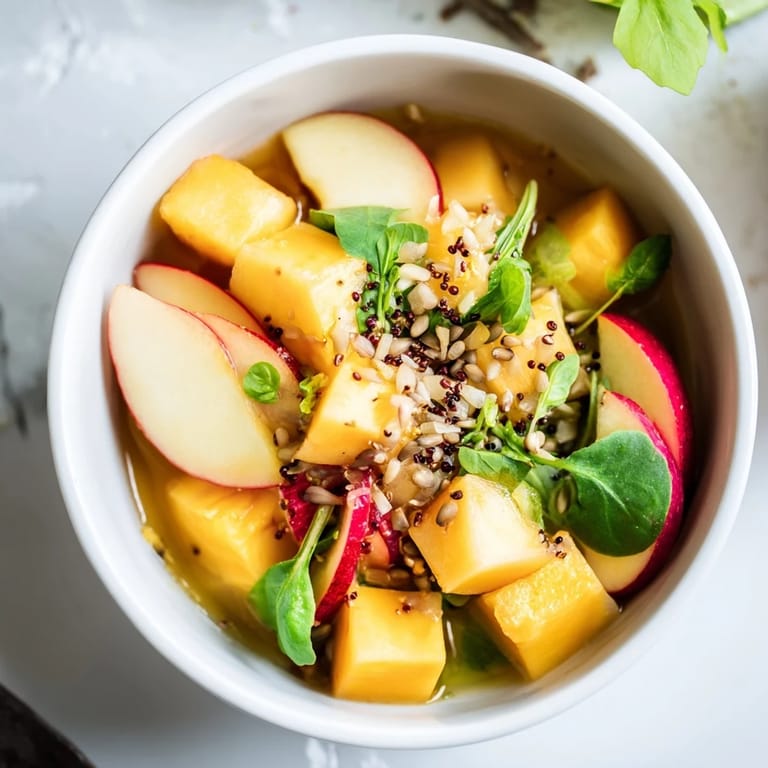
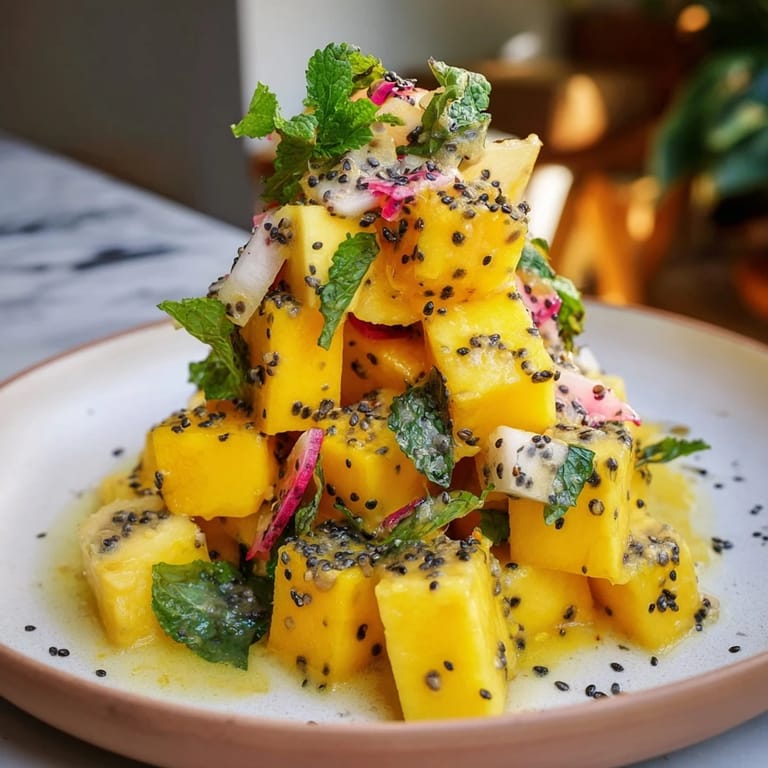
- Pile the mango, pineapple, apple, and peach into the center, creating a bright, abundant mound. The contrast between the deep greens and those sunny yellows is exactly what makes this salad work—visually and on the palate.
- Final touch:
- Drizzle the remaining dressing over both the fruits and greens, then scatter the toasted pumpkin seeds and lemon zest across the top if you're using them.
 Save
Save The real magic of this salad happened when I realized it wasn't actually about being healthy or photogenic—it was about the way eating something this vivid and alive changed the entire mood of a meal. People put their phones down. Conversations slowed. Someone always asked for the recipe.
Why Yellow Matters
Yellow fruits aren't just a color choice; they're actually gentler, more tropical, and naturally sweeter than their red or orange cousins. There's a reason mango and pineapple have such a devoted following—they carry brightness that's almost impossible to achieve any other way. When you build a salad around these instead of berries or stone fruits, you're choosing a flavor profile that feels optimistic, almost jubilant. It's the salad equivalent of sunshine on your plate, and that matters more than you'd think on a day when you need it.
The Kale-and-Herb Balance
The secret that took me a few tries to understand is that kale alone would be overwhelming—it's assertive, earthy, sometimes even bitter if you don't treat it right. But paired with mint, basil, and parsley, something shifts. The herbs lighten it, making the kale's earthiness feel grounded rather than heavy. The spinach adds a soft whisper beneath it all. Together, they create a backdrop so vibrant that the golden fruits feel like they're floating on a cloud rather than sitting in a pile. This balance is the difference between a salad that feels like work and one that feels like a gift to yourself.
Make It Your Own
This salad is forgiving in the way the best dishes are—it works with what you have, and it welcomes improvisation. Some days I add avocado because I want creaminess, other times I swap in yellow kiwi or papaya because that's what looks alive at the market. The structure is sturdy enough to handle variations, which means you can return to it again and again without it ever feeling stale.
- If you find yellow peaches disappointing any given season, golden pears or even a bit of fresh corn work beautifully.
- Toast your own pumpkin seeds if you have time; it takes five minutes and changes everything about their presence in the salad.
- Pair this with something crisp and cool to drink—a Sauvignon Blanc or even just sparkling water with a bit of lemon zest—and you've got something that feels restaurant-quality but still tastes like home.
 Save
Save This salad has become my antidote to days when cooking feels like a chore. It reminds me that the simplest meals, the ones that ask only for fresh hands and good ingredients, often become the ones people remember.
Recipe FAQs
- → What fruits work best for the yellow fruit medley?
Ripe mango, pineapple, golden apple, and yellow peach provide a bright, sweet base. You can also substitute with yellow kiwi or papaya for variety.
- → How do you soften kale without cooking?
Massage the shredded kale with half of the dressing for 1–2 minutes until it becomes slightly tender and less fibrous.
- → Can the herbs be adjusted in this salad?
Yes, fresh parsley, mint, and basil add aromatic layers, but you can adjust or omit based on personal preference or availability.
- → What dressing ingredients complement the fruit and greens?
A mixture of extra-virgin olive oil, fresh lemon juice, maple syrup, Dijon mustard, salt, and pepper balances sweetness and tanginess.
- → Are there any optional toppings to enhance texture?
Toasted pumpkin seeds and lemon zest add a delightful crunch and brightness to finish the dish.