 Save
Save There's something almost meditative about watching root vegetables transform in a hot oven—the kitchen fills with this earthy sweetness that makes you forget you're eating something so good for you. I discovered this bowl during one of those weeks when my fridge was overflowing with farmers market finds and my energy for complicated cooking was at zero. What started as me just roasting whatever needed to be used became this beautifully balanced meal that somehow feels both nourishing and indulgent at the same time.
I made this for my coworker Marcus during a potluck last fall, and he came back the next day asking if I'd written down the recipe because he'd been thinking about it all night. Watching someone genuinely excited about a bowl of roasted vegetables felt like a small kitchen victory—there's something about the combination of textures and that creamy tahini that just clicks for people.
Ingredients
- Carrots (2 medium, cut into 1-inch pieces): Their natural sweetness intensifies when roasted; I always peel them first because the texture is better, though leaving the skin on works if you prefer.
- Beets (2 medium, cut into 1-inch pieces): These bleed color everywhere so I cut them last or wear an apron—their earthy flavor is irreplaceable once they caramelize.
- Turnips (2 medium, cut into 1-inch pieces): Slightly bitter raw, but roasting mellows them into something almost sweet and tender.
- Parsnips (2 medium, cut into 1-inch pieces): These are the secret sweetness; don't skip them even if you think you won't like them.
- Olive oil (2 tbsp): Enough to coat everything evenly without making it greasy; I use my good olive oil here because it matters.
- Sea salt (1 tsp) and freshly ground black pepper (½ tsp): Season generously—roasted vegetables need it to shine.
- Dried thyme or rosemary (1 tsp, optional): Adds a subtle earthiness; fresh herbs burn too easily so dried is actually better here.
- Quinoa (1 cup, rinsed): Rinsing removes bitterness; it's an extra thirty seconds that makes a real difference.
- Water or vegetable broth (2 cups): Broth adds more flavor, but water works fine if that's what you have.
- Tahini (⅓ cup): The creamy backbone of this bowl; make sure it's fresh because stale tahini tastes chalky and disappointing.
- Lemon juice (2 tbsp): Brightens everything; fresh squeezed is noticeably better than bottled here.
- Garlic (1 clove, minced): One clove is enough; more would overpower the delicate tahini sauce.
- Maple syrup or honey (1 tsp, optional): Balances the earthiness with subtle sweetness—I always add it even though it says optional.
- Fresh parsley (2 tbsp, chopped): A burst of green and brightness right before eating matters more than you'd think.
- Toasted pumpkin or sunflower seeds (2 tbsp, optional): They add crunch and richness; I toast them myself in a dry pan for about three minutes.
Tired of Takeout? 🥡
Get 10 meals you can make faster than delivery arrives. Seriously.
One email. No spam. Unsubscribe anytime.
Instructions
- Heat your oven and prep your workspace:
- Preheat to 425°F and line a baking sheet with parchment paper so everything slides off easily without sticking. This temperature is hot enough to create caramelization without burning the vegetables.
- Toss the vegetables with oil and seasonings:
- In a large bowl, coat your chopped root vegetables with olive oil, salt, pepper, and herbs if using. Make sure every piece gets a light coating—this is where the color and flavor begins.
- Spread and roast until golden:
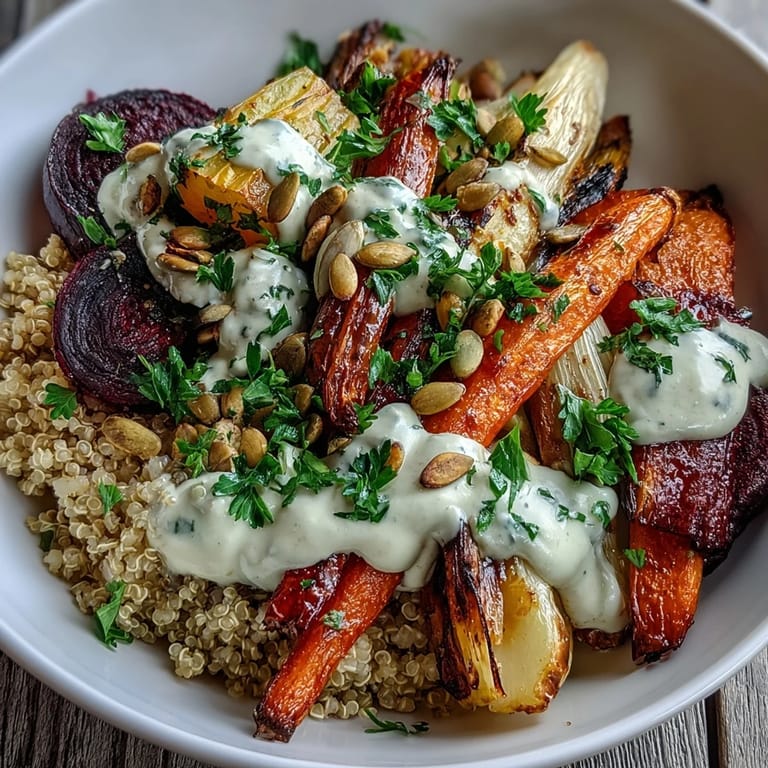
- Arrange vegetables in a single layer on the baking sheet and roast for 30 to 35 minutes, stirring halfway through so they caramelize evenly. You'll know they're done when they're tender and the edges have turned deep golden brown.
- Cook the quinoa while vegetables roast:
- Combine rinsed quinoa, water or broth, and salt in a medium saucepan and bring to a boil. Reduce heat, cover, and simmer for 15 minutes, then remove from heat and let it sit covered for 5 minutes before fluffing with a fork.
- Whisk together the tahini sauce:
- In a small bowl, whisk tahini, lemon juice, water, minced garlic, salt, and maple syrup until smooth and creamy. If it's too thick, add a splash more water until it reaches a drizzle consistency.
- Build and serve your bowl:
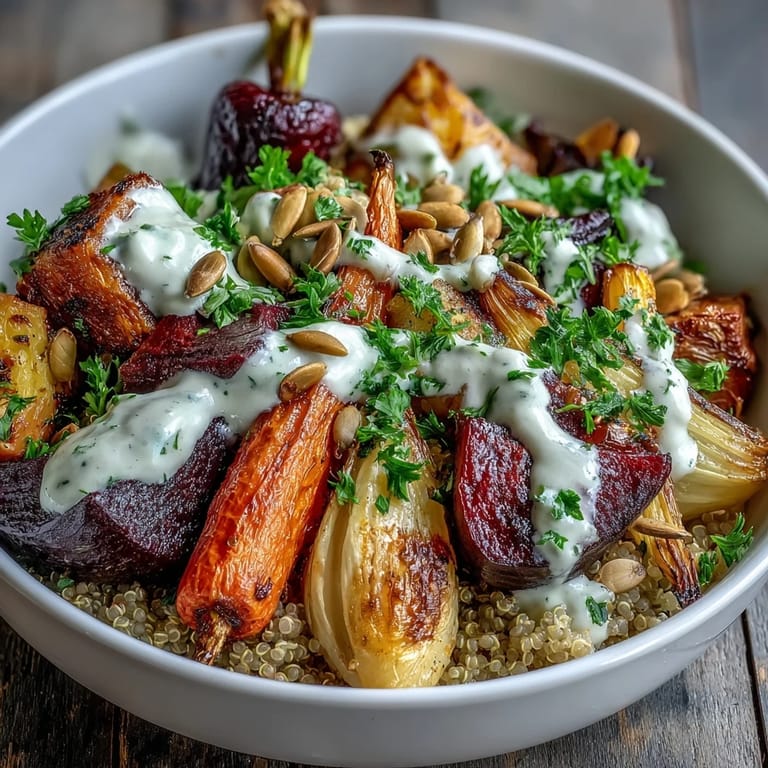
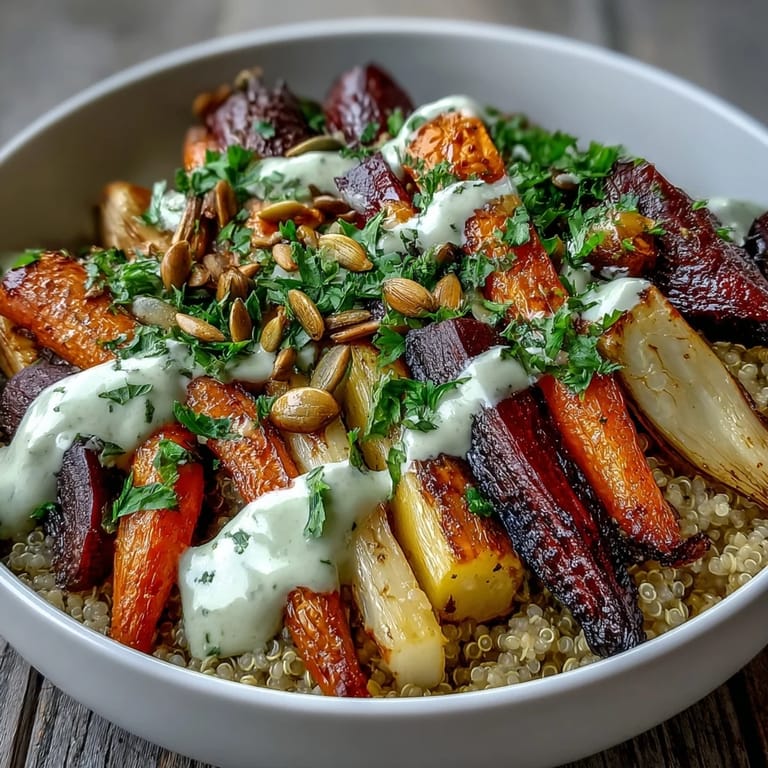
- Divide the fluffy quinoa among four bowls, top with roasted vegetables, drizzle generously with tahini sauce, and finish with fresh parsley and toasted seeds. Everything should be warm or at room temperature, creating this beautiful contrast of textures.
 Save
Save My partner called this "the bowl that makes me feel like I'm treating myself" which perfectly captures what happened here—somehow nutritious vegetables became something that feels genuinely luxurious. It's become our default meal when we want to feel grounded but not boring.
The Magic of Roasted Root Vegetables
The transformation that happens in a 425-degree oven is genuinely remarkable—vegetables that taste earthy and almost sharp raw become sweet and tender as their natural sugars concentrate and caramelize. I used to think root vegetables were boring until I understood that roasting isn't just cooking, it's completely changing their personality. The key is giving them space, heat, and time without fussing too much.
Why Tahini Sauce Changes Everything
Creamy, nutty tahini is the element that transforms this from a side dish into an actual meal—it brings richness and a subtle sesame flavor that ties everything together. The lemon juice and garlic keep it bright instead of heavy, and a touch of maple syrup adds just enough sweetness to balance the earthiness of the vegetables. Once I started making my own tahini sauce instead of buying it pre-made, I understood why people get excited about this bowl.
Making It Your Own and Storage Tips
This bowl is genuinely flexible—swap in sweet potatoes, rutabaga, or even regular potatoes depending on what you have or what you're craving. For extra protein, roast some chickpeas alongside the vegetables or add a poached egg on top, and for different flavor profiles, try cilantro instead of parsley or use a tahini-lime sauce instead. The bowl keeps well in the refrigerator for three days and actually tastes better as the flavors meld together.
- Roasted vegetables stay crispier if you store them separately from the quinoa and sauce, then assemble just before eating.
- Make extra tahini sauce because you'll want it on other things—grain bowls, roasted vegetables, even simple salads.
- Toasted seeds stay crunchy longer if you add them right before eating instead of mixing them in earlier.
 Save
Save This roasted root vegetable bowl has become the meal I make when I want to feel both nourished and happy, which honestly might be the best thing a recipe can do. It's earned a permanent spot in my regular rotation.
Recipe FAQs
- → Can I prepare the vegetables ahead of time?
Yes, you can peel and cut the root vegetables up to 2 days in advance. Store them in an airtight container with a damp paper towel to maintain freshness. Toss with oil and seasonings just before roasting.
- → What other vegetables work well in this bowl?
Sweet potatoes, rutabaga, or butternut squash make excellent additions or substitutions. You can also add Brussels sprouts or red onion during the last 15 minutes of roasting for variety.
- → How do I store and reheat leftovers?
Store components separately in airtight containers for up to 5 days. Reheat vegetables at 375°F for 10-12 minutes to restore crispness. Warm quinoa gently on the stove or microwave with a splash of water.
- → Can I make this protein-packed?
Absolutely. Add chickpeas during the last 15 minutes of roasting, top with a poached egg, or serve alongside grilled chicken or tempeh. The quinoa already provides 9 grams of protein per serving.
- → My tahini sauce is too thick, what should I do?
Whisk in additional water, one tablespoon at a time, until you reach your desired consistency. The sauce will naturally thicken as it sits, so you may need to thin it again before serving.
- → What wine pairs well with this dish?
A crisp Sauvignon Blanc complements the earthy sweetness of roasted vegetables. For non-alcoholic options, try an herbal tea or sparkling water with a squeeze of lemon.