 Save
Save I still remember the first time I wandered through the Pike Place Market in Seattle and watched a chef arrange foraged mushrooms and berries on a plate like they were painting a canvas. Something about the way those earthy colors came together—deep purples, golden browns, forest greens—made me realize that dinner could tell a story. That afternoon, I came home determined to recreate that magic in my own kitchen, and this Northwest Forest Forager dish was born from that moment of inspiration.
I made this for my sister's dinner party last fall, and what started as just an appetizer became the highlight of the evening. People kept coming back to nibble more of the herb moss, saying they'd never tasted anything quite like it. That's when I knew this recipe had to become a regular part of my cooking rotation.
Ingredients
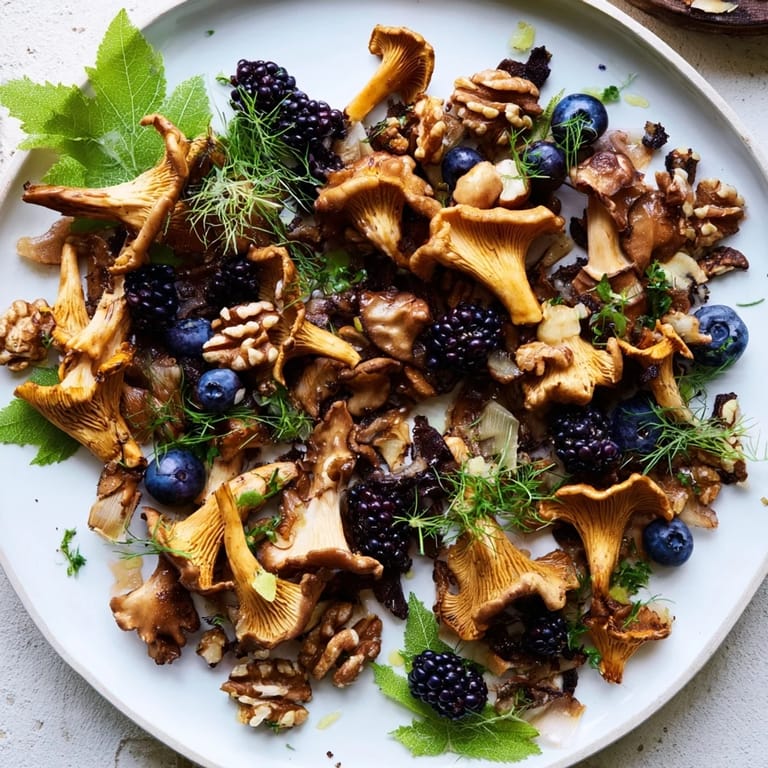
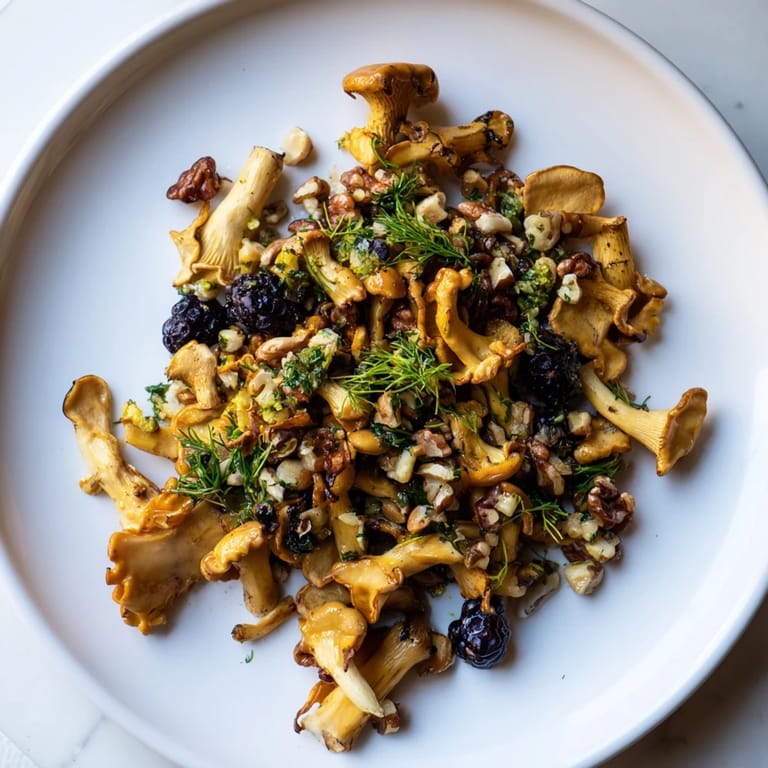
- Mixed wild mushrooms (chanterelle, shiitake, oyster): These varieties each bring something different—chanterelles add a subtle fruity note, shiitake brings deep umami, and oysters give you a delicate texture. Buy them from a farmer's market if you can; they make all the difference.
- Olive oil and unsalted butter: The combination creates the perfect golden sear on the mushrooms. Use good quality olive oil here since you'll taste it.
- Fresh garlic clove: Just one clove minced finely—you want to taste the earthy mushrooms, not overpower them with garlic.
- Toasted hazelnuts and walnuts: Toasting them yourself releases oils and deepens the flavor in a way store-bought never quite matches. The contrast between warm toasted nuts and cool berries is where the magic happens.
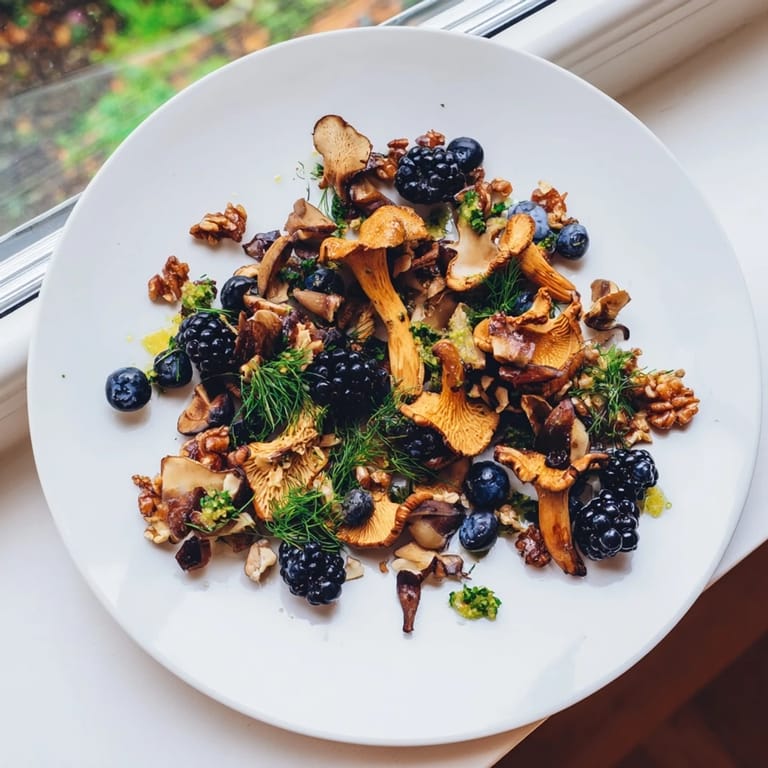
- Fresh blackberries and blueberries: These aren't cooked—they stay fresh and bright, providing pops of tartness and color that balance the earthy mushrooms.
- Fresh parsley, dill, chervil, and chives: This is your herb moss, and it's the soul of the dish. The combination creates something herbaceous and alive that makes people ask what the secret ingredient is.
- Lemon zest: A small amount brightens everything without adding moisture that would wilt your herbs.
Tired of Takeout? 🥡
Get 10 meals you can make faster than delivery arrives. Seriously.
One email. No spam. Unsubscribe anytime.
Instructions
- Start with the mushrooms:
- Clean your mushrooms gently with a damp cloth—water is the enemy of a good sear. Slice them about a quarter-inch thick so they'll brown properly. Heat your skillet over medium heat and let it get genuinely hot before adding the oil and butter. You'll know it's ready when the butter stops foaming and smells a little nutty. Add your minced garlic and let it perfume the pan for just 30 seconds, then add the mushrooms in a single layer. Don't stir them constantly; let them sit and develop that gorgeous golden color. This takes about 6 to 8 minutes. You'll know they're done when they're tender and caramelized at the edges.
- Create the herb moss:
- Finely chop all your fresh herbs—and I mean truly fine, almost to a paste. The finer you chop, the more it looks like moss and the better it clings together. Toss everything with olive oil, lemon zest, and flaky sea salt. Taste it and adjust; this bright green mixture should taste like the forest smells after rain.
- Toast your nuts:
- Spread hazelnuts and walnuts on a baking tray and toast at 350°F for 8 to 10 minutes. You're looking for golden color and that incredible toasted aroma. Once cool enough to handle, chop them coarsely—you want texture, not powder.
- Compose your plate:
- This is where you become an artist. Start with a large platter or individual plates and scatter clusters of mushrooms, nuts, and berries in organic groups—think of how things actually grow in a forest, not in neat rows. Generously spoon the herb moss around and between these clusters, letting it fill the spaces and create that woodland floor effect. The beauty is in the intentional randomness.
- Finish and serve:
- If you're using edible flowers or microgreens, scatter them over the top just before serving. Serve everything at room temperature so the flavors are at their brightest.
 Save
Save There was something magical about watching my guests lean in close to examine the plate before they tasted it, their faces lighting up when they realized this was actually food and not just decoration. That moment when beauty and flavor come together perfectly—that's what this dish is about.
Variations to Match the Season
This dish is flexible enough to celebrate what's in season. In spring, swap in fresh peas and tender shoots. Summer calls for roasted stone fruits instead of berries. Fall is perfect as written, but you can add roasted root vegetables like parsnips or beets for extra earthiness. Even in winter, using preserved berries or adding roasted chestnuts keeps the spirit of the forest alive on your plate.
Pairing and Serving
This dish truly shines as an elegant appetizer before a light main course, but I've also served it as a stunning lunch with good bread and a simple cheese. A crisp Pinot Noir or dry cider feels right alongside it—something that won't overpower the delicate flavors. If you're serving a crowd, prepare the components separately and assemble the platter just before guests arrive so everything stays fresh and vibrant.
Making It Your Own
The beauty of this recipe is how personal it becomes once you start making it. Substitute pecans or pine nuts if hazelnuts aren't available where you live. Add roasted root vegetables or pickled shallots for a different dimension. Make it vegan by swapping the butter for a plant-based alternative. The structure stays the same, but the dish becomes a reflection of what you love and what's available to you.
- Quality ingredients matter more here than in almost any other recipe—you're not masking anything with heavy sauces, so let each component shine.
- Don't stress about making it look perfect. The best version is slightly imperfect, organic, and full of character.
- If edible flowers aren't available, microgreens or thinly sliced radish add color and won't compromise the woodland aesthetic.
 Save
Save This recipe taught me that food doesn't always need to be complicated to be memorable. Sometimes the most beautiful meals are simply good ingredients arranged with intention and a little bit of imagination. Make this dish and watch it become as much a part of your kitchen story as it is of mine.