 Save
Save There's something about the smell of roasting spices that instantly transports you somewhere else entirely. I discovered this Moroccan couscous salad during one of those afternoons when the kitchen felt too warm and I needed something light but still satisfying, something that wouldn't heat up the whole house. A friend had just come back from Marrakech and couldn't stop talking about the market stalls bursting with color, so I decided to recreate that feeling on a plate. What started as an experiment with whatever vegetables I had on hand turned into a dish I now make constantly, especially when I want to impress people without spending hours in the kitchen.
I remember bringing this to a summer picnic where someone had forgotten to bring a dish, and watching people go back for third helpings while sitting under a tree. One person swore the lemon dressing was the secret to summer itself, and honestly, they weren't entirely wrong. That moment taught me that the simplest things, tossed together with care and good ingredients, somehow become the ones people remember.
Ingredients
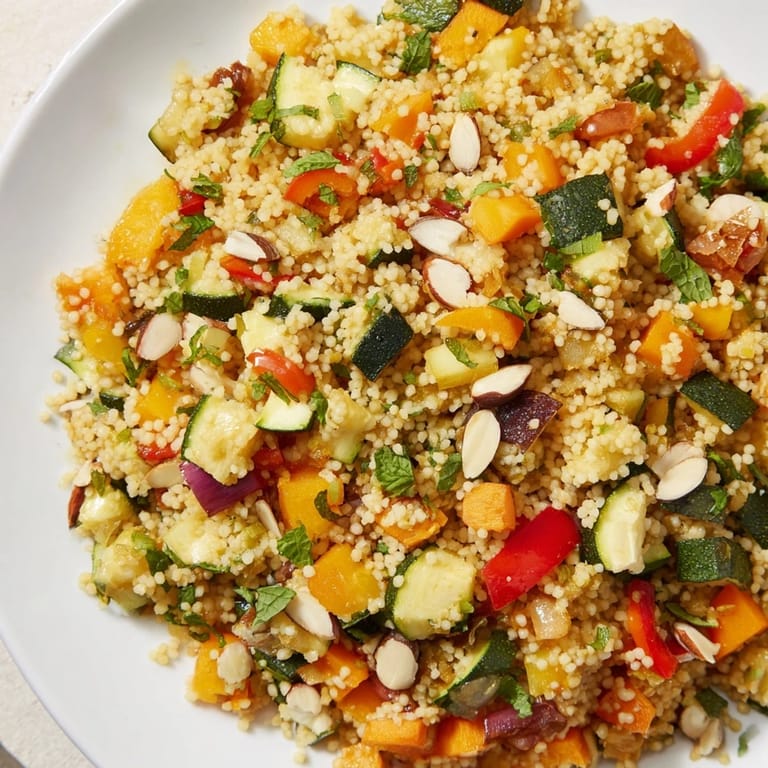
- Couscous: Use one cup of this tiny pasta that only needs hot broth and a five-minute rest to transform into fluffy clouds; it's the forgiving foundation that holds everything together.
- Vegetable broth: One and a quarter cups, boiling hot, is what makes the couscous tender; chicken or even water works if that's what you have, though the vegetable version adds a subtle warmth.
- Olive oil: Three tablespoons total split between cooking the couscous and making the dressing; use your better oil for the dressing where you can actually taste it.
- Zucchini, red bell pepper, carrot, red onion: One small one of each, diced into roughly quarter-inch pieces so they roast evenly and develop those golden edges that make everything taste better.
- Cumin, coriander, smoked paprika: Half a teaspoon each of the first two and a quarter teaspoon of paprika; these spices are what whisper Morocco into every bite without shouting.
- Chickpeas: Half a cup drained from a can, adding protein and a gentle earthiness that makes this feel like a complete meal.
- Raisins: A quarter cup of these sweet jewels that plump up slightly and create little surprises throughout; you can swap them for apricots or cranberries if you're in the mood for something different.
- Fresh parsley and mint: A third cup and two tablespoons respectively, chopped just before mixing so they stay bright and alive on your tongue.
- Toasted slivered almonds: A quarter cup if you have them, optional but they add a subtle crunch that makes your mouth happy.
- Lemon juice, garlic, honey: Fresh lemon from one large fruit, one minced garlic clove, and a half teaspoon of honey create the dressing that ties everything into one coherent song.
Tired of Takeout? 🥡
Get 10 meals you can make faster than delivery arrives. Seriously.
One email. No spam. Unsubscribe anytime.
Instructions
- Preheat and prepare:
- Turn your oven to 425°F and line a baking sheet with parchment paper, which is the small act that saves you from scrubbing later and means your vegetables won't stick.
- Dress the vegetables:
- Toss your diced zucchini, bell pepper, carrot, and red onion with two tablespoons of olive oil and all those spices until every piece is lightly coated. The cumin, coriander, and paprika should cling to the vegetables like they're getting ready for their moment in the spotlight.
- Roast until golden:
- Spread them in a single layer and roast for twenty to twenty-five minutes, stirring halfway through so nothing gets lonely or burnt. You're looking for edges that turn golden and caramelized, which means the vegetables have developed flavor and sweetness that raw versions simply can't offer.
- Prepare the couscous:
- While the vegetables roast, put the couscous in a large bowl with that tablespoon of olive oil, then pour the boiling vegetable broth over it. Cover with a plate and resist the urge to peek—those five minutes of steaming do all the work, and when you fluff it with a fork, the grains should separate into fluffy, tender pieces.
- Make the dressing:
- In a small bowl, whisk together fresh lemon juice, extra-virgin olive oil, your minced garlic, and a half teaspoon of honey until it emulsifies into something glossy and alive. Taste it and adjust the salt and pepper until it makes you want to drizzle it on everything you'll eat for the rest of the day.
- Bring it all together:
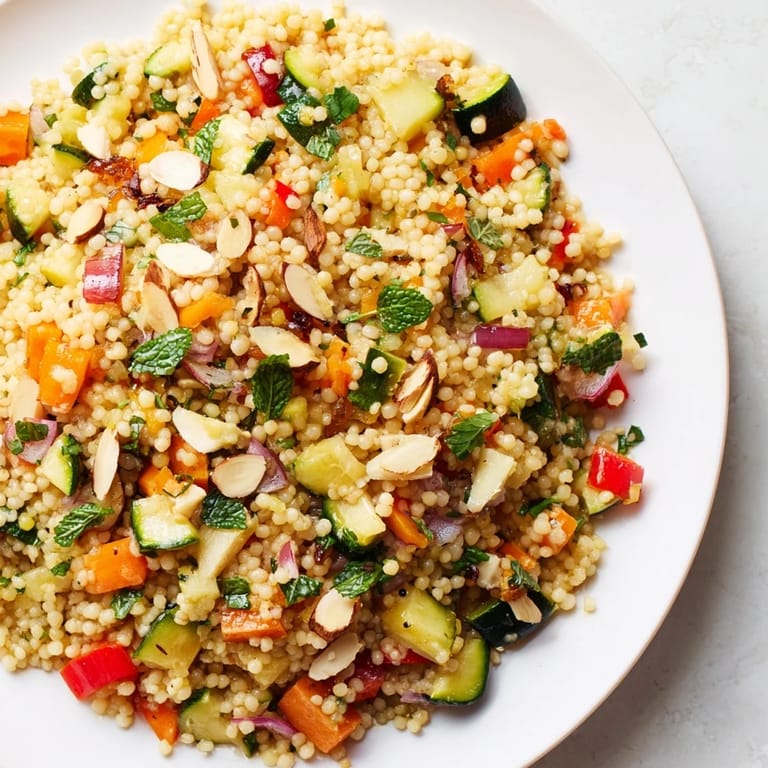
- Once the vegetables have cooled slightly, add them to the fluffed couscous along with the chickpeas, raisins, fresh parsley, mint, and almonds if you're using them. Pour the dressing over everything and toss gently so you don't crush the delicate grains, just enough to coat every piece with that bright lemon flavor.
- Serve with intention:
- This salad is beautiful warm, even better at room temperature when the flavors have gotten to know each other, and just as good straight from the refrigerator the next day if you want to eat it chilled.
 Save
Save There was a Tuesday when I made this for myself after a long day, ate it straight from the bowl while standing at the counter, and felt genuinely nourished in a way that surprised me. That's when I understood that food doesn't need to be complicated or time-consuming to make you feel taken care of.
Why This Salad Feels Like Summer
Even though the vegetables get roasted hot, something about this salad captures that lighthearted, effortless feeling of warm-weather eating. The lemon and mint combination is refreshing enough to serve at a picnic, but the roasted vegetables and chickpeas give it enough substance that you'll feel satisfied for hours afterward. I've learned that the best summer food walks this line between indulgence and simplicity, and this salad nails that balance perfectly.
Making It Your Own
One of my favorite things about this recipe is how forgiving it is when you want to make substitutions. If you don't have red bell pepper, use yellow or orange, and they'll taste just as good with slightly different flavor notes. The vegetables can shift with what's in season or what your grocery store has that day, and the salad will taste like a completely different meal depending on whether you're using summer zucchini or autumn squash.
Storage and Serving Suggestions
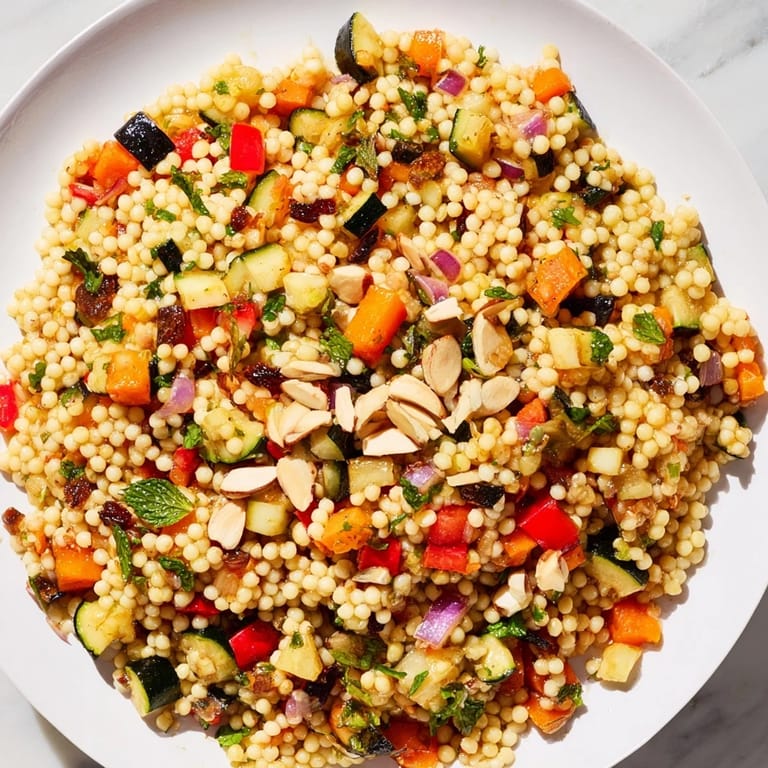
This salad gets better as it sits, which makes it ideal for meal prep or for making ahead when you know guests are coming. The couscous absorbs the dressing slowly, so if you're storing it, you might want to add a little extra lemon juice before serving to brighten everything back up. This works beautifully alongside grilled chicken or lamb, or you can pile it onto a platter with hummus, olives, and feta to create an instant mezze spread.
- Store in an airtight container in the refrigerator for up to three days, though it tastes best when eaten within twenty-four hours while the herbs are still vibrant.
- If serving chilled, take it out of the refrigerator about ten minutes before eating to let the flavors come back to life.
- You can make all the components separately and assemble just before serving if you want the vegetables to stay warm and the herbs to stay bright.
 Save
Save This Moroccan couscous salad has become my go-to when I want to feel like I've traveled somewhere beautiful without leaving my kitchen. It's the kind of recipe that whispers rather than shouts, nourishing you with every forkful.
Recipe FAQs
- → How do you achieve fluffy couscous texture?
Pour boiling vegetable broth over couscous, cover and let it sit for 5 minutes, then fluff gently with a fork to separate grains.
- → What vegetables work well roasted in this dish?
Zucchini, red bell pepper, carrot, and red onion are ideal; roasting enhances their sweetness and adds depth.
- → Can the citrus dressing be adjusted?
Yes, lemon juice can be swapped with lime for a different tang, and the honey/maple syrup balances acidity with subtle sweetness.
- → Are toasted almonds necessary?
They add a pleasant crunch and nutty flavor, but can be omitted or replaced depending on preferences or allergies.
- → How can this dish be made vegan?
Use maple syrup instead of honey in the dressing to keep it fully plant-based.