 Save
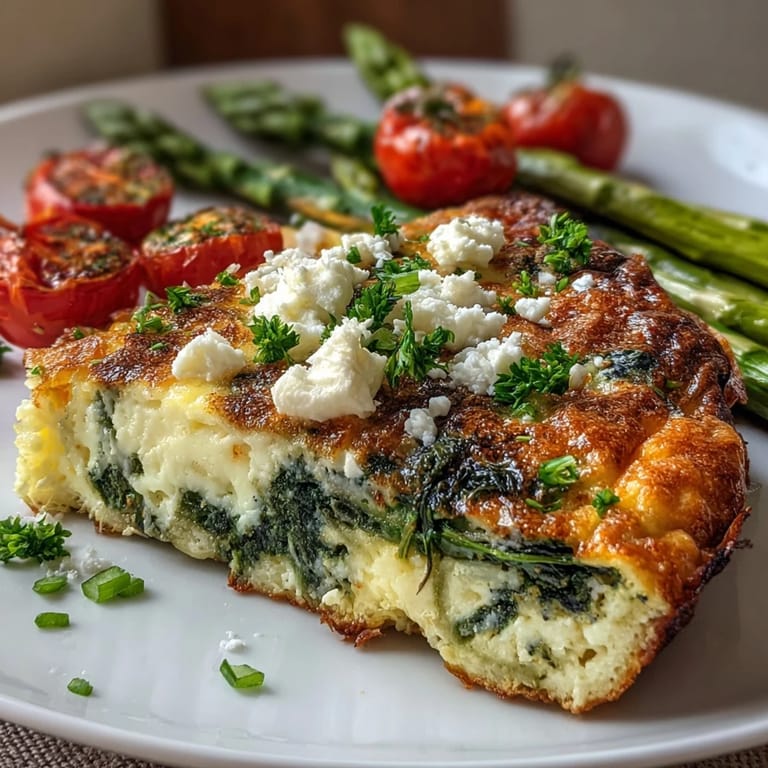
Save My neighbor stopped by one April morning with a basket of asparagus from her garden, and I suddenly had the perfect excuse to make something that felt both light and satisfying. There's something about spring vegetables that makes you want to cook them simply, without fuss, and a frittata seemed like the answer. I'd watched my grandmother flip hers on a plate once, the dramatic arc of it landing perfectly back in the pan, but I decided that day to take the easier route and let the oven do the work. That one choice changed how I approached frittatas forever, turning what felt like a showstopper into something genuinely relaxed.
I made this for a small gathering on a Saturday when the weather finally felt warm, and watching people eat it straight from the skillet, no plates needed, reminded me why I love cooking with fresh vegetables. Someone asked for the recipe on their way out, and I realized it wasn't just the food they wanted, but that feeling of sitting together over something that took care of itself in the oven while we talked.
Ingredients
- Asparagus: Trim the woody ends by bending each spear until it snaps naturally, keeping the tender part. If you find thick spears, halve them lengthwise so they cook evenly with everything else.
- Baby spinach: Rough chop it so the leaves wilt down and distribute better throughout the frittata. Pre-washed spinach saves time without sacrificing quality.
- Cherry tomatoes: Halving them prevents them from rolling around and lets them release their sweetness into the egg base.
- Zucchini: Dice it into quarter-inch pieces so it softens without turning mushy. Don't peel it; the skin holds everything together.
- Red onion: The finely chopped pieces add a gentle bite that sweetens slightly as they cook down.
- Large eggs: Room temperature eggs blend more smoothly, creating a silkier texture throughout. This matters more than you'd think.
- Milk: Even a splash helps the eggs set gently and stay tender rather than rubbery. Dairy-free options work equally well.
- Feta cheese: Crumble it generously; it adds a salty tang that brightens all those fresh vegetables without overpowering them.
- Fresh parsley and chives: These herbs keep their bright green color and fresh taste if added at the end, right before serving.
- Olive oil: Just enough to coat the skillet and keep the vegetables from sticking. Don't be shy, but you don't need a pool of it.
Tired of Takeout? 🥡
Get 10 meals you can make faster than delivery arrives. Seriously.
One email. No spam. Unsubscribe anytime.
Instructions
- Get your oven ready:
- Set it to 375°F and let it preheat while you prepare everything. Having the temperature steady before you start makes the baking predictable and takes the guesswork out of doneness.
- Warm the skillet and start with aromatics:
- Heat olive oil over medium warmth and watch the red onions soften, about 2 minutes. You'll smell when they're ready, that sweet, mellow aroma that signals they've given up their sharp edges.
- Build your vegetable base:
- Add asparagus, zucchini, and a pinch of salt, stirring occasionally for 3 to 4 minutes until the pieces are just tender but not soft. The vegetables will look slightly caramelized at the edges, which is exactly what you want.
- Finish the fresh vegetables:
- Toss in the spinach and cherry tomatoes, cooking just long enough for the spinach to wilt and turn dark green, about 1 to 2 minutes. The tomatoes release their juices and mingle with everything else.
- Prepare the egg mixture:
- In a separate bowl, whisk together eggs, milk, salt, black pepper, and the red pepper flakes if you're using them. Whisk until the yolks and whites are completely combined and the mixture looks pale and slightly frothy.
- Bring it together:
- Pour the egg mixture evenly over the vegetables in the skillet, making sure it settles into the spaces. Scatter the feta, parsley, and chives over the top in a way that looks generous and inviting.
- Start on the stovetop:
- Cook over medium heat for 2 to 3 minutes, watching as the edges begin to set and look opaque while the center stays jiggly. Don't disturb it; let the heat do the work.
- Finish in the oven:
- Transfer the hot skillet to your preheated oven and bake for 10 to 12 minutes until the center is set and the top shows a light golden blush. If you gently jiggle the pan, the very center should barely move.
- Cool and serve:
- Let it rest for a couple of minutes out of the oven so it sets up completely and stays together when you slice. Cut into wedges and serve warm, or let it cool to room temperature if you prefer.
 Save
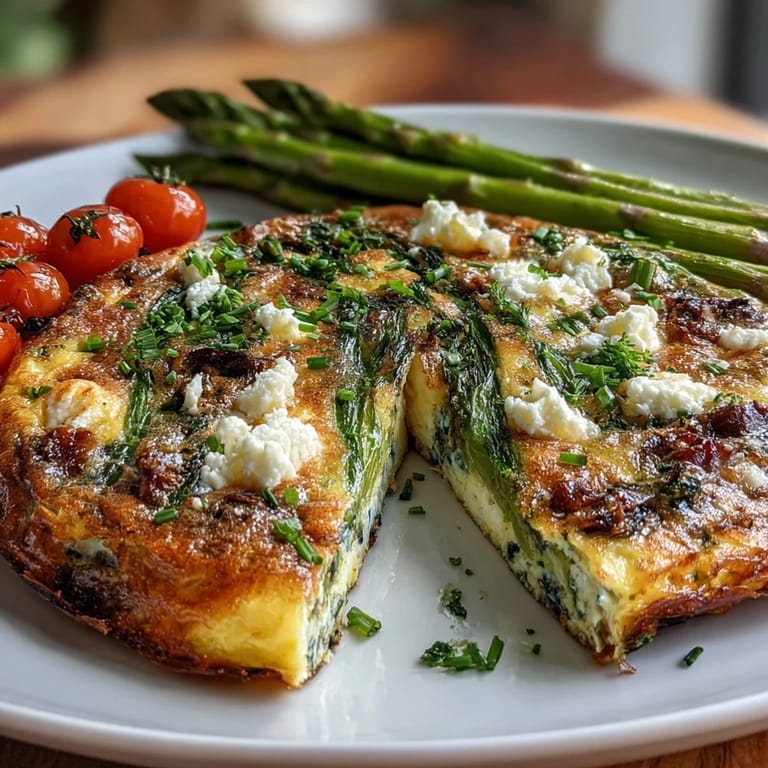
Save I'll never forget serving this at a friend's house when her teenage daughter, who'd been picking at vegetables for months, asked for seconds without any convincing. That's when I understood the real magic of this frittata: it doesn't feel like you're doing something healthy, it just tastes like spring.
Flavor Combinations That Work
The beauty of a frittata is how it welcomes different vegetables depending on what season offers. Early spring means tender asparagus and fresh peas, while late spring calls for zucchini and young leeks. I've swapped in roasted red peppers, caramelized onions, sun-dried tomatoes, and fresh mushrooms all with great results. The key is keeping the vegetables relatively raw or lightly cooked before they go into the egg mixture, so they stay vibrant and don't release too much liquid that would make the frittata watery.
Making It Work for Your Dietary Needs
Vegetarian is built in here, but this recipe adapts beautifully for dairy-free eating. Swap the milk for almond milk or oat milk without changing amounts, and either skip the feta entirely or use a dairy-free cheese alternative that melts slightly. Some people crumble seasoned roasted chickpeas instead of cheese for extra protein and texture, which I've found works wonderfully. The egg is still the star, so focus there and let everything else follow.
Serving Suggestions and Storage
This frittata shines at room temperature, making it perfect for meal prep or a picnic lunch. Store it covered in the refrigerator for up to four days, and it reheats gently in a low oven or even tastes fine cold straight from the fridge. Pair it with crusty bread, a simple green salad, or a crisp Sauvignon Blanc if you're in the mood for something special.
- Slice and pack individual wedges in containers so you have grab-and-go breakfasts all week.
- Serve it alongside roasted potatoes or fresh grain for a more substantial meal.
- Don't skip letting it rest for a few minutes after coming out of the oven, or it might fall apart when you slice it.
 Save
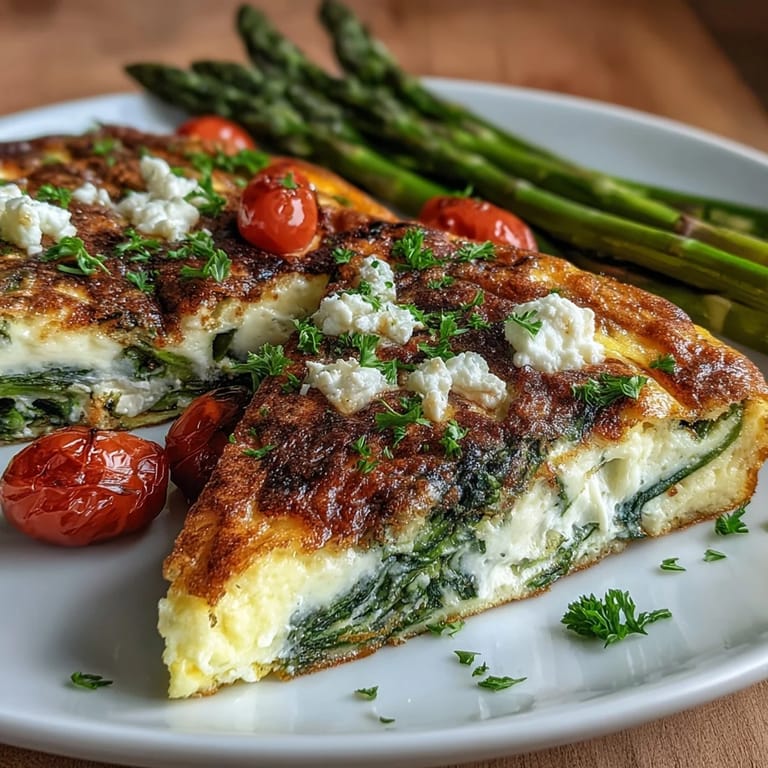
Save Make this when you want something wholesome but don't want cooking to feel like work. It'll become one of those recipes you turn to again and again, changing with the seasons but always feeling just right.
Recipe FAQs
- → What vegetables are best for this frittata?
Asparagus, baby spinach, cherry tomatoes, zucchini, and red onion combine to provide a fresh, flavorful mix perfect for spring.
- → Can this dish be made dairy-free?
Yes, substitute milk with a plant-based alternative and replace feta with a dairy-free cheese or omit it completely without losing flavor.
- → How do you cook the frittata evenly?
Start by sautéing the vegetables on the stovetop, pour the egg mixture evenly over, then finish baking in the oven until fully set and lightly golden.
- → What herbs complement the flavors here?
Fresh parsley and chives are used to brighten the dish, adding a subtle herbal aroma and enhancing the Mediterranean profile.
- → Can other vegetables be used in place of listed ones?
Seasonal veggies such as peas or leeks work well as substitutions, letting you customize the frittata to your taste and availability.