 Save
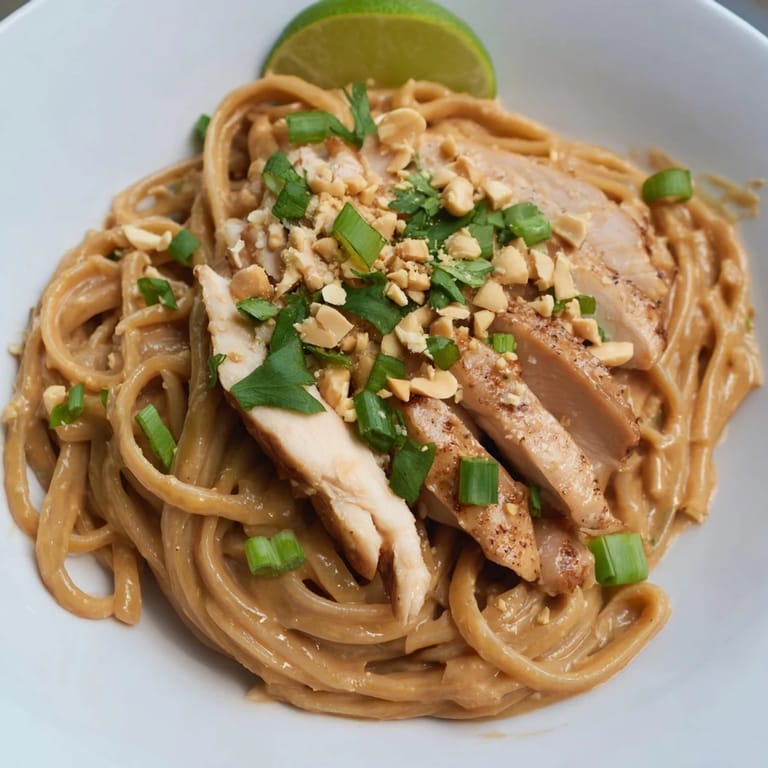
Save My first encounter with this dish happened on a Tuesday evening when I had exactly thirty minutes before guests arrived and nothing thawed except chicken breasts. I grabbed a jar of Thai peanut sauce from the pantry—the kind I'd been meaning to use—threw pasta water on the stove, and discovered something magical happens when you stop overthinking dinner. The combination of creamy peanut, bright lime, and tender chicken over warm noodles felt both effortless and impressive, the kind of meal that makes people ask for the recipe before they've finished eating.
I made this for my sister last spring when she mentioned being tired of her usual rotation, and watching her close her eyes after the first forkful told me everything. She asked if I'd learned to cook Thai food, and I had to laugh—no, just discovered that good shortcuts don't feel like shortcuts when the flavors land right. Now it's the dish she requests, the one that reminds me that simple sometimes hits harder than complicated.
Ingredients
- Linguine or spaghetti (340 g): The texture holds the sauce beautifully, though honestly any pasta works—I've used fettuccine when that's what was in the cupboard and it was equally good.
- Boneless, skinless chicken breast (450 g): Slice it thin so it cooks through quickly and absorbs the flavors rather than sitting tough in the middle of the pan.
- Vegetable oil (1 tbsp): Just enough to get the skillet hot without making the chicken swim; medium-high heat is your friend here.
- Salt and black pepper: Season the chicken generously before it hits the pan—this is where you build the base flavor.
- Ready-made Thai peanut sauce (1 cup): This is the backbone, so pick one you'd eat straight from the jar; it makes all the difference.
- Soy sauce (2 tbsp): Adds a savory depth that keeps the sauce from being one-note sweet.
- Lime juice (2 tbsp): Fresh lime is worth the squeeze; bottled changes the brightness significantly.
- Fresh ginger and garlic (1 tsp ginger, 2 cloves garlic): These wake up the sauce and prevent it from tasting like a single-note condiment.
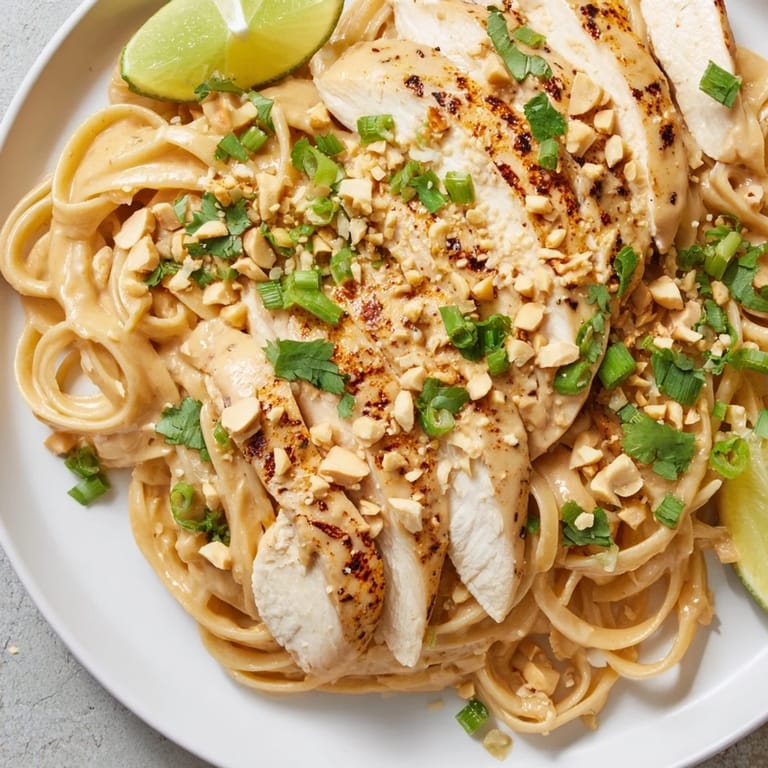
- Fresh cilantro, mint, and green onions: Stir in the cilantro and mint while the dish is still warm so they release their scent, then pile the green onions on top for a fresh crunch against the creamy sauce.
- Roasted peanuts (1/4 cup chopped) and lime wedges: The garnish does real work here—peanuts add texture, lime wedges let people adjust the tang to their taste.
Tired of Takeout? 🥡
Get 10 meals you can make faster than delivery arrives. Seriously.
One email. No spam. Unsubscribe anytime.
Instructions
- Get your pasta water going:
- Fill a large pot with water, salt it generously until it tastes like the sea, and bring it to a rolling boil. This is your first flavor layer, so don't skip the salt.
- Cook the pasta:
- Drop the pasta in and stir occasionally so it doesn't stick to itself. Check it a minute before the package says it's done—you want it tender with just a whisper of resistance when you bite it.
- Sear the chicken:
- While pasta cooks, heat oil in your skillet over medium-high until it shimmers. Lay the chicken slices flat, season them, and let them sit undisturbed for a few minutes so they develop a golden surface. They'll cook through in about 5 to 7 minutes total.
- Build the sauce:
- In the same skillet, lower the heat to medium and add your peanut sauce with soy sauce, lime juice, ginger, and garlic. Stir gently and let it warm through for 2 to 3 minutes until the flavors start speaking to each other.
- Bring it together:
- Add the drained pasta and cooked chicken to the skillet, tossing everything until each strand of pasta and piece of chicken wears the sauce like a coat. The residual heat will help it all meld.
- Finish with freshness:
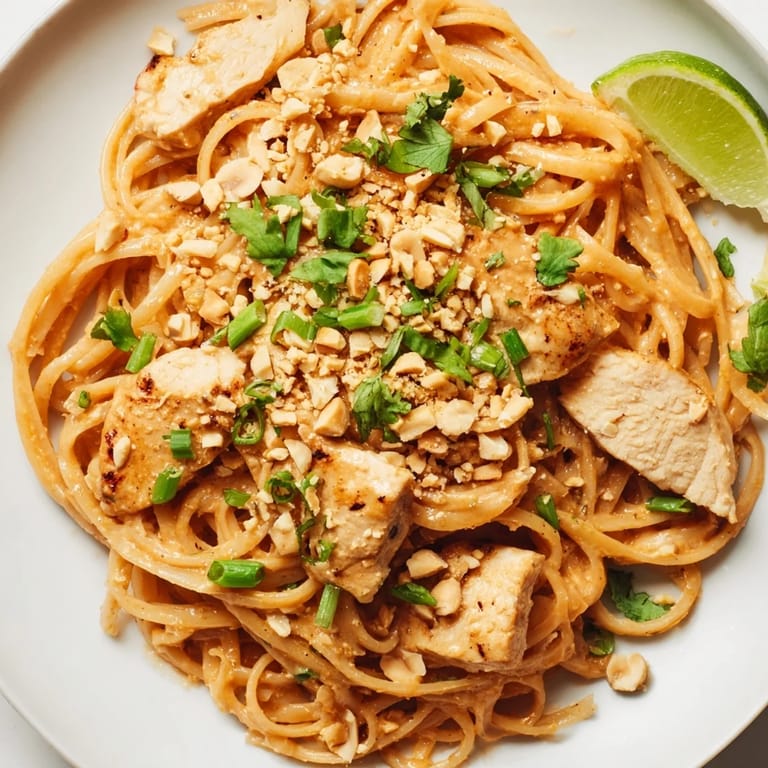
- Remove from heat, stir in cilantro and mint while everything is still warm, then divide into bowls. Scatter peanuts and green onions on top, nestle a lime wedge on the rim, and serve immediately while the heat still carries the herb fragrance.
 Save
Save There's a moment when you're stirring everything together in the skillet where the aroma shifts from individual ingredients to something unified and craveable, and that's when you know it's going to work. That's the moment I love about this dish—it feels like cooking magic but it's really just heat and timing doing their job.
Why This Tastes Like More Than the Sum of Parts
The peanut sauce provides a creamy, slightly sweet foundation, but soy sauce and fresh ginger prevent it from becoming cloying or one-dimensional. Lime juice cuts through everything like a knife, keeping your palate fresh between bites so you're never bored. The garnishes aren't just decoration—cilantro and mint add an herbal brightness that makes you taste the sauce differently with each bite, and the peanut crunch gives your teeth something to do.
Making It Your Own
This recipe is forgiving because the peanut sauce carries most of the flavor work, which means you can adjust things without breaking it. More heat-loving? Add sriracha or chili flakes to taste. Prefer tofu? It absorbs the sauce even better than chicken. Avoiding gluten? Rice noodles swap in seamlessly and actually have a nicer chew. I've also found that a splash of coconut milk stirred into the sauce mellows it slightly if you prefer less intensity, though I usually skip it.
Serving and Pairing
This dish shines on its own, but if you're building a meal around it, a crisp white wine like Riesling echoes the lime and brightness, or iced Thai tea adds another herbal note that feels natural alongside the cilantro and mint. I sometimes add a simple cucumber salad on the side for cooling contrast, and a few lime wedges scattered on the table let people adjust the tang to their preference without touching the pan again.
- Serve immediately while the sauce is still warm and coating everything evenly.
- Have extra lime wedges ready because people always want more brightness than you expect.
- If you make this ahead, reheat gently on the stovetop with a splash of water rather than the microwave, which tends to make the noodles gummy.
 Save
Save This recipe has saved countless weeknight dinners and impressed more people than its simplicity suggests it should. It's the kind of dish that reminds you that good cooking isn't about complexity—it's about knowing what each ingredient does and letting them do it.
Recipe FAQs
- → What pasta works best for this dish?
Linguine or spaghetti are ideal as they hold the creamy peanut sauce well and cook quickly.
- → Can I substitute the chicken with another protein?
Yes, tofu provides a great vegetarian alternative and pairs nicely with the peanut sauce.
- → How do I add more heat to the dish?
A dash of sriracha or red chili flakes stirred into the sauce will add a spicy kick.
- → What fresh herbs complement the peanut sauce best?
Cilantro and mint bring bright, fresh notes that balance the richness of the sauce.
- → Is this suitable for gluten-free diets?
Using rice noodles instead of wheat pasta makes this dish gluten-free while maintaining texture.