 Save
Save Last summer I stumbled into a tiny apartment kitchen in Barcelona where my friend Carmen was crushing olives with a mortar and pestle. The sharp briny scent hit me before I even crossed the threshold. She stirred this dark mysterious mixture into steaming pasta and I watched skeptical as it coated each strand. One bite changed everything about how I think about quick weeknight dinners.
My roommate walked in while I was making it last night and immediately asked what smelled so incredible. The garlic hits the pan and suddenly the whole apartment feels warmer more inviting. We ate standing up at the counter too impatient to bother with proper plates.
Ingredients
- Mixed pitted olives: The combination of briny Kalamata and bright green olives creates layers of flavor you cannot get from just one variety
- Capers: These little flower buds add an explosive pop of saltiness that cuts through the rich olive oil
- Fresh garlic: Raw garlic might seem aggressive but it mellows slightly when tossed with hot pasta
- Extra virgin olive oil: Do not skimp here because the oil carries all those bold flavors and creates that silky coating
- Fresh parsley: This brings a grassy fresh brightness that balances all the intense salty elements
- Lemon juice: Just enough acid to wake up the entire dish and make everything sing
- Dried spaghetti or linguine: Long strands hold onto the chunky tapenade better than short pasta shapes
- Pasta water: This starchy liquid is the secret that transforms the tapenade into a proper sauce
Tired of Takeout? 🥡
Get 10 meals you can make faster than delivery arrives. Seriously.
One email. No spam. Unsubscribe anytime.
Instructions
- Get your pasta water going:
- Bring a large pot of water to a rolling boil and salt it generously until it tastes like the sea
- Build the tapenade:
- Pulse the olives capers garlic parsley and lemon juice until you have a coarse chunky mixture then drizzle in the olive oil while the processor runs
- Cook the pasta:
- Add the spaghetti to the boiling water and cook until it is al dente then carefully scoop out that precious cup of starchy cooking water before draining
- Bring it together:
- Return the hot pasta to its pot add the tapenade and toss vigorously adding splashes of pasta water until the sauce turns glossy and clings to every strand
- Finish and serve:
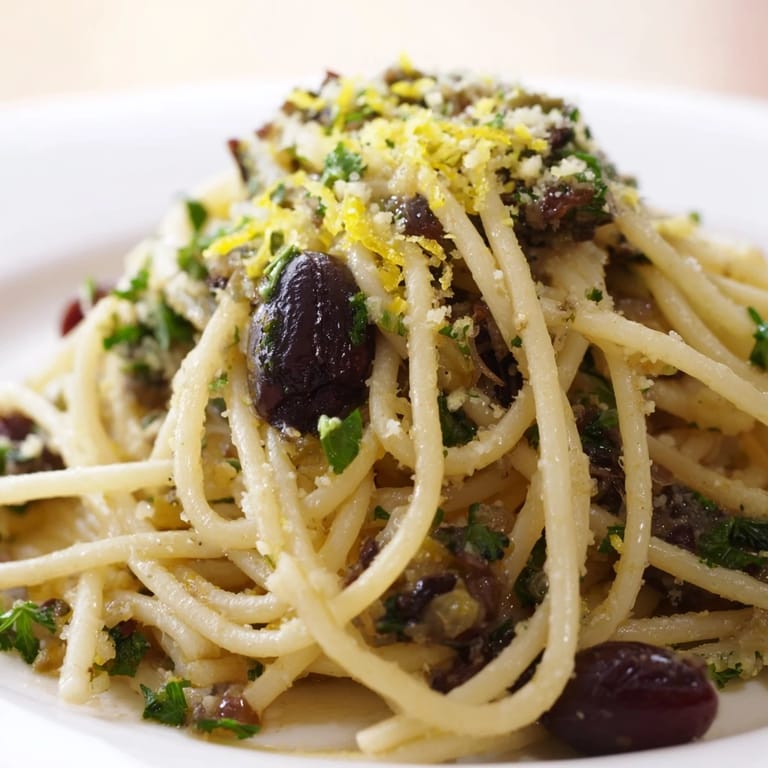
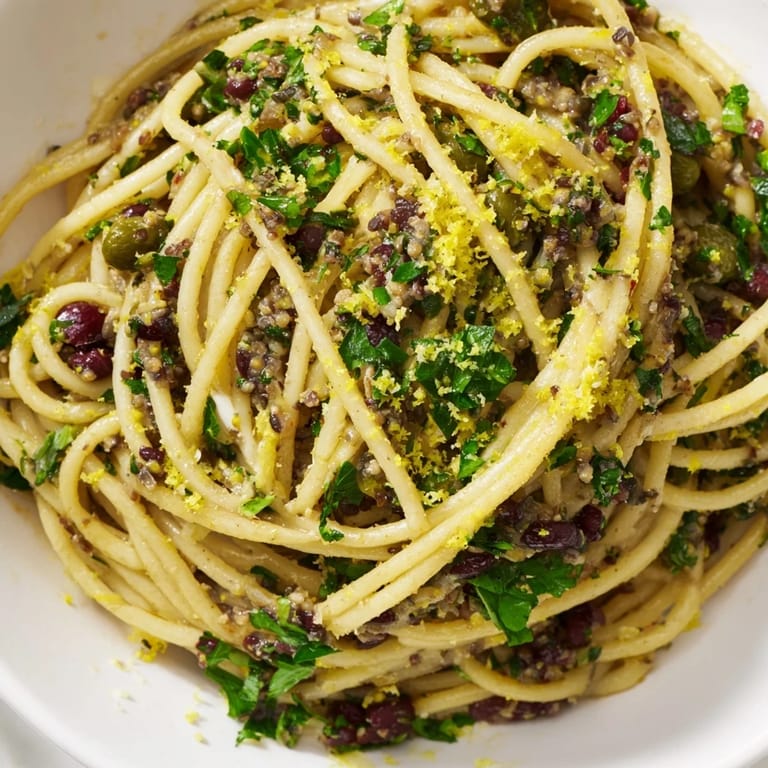
- Divide into bowls and top with extra parsley lemon zest and maybe some Parmesan if you are feeling indulgent
 Save
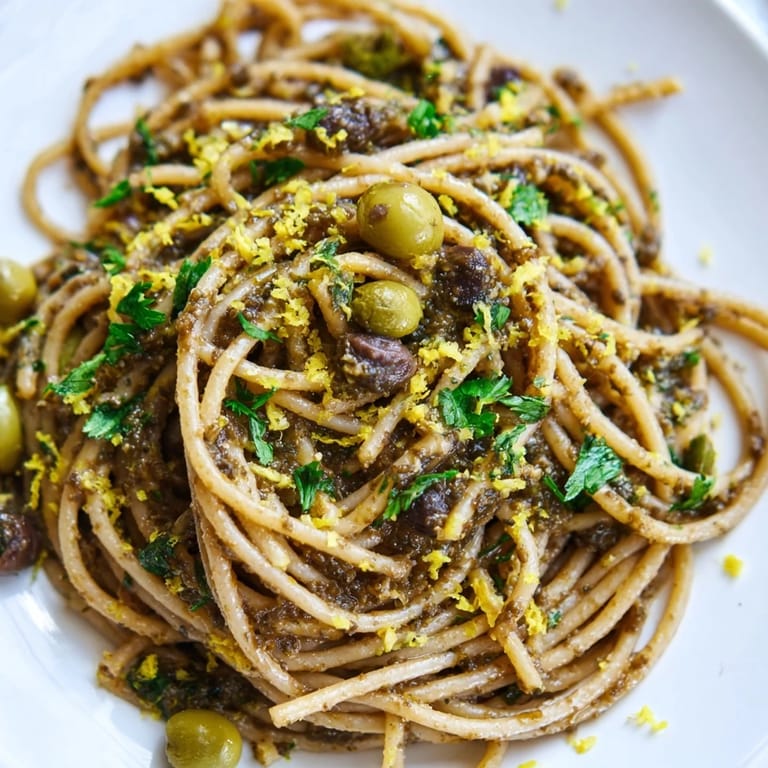
Save This has become my go to when friends drop by unexpectedly because it looks impressive but requires almost zero active cooking time. Something about the combination of salty olives and bright lemon just makes people lean in a little closer around the table.
Making It Your Own
Once you master the basic tapenade you will start seeing possibilities everywhere. Sometimes I add sun-dried tomatoes for a deeper sweeter note or a handful of arugula at the end for some peppery bite.
What To Serve With It
A crisp green salad with an acidic vinaigrette cuts through the richness beautifully. Grilled vegetables or some crusty bread to soak up any extra sauce never hurts either.
Storage And Make Ahead Tips
The tapenade actually improves after a day or two in the refrigerator as the flavors meld together. Make a double batch and keep it in a jar for instant meals.
- Store leftover tapenade in a sealed jar topped with a thin layer of olive oil
- The pasta is best eaten immediately but leftovers reheat surprisingly well with a splash of water
- Never refrigerate the pasta and sauce together unless you want it to absorb all the moisture
 Save
Save Some nights the simplest dishes end up being the ones we remember most fondly.
Recipe FAQs
- → What does tapenade taste like?
Tapenade offers a bold, briny flavor profile with salty notes from olives and capers, subtle pungency from garlic, and bright acidity from lemon juice. The texture is chunky and spreadable, creating a rustic coating for pasta that's intensely savory and satisfying.
- → Can I make the tapenade ahead of time?
Absolutely. Prepare the tapenade up to 5 days in advance and store it in an airtight container in the refrigerator. The flavors actually develop and improve over time. Bring it to room temperature before tossing with hot pasta for the best consistency and flavor integration.
- → What type of olives work best?
A combination of Kalamata and green olives provides excellent balance—Kalamatas bring deep, rich brine while green olives add brighter, fruitier notes. You can also use niçoise, Gaeta, or cured black olives. Avoid stuffed olives as their fillings can alter the traditional flavor profile.
- → Is this dish vegan?
Yes, when prepared without Parmesan garnish, this dish is completely vegan. Use vegan-certified pasta, as some traditional brands process with animal products. The tapenade itself contains no animal products, relying on olive oil for richness and capers for umami depth.
- → Why reserve pasta water?
Pasta water contains starch released during cooking, which helps emulsify the olive oil and creates a silky sauce that clings to each strand. This starchy liquid bridges the gap between chunky tapenade and slippery pasta, ensuring even coating and preventing the sauce from separating.