 Save
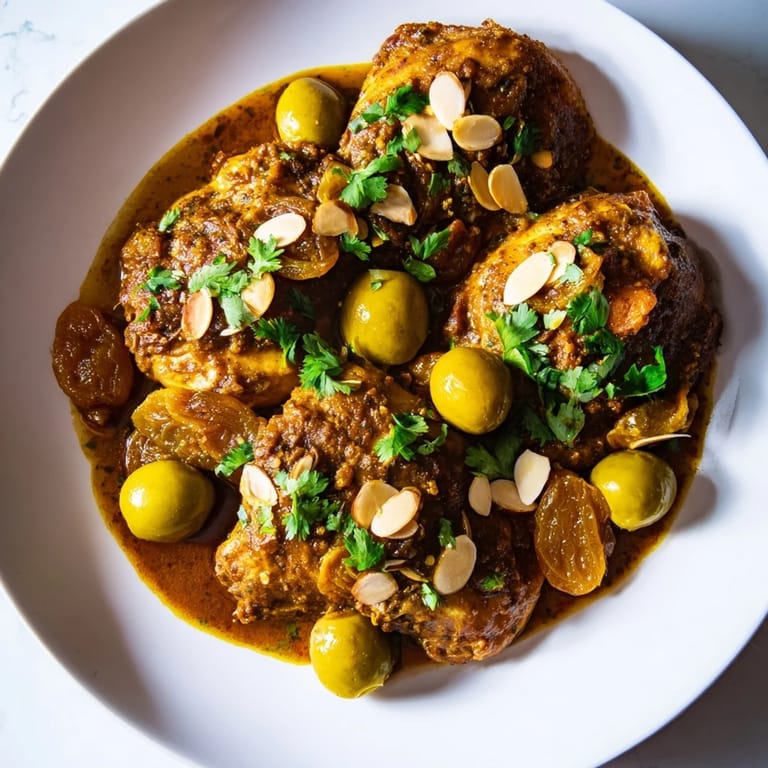
Save The first time I tasted authentic Moroccan tagine, I was sitting cross-legged on a low cushion in Marrakech, steam rising from a conical earthenware pot that had been simmering for hours. The chicken was so tender it fell apart with a fork, and the sweet apricots mingled with briny olives and warm spices in a way that made me close my eyes. That meal taught me that cooking isn't about following rules—it's about balance, patience, and letting flavors have a conversation. Years later, I recreated it in my own kitchen, and now it's become my go-to dish when I want to transport myself and whoever I'm cooking for to that same place of wonder.
I made this for my neighbor Sarah on a cold November evening when her family was going through a rough patch, and she told me later that the smell alone made her feel comforted before she'd even taken a bite. There's something about the combination of cinnamon and turmeric that fills a kitchen with such warmth you can almost wrap yourself in it. That night, we ended up talking for hours, the tagine bubbling softly on the stove, and I realized this dish has a quiet power to bring people together.
Ingredients
- Bone-in, skin-on chicken thighs (1.5 lbs): These are your secret weapon—they stay moist and flavorful during the long simmer, unlike breast meat which can dry out.
- Fresh ginger, garlic, and onion: This aromatic base is where the magic starts; don't skip the ginger, as it adds a gentle warmth that ties everything together.
- Spice blend (cumin, coriander, cinnamon, paprika, turmeric): Toast these briefly in the hot oil to unlock their oils and deepen their flavors—your nose will tell you when they're ready.
- Dried apricots: Halving them helps them release their sweetness into the sauce while still holding their shape.
- Preserved lemon: If you can find it, this ingredient elevates the dish from good to unforgettable with its briny, complex tang; the rind is what you use, not the pulp.
- Green olives, pitted and halved: These add a savory contrast to the sweet fruit and should go in near the end so they don't soften too much.
- Toasted almonds and cilantro: These are the bright finishing touches that add texture and freshness after the long simmer.
Tired of Takeout? 🥡
Get 10 meals you can make faster than delivery arrives. Seriously.
One email. No spam. Unsubscribe anytime.
Instructions
- Prepare and brown the chicken:
- Pat your thighs completely dry—this is the only way they'll develop a golden, flavorful crust in the hot oil. Once the oil shimmers, lay them in confidently and resist the urge to move them; let them sit for a few minutes on each side until the skin turns deep golden brown.
- Build your aromatic base:
- After removing the chicken, soften your onions and carrots slowly in the same pot, letting them absorb all those delicious browned bits stuck to the bottom. This takes patience, but it's where flavor lives.
- Bloom the spices:
- When you add the garlic, ginger, and spice blend, you'll notice the kitchen suddenly smells like a Moroccan spice market—that's your signal that the spices are waking up and releasing their essential oils. Keep the heat medium so they don't burn.
- Combine and simmer:
- Once the tomatoes are in and the chicken returns to the pot with the apricots and broth, everything comes together into a cohesive sauce. The low, covered simmer is where the chicken becomes fork-tender and absorbs all the surrounding flavors.
- Finish with olives and taste:
- Add the olives toward the end so they stay bright and don't turn mushy, then taste and adjust seasoning—you might need a pinch more salt or a squeeze of fresh lemon juice to balance the sweetness.
 Save
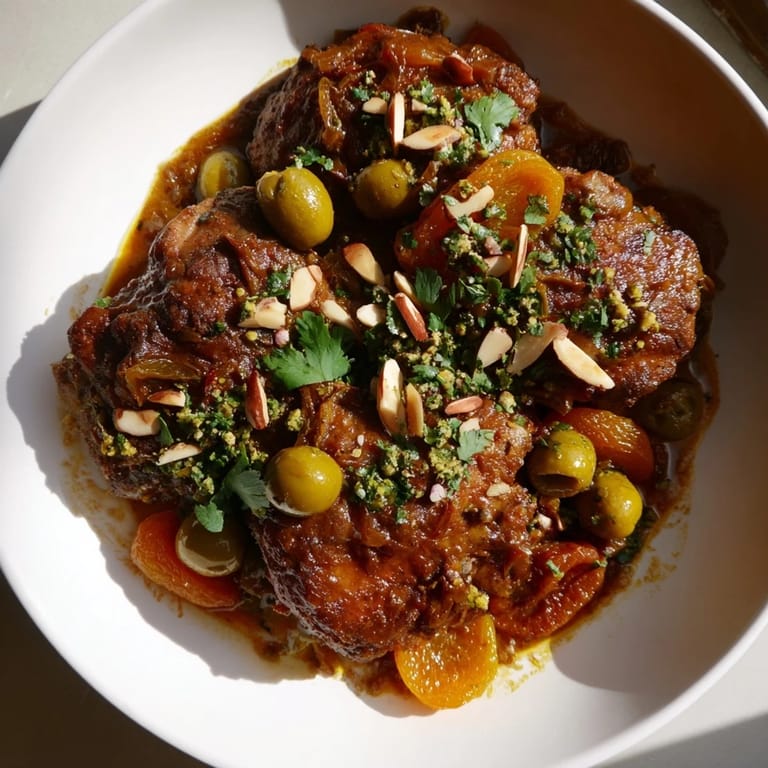
Save My friend Marcus, who grew up eating his grandmother's tagines, tasted this dish and got quiet for a moment before telling me it reminded him of home in a way he wasn't expecting. That's when I understood that food can be a bridge, carrying us to places we love and to people we miss.
Serving and Pairing Ideas
This tagine was made to be served over something that can soak up the silky sauce—couscous is the traditional choice, but I've had equally wonderful results with fluffy white rice or even warmed flatbread torn into pieces. The key is to have something to catch every last drop of that golden, spiced sauce. If you want to go lighter, serve it in shallow bowls with just a small portion of couscous, letting the chicken and sauce be the main attraction.
Variations and Flexibility
One evening I made this for a vegetarian friend by swapping the chicken for hearty chickpeas and adding extra root vegetables like parsnips and sweet potato, and honestly, it was just as satisfying. You can also experiment with the spice blend—if you prefer more heat, stir in a teaspoon of harissa paste when you add the tomatoes. The framework of this dish is forgiving; it's built on balance rather than precision, so don't be afraid to adjust based on what you have on hand.
Make Ahead and Storage Tips
This is one of those dishes that tastes even better the next day, once all the flavors have had time to meld and deepen. I often make it on a Sunday afternoon and reheat it gently throughout the week, knowing that each meal will be just as delicious as the last. Store it in an airtight container in the refrigerator for up to four days, or freeze it for up to three months—thaw it overnight in the fridge before reheating gently on the stovetop.
- Reheat gently over medium-low heat with a splash of broth to keep the sauce silky and prevent the chicken from drying out.
- If you're freezing, leave out the fresh cilantro and almonds; add these garnishes fresh when you serve it again.
- Make the full recipe even if you're cooking for two—the leftovers are genuinely worth keeping around.
 Save
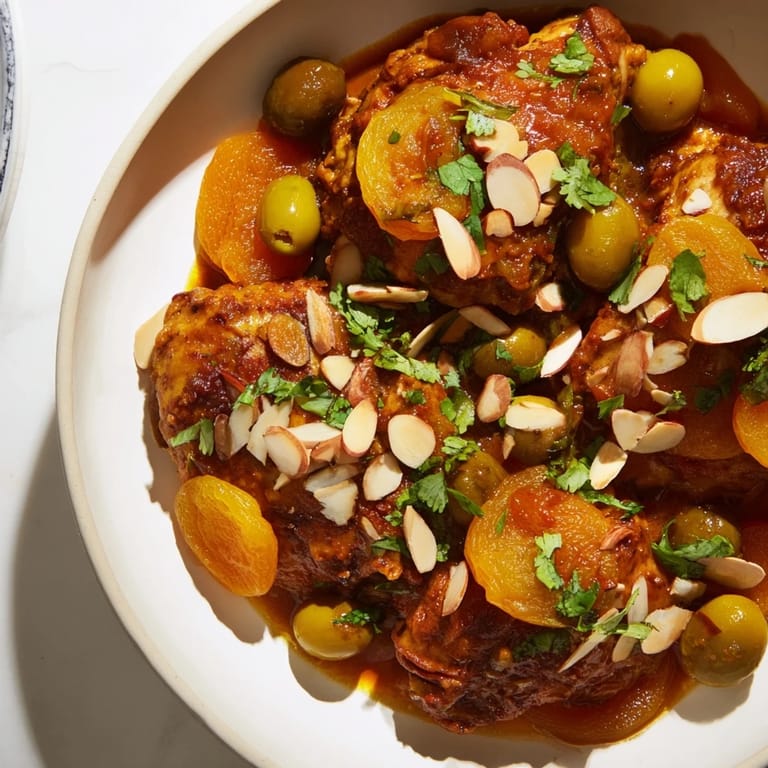
Save This Moroccan tagine is a quiet lesson in how simple ingredients, given time and intention, can become something that nourishes both body and spirit. I hope it becomes as beloved in your kitchen as it has in mine.
Recipe FAQs
- → What cut of chicken is best for this dish?
Bone-in, skin-on chicken thighs are ideal as they remain tender and flavorful during the slow simmer.
- → Can I use fresh apricots instead of dried?
Dried apricots provide concentrated sweetness and texture; fresh apricots may become too soft and lose flavor during cooking.
- → What is the role of preserved lemon in this dish?
Preserved lemon adds a bright, tangy depth of flavor that complements the warm spices and balances sweetness.
- → How can I adjust the spice level?
The optional cayenne pepper controls heat; omit it for a milder flavor or add harissa paste for a spicier kick.
- → What sides pair well with this dish?
Traditional accompaniments include steamed couscous, fluffy rice, or warm flatbread to soak up the sauce.
- → Is it possible to make a vegetarian version?
Yes, chickpeas and root vegetables can replace the chicken while keeping the flavorful spice blend and fruit elements.