 Save
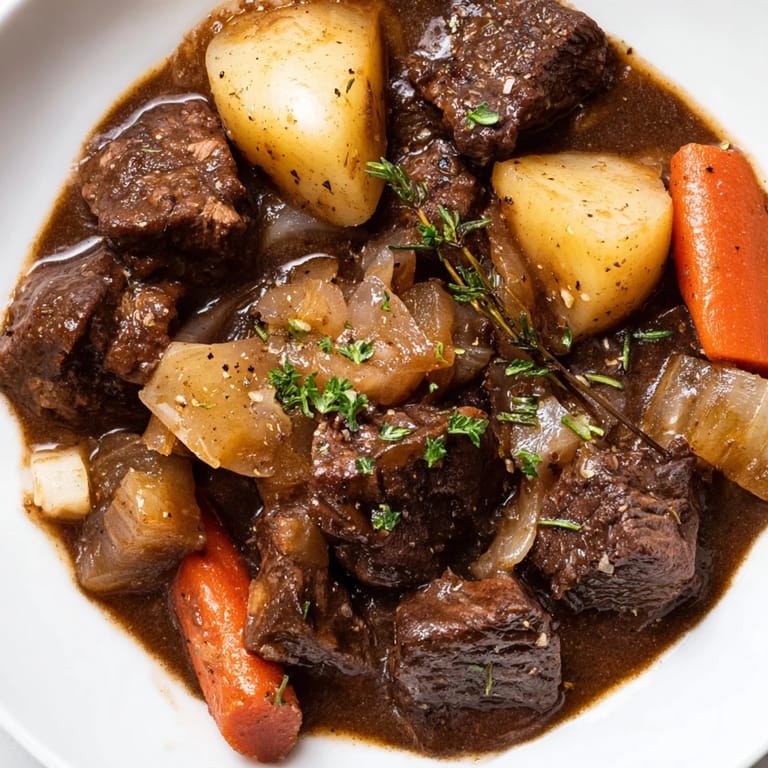
Save My grandmother used to make this stew on the coldest Dublin mornings, filling the whole house with a smell that made everything feel right. One winter, I watched her brown the beef with such care, turning each cube until it was nearly black, and she told me that's where all the flavor lives. Years later, standing in my own kitchen on a gray afternoon, I found myself doing exactly what she did—and suddenly I understood why this simple stew became the thing people asked for, the dish that somehow turned a bad day into something manageable.
I made this for my partner on our first winter together, nervous about impressing someone who'd grown up eating real Irish stew. He walked in from work, stopped in the doorway, and just breathed it in. We didn't talk much while eating—just quiet, concentrated spoon clinking—and when he looked up, he didn't need to say anything. That's the moment I knew this recipe was keeper.
Ingredients
- Beef chuck, 1.5 kg (3.3 lbs), cut into 2-inch cubes: This cut has just enough marbling to stay moist during long cooking; avoid lean cuts that turn stringy.
- Potatoes, 4 large, peeled and cut into chunks: Use floury varieties like Maris Piper or Russsets; they soften beautifully without falling apart completely.
- Carrots, 4 large, peeled and sliced: Cut them into thick batons so they don't disappear into the broth.
- Onions, 2 large, chopped: They'll break down and thicken the stew slightly, adding natural sweetness.
- Celery stalks, 2, sliced: This adds depth and brightness that balances the richness of the beef.
- Garlic, 3 cloves, minced: Add it after softening the vegetables so it doesn't burn and turn bitter.
- Beef stock, 1.2 liters (5 cups), gluten-free if needed: Use homemade or good-quality store-bought; weak stock makes weak stew.
- Guinness stout or dark beer, 330 ml (1 bottle), optional: It adds a subtle bitterness and depth; the alcohol cooks off completely.
- Tomato paste, 2 tbsp: A small amount adds umami without making the stew taste tomatoey.
- Worcestershire sauce, 2 tbsp, gluten-free if needed: This is your secret weapon for savory depth.
- Bay leaves, 2: Don't skip these; they're essential for that classic stew flavor.
- Dried thyme and rosemary, 1 tsp each: Use dried here rather than fresh, as they hold up to the long cooking time.
- Salt and black pepper, to taste: Taste as you go; you'll likely need more than you think.
- Vegetable oil, 3 tbsp: High smoke point oil is crucial for properly browning the beef.
- Fresh parsley, 2 tbsp, chopped: Just for garnish, but it adds a bright moment to each spoonful.
Tired of Takeout? 🥡
Get 10 meals you can make faster than delivery arrives. Seriously.
One email. No spam. Unsubscribe anytime.
Instructions
- Dry your beef and season it:
- Pat the cubes completely dry with paper towels—moisture is the enemy of browning. Season generously with salt and pepper now, not later.
- Build a flavorful crust:
- Heat oil in your Dutch oven until it shimmers. Brown the beef in batches without crowding; you want a deep golden crust, not steamed meat. This takes patience, but it's where the stew's soul lives.
- Create your aromatic base:
- In the same pot, soften the onions and celery until they're translucent and fragrant. Add garlic and cook just until you smell it—about one minute.
- Deepen with tomato paste:
- Stir in the tomato paste and let it caramelize slightly in the pot, about one minute. This concentrates its flavor.
- Add the beer, if using:
- Pour in the Guinness (if you're using it) and scrape the bottom of the pot with a wooden spoon, lifting up all those browned bits. Let it bubble gently for two minutes, then add it back to the pot.
- Combine everything and simmer:
- Return the beef to the pot, add carrots, potatoes, bay leaves, thyme, rosemary, beef stock, and Worcestershire sauce. Bring to a gentle boil, then cover and reduce heat to low. This is where the magic happens—let it go for two to two and a half hours, stirring occasionally.
- Finish and serve:
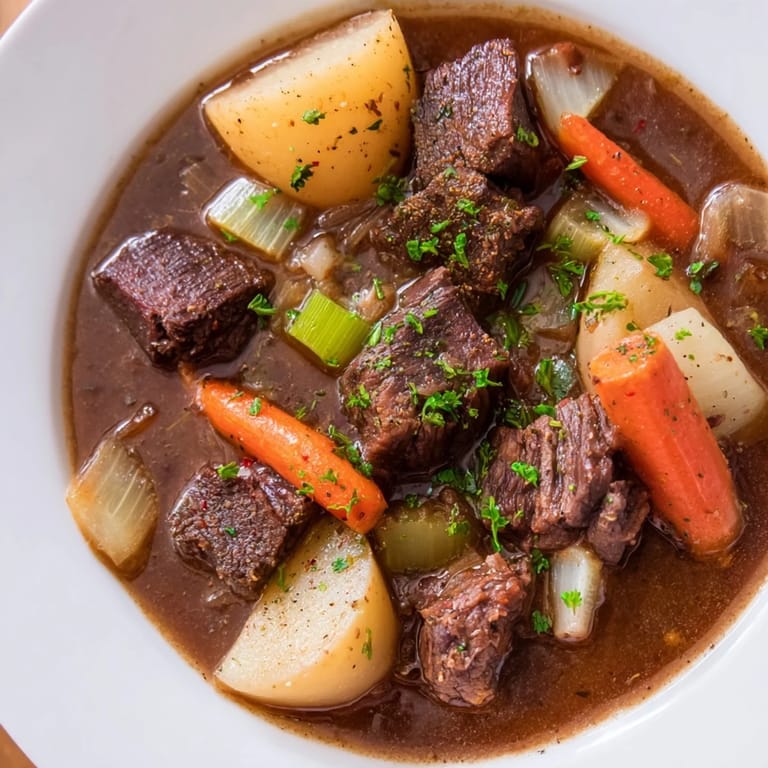
- When the beef is fork-tender and the vegetables are soft, remove the bay leaves. Taste and adjust seasoning. Serve hot, scattered with fresh parsley.
 Save
Save I learned something watching my grandmother that day: stew isn't about speed or fancy technique. It's about paying attention, about giving ingredients time to become something more than themselves. Every time I make it now, I feel a little bit like she's standing next to me.
Why This Stew Tastes Like Home
Irish beef stew exists for a reason—it's built from ingredients that grow in Irish soil and thrive in Irish weather. The long, slow cooking isn't a limitation; it's the entire point. This is food that was designed to warm you from the inside while something cold and gray happens outside your window. There's a reason people come back to it, generation after generation.
The Secret to Tender Beef
The beef becomes tender through time and moisture, not through any special trick. The gentle simmer keeps the meat from toughening while the collagen breaks down into gelatin, which is what gives the broth its silky, rich body. If your stew ever tastes a bit thin or lacks richness, it's usually because the beef didn't have enough time—give it those full two and a half hours, and you'll see the difference.
Variations and Serving Ideas
This stew is forgiving and flexible. Some people swear by lamb instead of beef, which gives it a completely different character. Others serve it over mashed potatoes or with crusty bread torn off by hand. A few people I know add pearl barley or thicken it by mashing a few potato chunks right in the pot. The beauty is that it adapts to what you have and what you love.
- If you're serving gluten-free, just double-check your Worcestershire sauce and beer before you start.
- Make a double batch and freeze half—it actually tastes better after a few days, when all the flavors have had time to get acquainted.
- Leftovers transform into cottage pie; top with mashed potatoes and broil until golden.
 Save
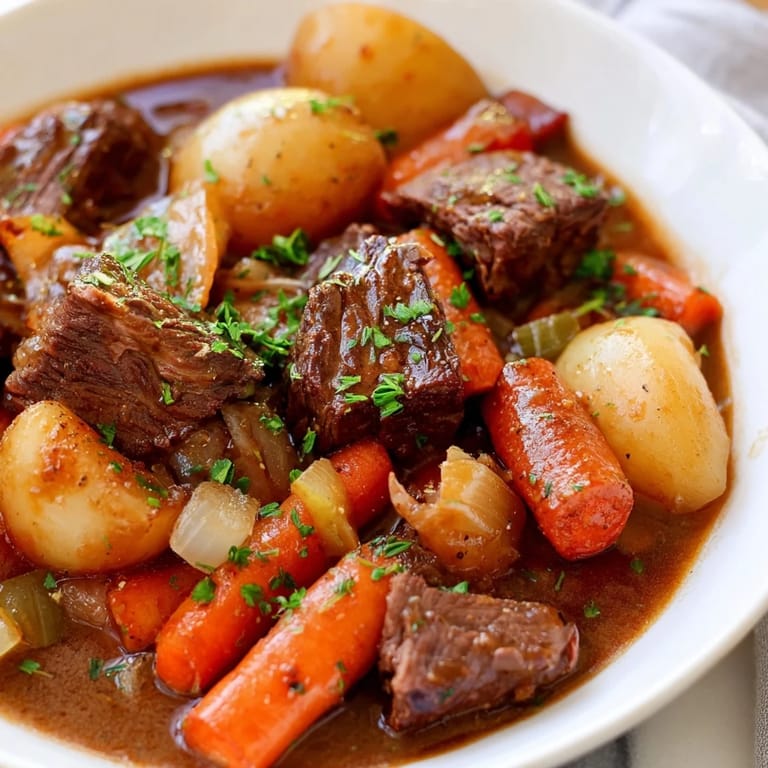
Save This is the kind of recipe that gets passed down because it works, because it tastes like someone cares, and because it turns an ordinary evening into something worth remembering. Make it for people you love.
Recipe FAQs
- → Can I substitute lamb for the beef?
Yes, lamb can be used for a traditional variation, offering a richer flavor and tender texture similar to beef.
- → What is the purpose of adding Guinness stout?
Guinness adds depth and a subtle bitterness that enhances the savory flavors, but it can be omitted for gluten-free options.
- → How do I thicken the stew naturally?
Mash a few potato pieces against the pot’s side and stir them in to gently thicken the broth without added thickeners.
- → What herbs best complement this dish?
Bay leaves, thyme, and rosemary provide earthiness and aromatic warmth that balance the richness of the beef and vegetables.
- → Can this be prepared in advance?
Yes, flavors deepen when refrigerated overnight and gently reheated; it makes an excellent make-ahead meal.