 Save
Save I discovered this recipe on a Tuesday night when I had a block of tofu staring at me from the fridge and absolutely nothing else appealing to cook. My friend had just brought back a jar of gochujang from a Korean market, raving about its complexity, so I decided to finally use it. Twenty minutes later, I was standing in my kitchen amazed at how something so simple could taste so polished, with that perfect balance of heat and honey that made me reach for another piece before the first batch had even finished crisping.
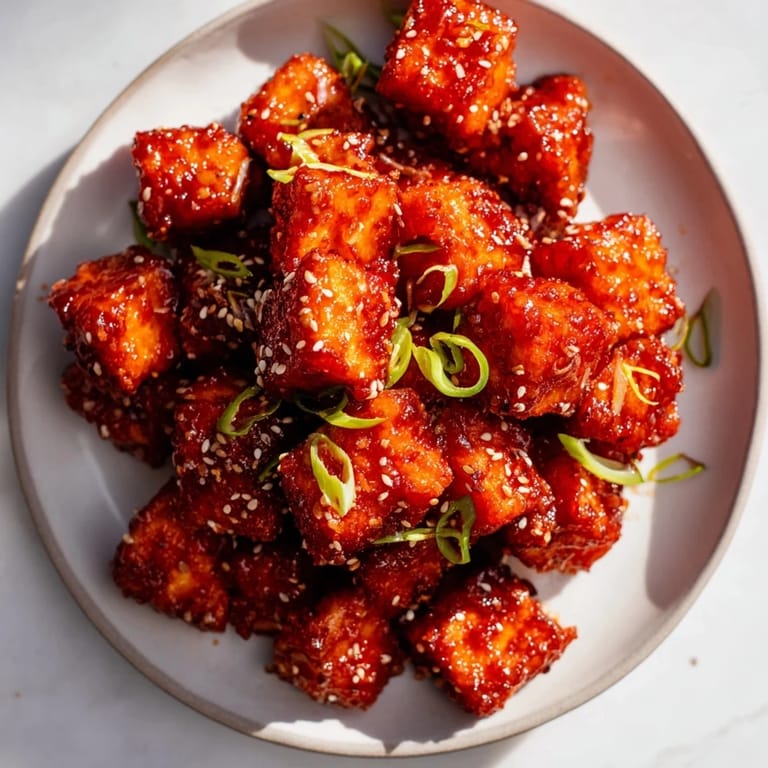
The first time I made this for a dinner party, I was nervous that my vegetarian guests would feel like they were eating "healthy food" instead of actual food, but three people asked for the recipe before dessert even arrived. One friend actually texted me the next day asking if I'd accidentally used secret chicken. It wasn't the proteins that made them believers—it was the sauce, glossy and sticky, clinging to every edge of those golden cubes.
Ingredients
- Firm tofu, 400 g (14 oz): Press it hard and press it long because any lingering moisture will sabotage your crispiness, and soggy tofu is the villain in this story.
- Cornstarch, 2 tbsp: This is your secret to that restaurant-quality crunch that makes people lean in closer when they take their first bite.
- Salt, 1/2 tsp: Season the coating, not just for flavor but to help draw out any remaining moisture before it hits the pan.
- Neutral oil, 2 tbsp: Medium heat matters here—blast it too hard and you'll burn the outside before the inside develops color.
- Gochujang, 2 tbsp: This Korean chili paste is fermented and funky in the best way, bringing depth that simple hot sauce can't match.
- Honey, 2 tbsp: It balances the paste's savory spice and creates that sticky glaze that clings beautifully.
- Soy sauce, 1 tbsp: Use a good one if you have it; the difference between cheap and decent soy sauce shows up immediately in taste.
- Rice vinegar, 1 tbsp: Cuts through the richness and keeps the sauce from feeling one-dimensional.
- Sesame oil, 1 tbsp: Toasted sesame oil especially brings a toasty, almost nutty note that transforms everything around it.
- Garlic and ginger: Fresh versions only—they provide brightness that jarred versions can never quite deliver.
- Water, 2 tbsp: Adjusts the sauce consistency; you want it flowing but thick enough to coat.
- Sesame seeds and green onions: These aren't just garnish—they add textural contrast and a fresh finish that keeps the dish from feeling heavy.
Tired of Takeout? 🥡
Get 10 meals you can make faster than delivery arrives. Seriously.
One email. No spam. Unsubscribe anytime.
Instructions
- Press your tofu like you mean it:
- Wrap the block in a clean kitchen towel, set it on a plate, and weight it down with something heavy for at least ten minutes. You'll be shocked how much liquid comes out, and this step is genuinely non-negotiable for crispiness.
- Cube and coat:
- Cut into roughly 2 cm pieces, then toss with cornstarch and salt until every surface is dusted. Think of it like giving each cube a protective armor that'll turn golden under heat.
- Fry until golden:
- Heat oil over medium-high until it shimmers, then add tofu and let it sit undisturbed for a couple minutes before turning. You're looking for that deep golden color on each side, which takes around 8–10 minutes total.
- Build the sauce:
- Whisk gochujang, honey, soy sauce, rice vinegar, sesame oil, garlic, ginger, and water together in a bowl until smooth. Taste it raw—this is your moment to adjust heat level before it goes into the pan.
- Simmer and thicken:
- Pour the sauce into the same skillet, bring it to a gentle simmer, and let it bubble for 2–3 minutes until it visibly thickens and coats the back of a spoon. You'll smell the fermented depth of the gochujang come alive as it warms.
- Return the tofu and coat:
- Add your crispy cubes back in and toss gently for about two minutes, letting the sauce cling to every surface and turn sticky and glossy. Work quickly so the tofu stays crisp outside while absorbing all that flavor.
- Finish and serve:
- Transfer to a plate while everything is still hot, scatter sesame seeds and green onions on top, and serve immediately. The contrast between the warm, sticky tofu and the fresh brightness of those garnishes is what makes people actually say wow.
 Save
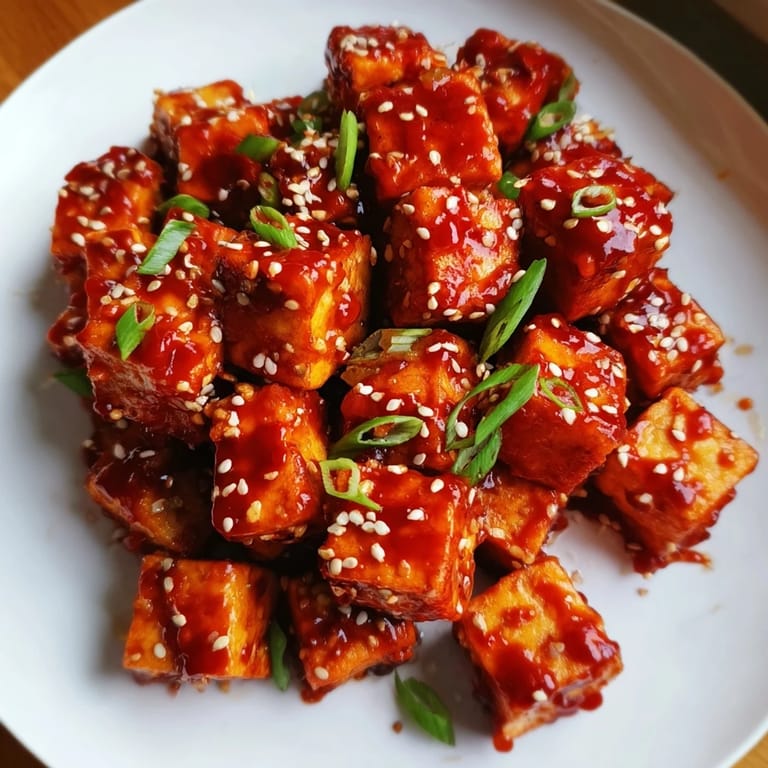
Save I made this last month for my partner on a random Thursday, and they looked up from their plate and said, "This tastes like you spent three hours on it." That moment—when something simple and quick tastes like you genuinely cared about every detail—is exactly why I keep coming back to this recipe.
Flavor Balance and the Science Behind It
The magic here isn't luck; it's chemistry happening right in front of you. Gochujang brings savory, spicy funk; honey provides sweetness and helps the sauce cling; soy sauce adds umami depth; vinegar brightens everything up; and sesame oil drapes a warm, toasty note over the whole thing. Together, they create something that feels complex and considered, not like you just threw hot paste on fried tofu. I learned this by making it badly the first time, using whatever ingredients I had on hand, and the result tasted like a mistake. Now I respect each element's job and never skip anything.
Ways to Serve and Adapt
Over steamed jasmine rice is the obvious move, and it's a move for a reason—the rice soaks up all that sticky sauce and becomes the best part of the meal. But I've also spooned it into lettuce cups with fresh herbs for a hands-on appetizer situation, layered it over quinoa when I wanted something heartier, and even tossed it with roasted broccoli florets for a vegetable-heavy dinner. The sauce is forgiving; it works with almost anything you want to pair it with because the flavor is bold enough to stand on its own but not so aggressive that it overpowers supporting players.
Making It Your Own
The original recipe is balanced perfectly, but your kitchen isn't my kitchen, and your gochujang might pack more or less heat than mine. Taste the sauce before the tofu goes back in, and adjust accordingly—add more honey if you're overwhelmed by heat, more gochujang if you want it spicier, more vinegar if it feels too sweet. I also learned that using maple syrup instead of honey creates a deeper, earthier sweetness that some people prefer, and it works beautifully if you're vegan. Fresh herbs matter too; scallions are standard, but cilantro, Thai basil, or even a sprinkle of furikake layered on top of the sesame seeds creates interesting variations.
- If you can't find gochujang, a combination of sambal oelek and miso paste in similar proportions creates a decent approximation, though the flavor won't be identical.
- Add steamed broccoli, sautéed mushrooms, or snap peas directly to the skillet while the sauce simmers for a complete meal in one pan.
- The leftovers are actually incredible cold or at room temperature the next day, so don't hesitate to make extra.
 Save
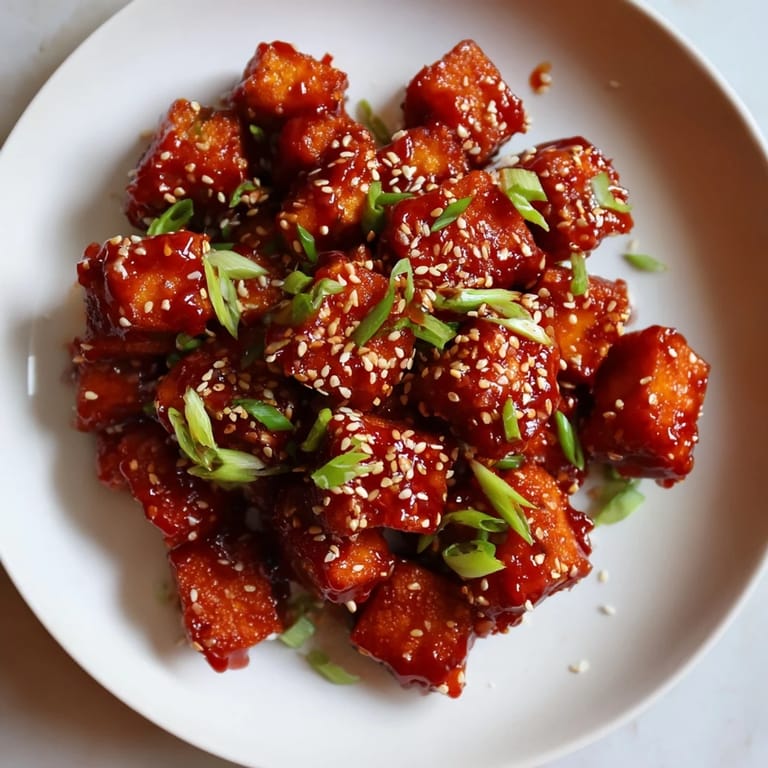
Save This recipe lives on my weeknight rotation because it delivers something genuinely satisfying without asking for much in return. Once you make it once, you'll have it forever.