 Save
Save The first time I tasted koshari, I was standing at a street cart in Cairo at dusk, the air thick with the smell of frying onions and cumin. The vendor handed me a paper cone overflowing with layers of rice, lentils, and pasta, each component distinct yet somehow meant to be together. I drizzled the tangy garlic vinegar over the top and took a bite, and suddenly understood why this humble dish has fed millions of hungry Egyptians for over a century. It wasn't fancy or precious—it was just honest, satisfying, and utterly unforgettable.
I made this for my brother one rainy evening when he was stressed about work, and watching his face light up when he tasted it reminded me that food doesn't need to be complicated to be healing. He went back for thirds, mixing the layers differently each time, discovering new combinations. That's when I realized koshari isn't just a dish—it's an invitation to play, to make it your own, to find comfort in those humble, honest layers.
Ingredients
- Medium-grain rice: Rinsed beforehand, it stays fluffy and separate rather than clumping together, which is essential for proper layering.
- Brown or green lentils: These hold their shape during cooking, unlike red lentils which turn mushy; they give koshari its earthiness.
- Small elbow macaroni or ditalini pasta: Their small size lets them integrate with the other layers without overwhelming the dish.
- Crushed tomatoes: Use canned San Marzano if you can find them—they have a natural sweetness that balances the spices beautifully.
- Garlic and onions: The aromatic foundation; don't skip the mincing step or the frying—those crispy onions are what people remember.
- Ground cumin and coriander: These warm spices are what make koshari taste authentically Egyptian, so measure them carefully.
- Chili flakes: Optional but recommended; they add a gentle heat that wakes up the whole dish without overwhelming it.
- Vegetable oil: For frying the onions until they're golden and crunchy, not burnt.
Tired of Takeout? 🥡
Get 10 meals you can make faster than delivery arrives. Seriously.
One email. No spam. Unsubscribe anytime.
Instructions
- Simmer the lentils until tender:
- Bring them to a rolling boil in salted water, then drop the heat to medium-low and let them bubble quietly for 20–25 minutes. They're done when you can easily break one with a wooden spoon, but they shouldn't be falling apart.
- Cook the rice until fluffy:
- Use the absorption method—water and rice in a 2-to-1 ratio with a pinch of salt, brought to a boil, covered, and simmered gently until the water is completely absorbed and the grains are tender. Fluff it gently with a fork so the grains stay separate.
- Boil the pasta until al dente:
- In a large pot of salted boiling water, cook until it still has a slight firmness when you bite it—about 7–10 minutes depending on your brand. Don't overcook or it will turn to mush when you mix it all together.
- Build the sauce with layers of flavor:
- Start by sautéing your onion until it's translucent and sweet, then add garlic for just one minute so it doesn't burn. Stir in the tomato paste first and let it caramelize slightly in the oil, then add the crushed tomatoes, spices, and a pinch of sugar to balance the acidity. Simmer uncovered so the sauce thickens and the flavors meld—you want it to coat a spoon, not be watery.
- Fry the onions until they're golden and crispy:
- Toss your sliced onions with flour and salt, then fry them in hot oil in batches so they have room to become crispy rather than steamed. They should be deep golden brown and crunchy when you bite them—drain them on paper towels so they stay crispy.
- Make the garlic vinegar if you're using it:
- Mix white vinegar with minced garlic and chili flakes, then let it sit for 10 minutes so the garlic flavor blooms into the vinegar. This is optional but highly recommended—it's what gives koshari its characteristic sharp, tangy brightness.
- Layer and serve with confidence:
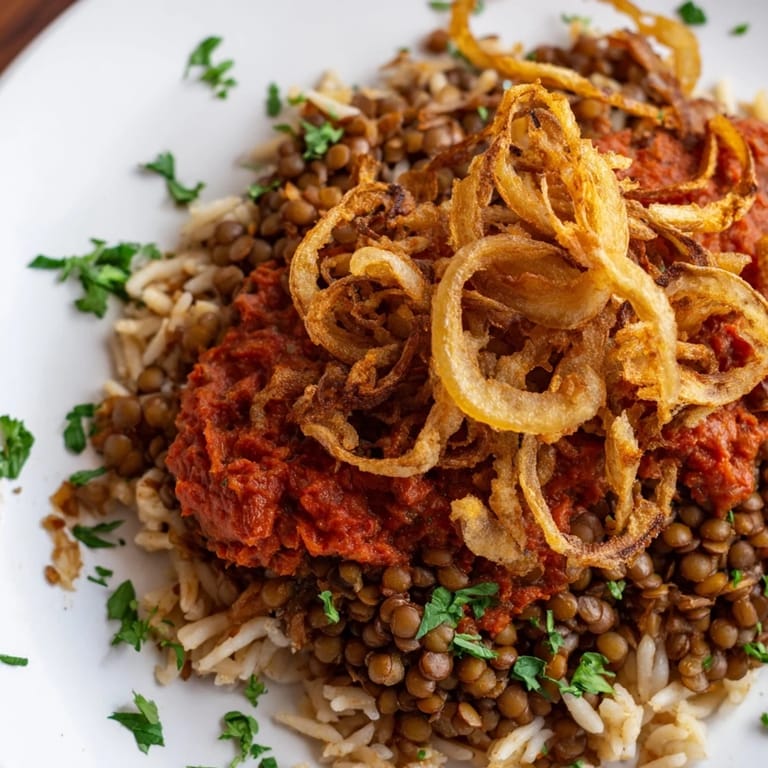
- In a bowl, start with rice as your base, then top with lentils, then pasta. Spoon the warm tomato sauce generously over everything, scatter the crispy onions on top, and finish with a drizzle of garlic vinegar if you're using it. The magic is in letting each component shine while the sauce and onions bring it all together.
 Save
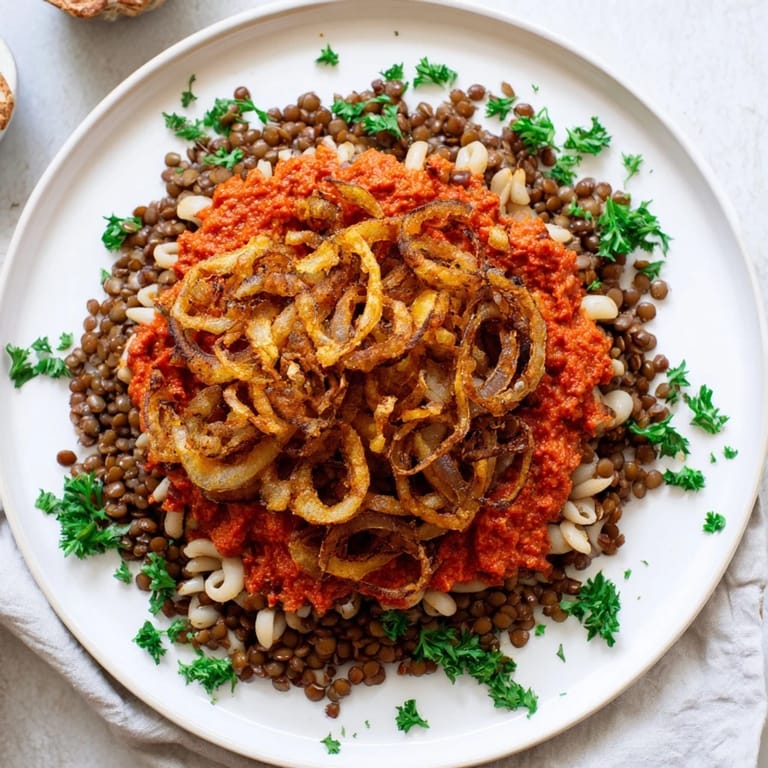
Save There's something almost meditative about assembling koshari—the ritual of layering, the anticipation of drizzling that warm sauce over everything, the moment when all those separate components suddenly become one cohesive, comforting whole. I've watched people who swear they don't like lentils or pasta fall in love with koshari because here, those humble ingredients shine in their own way, supported by each other rather than competing.
The Art of Layering
Koshari's brilliance lies in the fact that you never eat just one thing at a time—each spoonful brings together rice, lentils, pasta, sauce, and onions in a slightly different proportion depending on how you mix it. Some people like to build their layers thin and eat methodically; others mix everything together immediately. There's no wrong way, and that freedom is part of what makes this dish feel so personal and satisfying to eat.
Why This Dish Feeds a Soul
Koshari emerged in Cairo in the 19th century as street food for people working long hours—it's affordable, filling, and deeply nourishing. What began as practical food became beloved because it's simply delicious and makes you feel taken care of. Every time I make it, I'm connecting to generations of cooks and eaters who found comfort in these same layers of rice, lentils, pasta, and spice.
Making It Your Own
Once you master the basics, koshari becomes a canvas for your own preferences and discoveries. Some people add a fried egg on top for richness, others use vegetable broth instead of water for deeper flavor, and many adjust the heat of the chili flakes to match their taste. The structure is solid enough to support variations without losing its identity.
- Try vegetable or chickpea broth instead of water for cooking the rice or lentils if you want more savory depth.
- Make a double batch of crispy onions because you'll find yourself snacking on them straight from the paper towels.
- Keep extra garlic vinegar at the table so people can adjust the tanginess to their preference—some will want barely a drizzle, others will want more than you'd think.
 Save
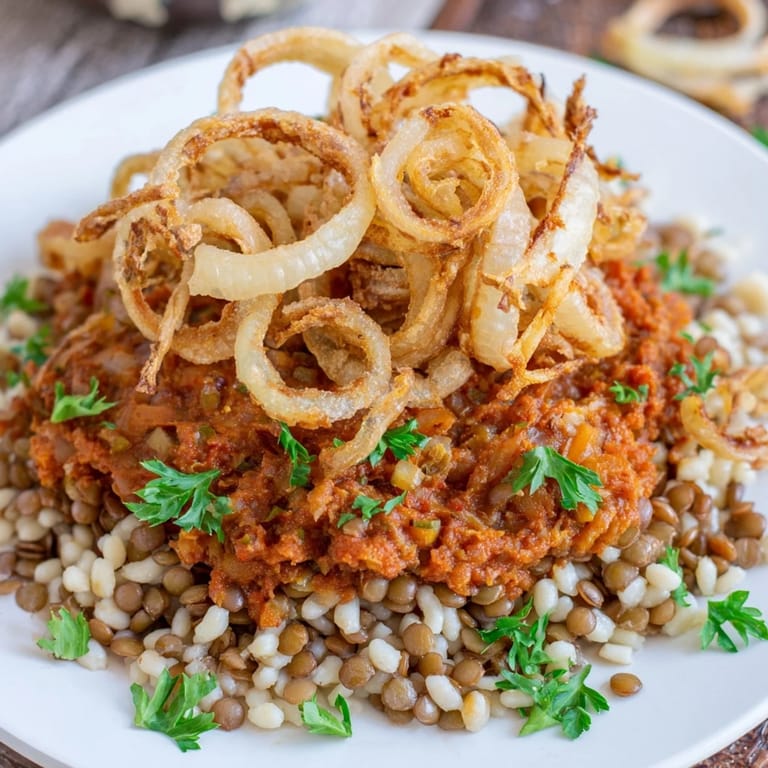
Save Koshari has a way of bringing people together around a bowl, turning a simple meal into a moment of genuine connection. Once you've made it a few times, it becomes one of those dishes you can make with your eyes closed—which means you can focus on the joy of feeding yourself and the people you love.
Recipe FAQs
- → What type of lentils work best in this dish?
Brown or green lentils hold their shape well when simmered, offering a firm texture that complements the layers perfectly.
- → Can I substitute the pasta used here?
Yes, small pasta shapes like orzo or ditalini make excellent alternatives to elbow macaroni, providing similar texture and bite.
- → How do I achieve crispy fried onions?
Slice onions thinly, toss with flour and salt, then fry in hot vegetable oil until golden brown and crisp, draining excess oil before serving.
- → What spices enhance the tomato sauce's flavor?
Ground cumin and coriander add warmth and depth, while optional chili flakes provide a subtle heat balance.
- → Is there a way to add tanginess to the dish?
A drizzle of garlic-infused white vinegar with chili flakes can be added to brighten and elevate the overall flavors.