 Save
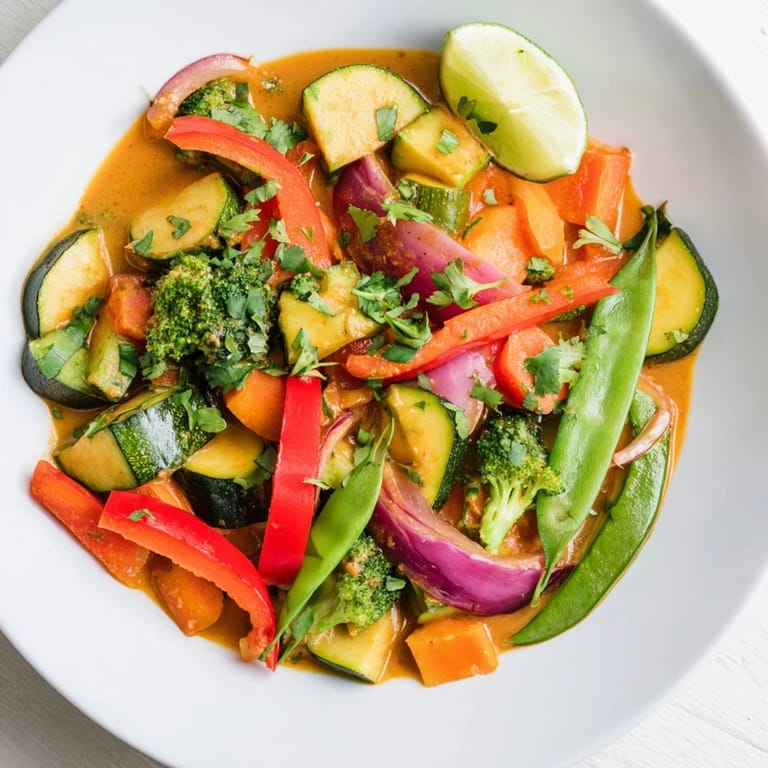
Save I discovered this curry on a rainy afternoon when my farmer's market haul looked too vibrant to waste. The bell peppers practically glowed red, the broccoli crowns were impossibly green, and I had just bought my first can of full-fat coconut milk. I threw it all into a pot with some spices I'd collected over months, and the kitchen filled with this warmth that made the whole gray day feel different. My partner came home to the smell and asked if I'd ordered takeout—I hadn't, but I was just as shocked it tasted that good.
I made this for a dinner party once when I was too tired to attempt anything complicated, and three people asked for the recipe before dessert even came out. That's when I realized this curry works because it looks and tastes more effort-intensive than it actually is—it's the kind of honest food that makes people feel welcomed without you having to spend hours in the kitchen.
Ingredients
- Red bell pepper: The sweetness balances the spice beautifully; don't skip it even if you think you're not a bell pepper person.
- Carrot: Adds natural sweetness and holds its texture through the simmer without getting mushy.
- Zucchini: Absorbs the curry flavors like a sponge; use medium dice so it stays tender but doesn't disappear.
- Broccoli florets: They stay impossibly green if you add them with the other vegetables and don't overcook—that's the secret.
- Snap peas: Go in at the end to keep their snap; overcooked snap peas are nobody's favorite.
- Red onion: Thinly slice it so it softens into the sauce rather than staying chunky.
- Coconut oil: Use extra virgin if you like a stronger coconut flavor, or refined if you want to taste the spices more.
- Garlic and ginger: Fresh is non-negotiable here; they bloom in the heat and become the backbone of the whole dish.
- Red curry paste: Read the label carefully if you need it vegan or vegetarian—some brands sneak in shrimp or fish paste.
- Spice blend (turmeric, cumin, coriander): Toast them slightly in the hot oil to wake them up; this is where the magic happens.
- Full-fat coconut milk: Never use lite; the richness is essential to how this tastes.
- Vegetable broth: Keeps it from being too thick; you can use water in a pinch but the broth adds subtle depth.
- Soy sauce or tamari: A tablespoon adds umami that ties everything together; use tamari if you need gluten-free.
- Fresh lime juice: Not bottled—fresh lime at the very end brightens the whole thing up at the last second.
- Cilantro and lime wedges: These are the garnish that make people think you know what you're doing.
Tired of Takeout? 🥡
Get 10 meals you can make faster than delivery arrives. Seriously.
One email. No spam. Unsubscribe anytime.
Instructions
- Get your pan hot and start with the onion:
- Heat the coconut oil over medium heat until it smells warm and toasty. Throw in your red onion slices and let them soften for a couple minutes—you want them translucent but not browned yet.
- Wake up your aromatics:
- Add the garlic and ginger and stir constantly for about a minute. Your kitchen will smell incredible; that's your signal you're doing it right.
- Bloom the spices:
- This is the crucial moment—add your curry paste and all the dry spices, stirring for a full minute so they release their oils and flavors into the hot pan. You'll see the color deepen and the smell shift from raw to cooked.
- Add the heartier vegetables:
- Toss in your bell pepper, carrot, zucchini, and broccoli. Stir them around for a few minutes so they get coated in the spice mixture and start to soften at the edges.
- Pour in the liquid and let it simmer:
- Add your coconut milk and vegetable broth, and let everything come to a gentle simmer. The vegetables will start to turn tender.
- Add the snap peas in the home stretch:
- About ten minutes into simmering, add your snap peas and soy sauce. The snap peas only need a couple minutes to stay crisp-tender; add them too early and they'll lose their snap.
- Finish with brightness:
- Remove from heat and squeeze in fresh lime juice. Taste and adjust the salt and pepper—the lime should make everything pop.
- Plate and garnish:
- Serve hot over rice or quinoa, topped with fresh cilantro and lime wedges on the side.
 Save
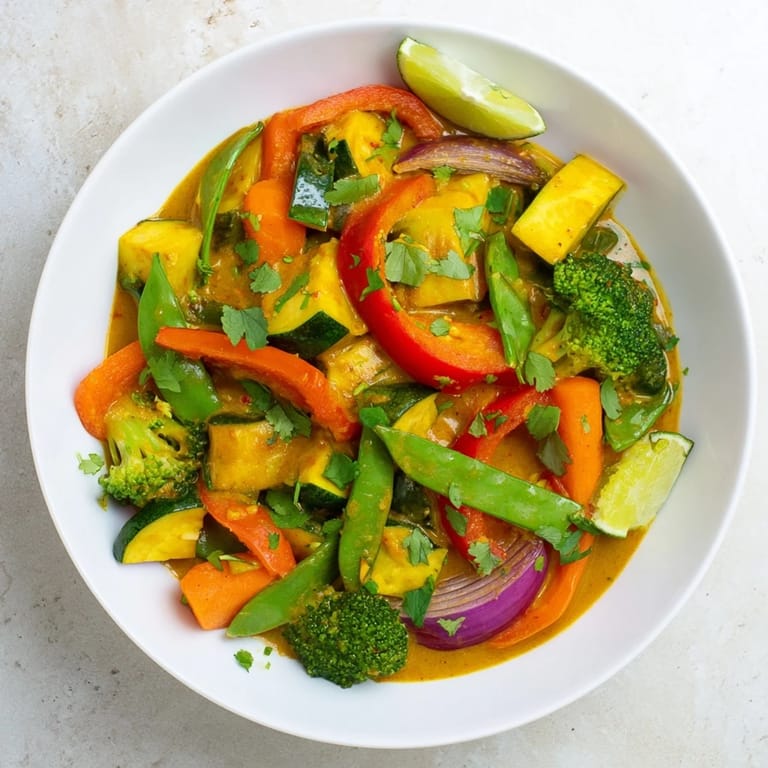
Save The first time I made this for someone who said they didn't eat vegetables much, they came back for seconds and thirds. Watching someone discover that vegetables can actually be exciting, that they're not just the obligation on the side of the plate, felt like I'd shared something real. That's when this recipe stopped being a weeknight dinner and became something I made with intention.
Why This Curry Works Every Time
There's something about the combination of coconut milk with warm spices that just works—it doesn't matter what your cooking skill level is, or whether you're improvising with different vegetables. The recipe is forgiving enough that you can add what you have on hand, but structured enough that it tastes intentional and delicious. I've made this with mushrooms instead of zucchini, thrown in chickpeas when I wanted protein, used frozen broccoli on a lazy week. Every version tastes like someone put thought and care into dinner.
Making It Your Own
This is one of those recipes that invites customization without losing its soul. You can make it spicier by adding more curry paste or even a pinch of cayenne, or you can dial it back with extra coconut milk if you prefer something gentler. The vegetable combinations are endless—I've thrown in green beans, cauliflower, mushrooms, even thin-sliced cabbage. The base stays the same but your version becomes uniquely yours.
Serving and Storage
This tastes best served right after you make it while the vegetables still have their texture and the flavors feel bright and distinct. That said, it keeps beautifully in the refrigerator for a few days, and the flavors actually deepen as it sits. Reheat it gently on the stovetop rather than the microwave so the vegetables don't turn rubbery and the coconut milk stays silky.
- Pair it with jasmine rice or quinoa to soak up all that golden sauce.
- Lime wedges on the side let everyone brighten their own bowl to their taste.
- Fresh cilantro scattered on top at the last second keeps everything tasting alive and fresh.
 Save
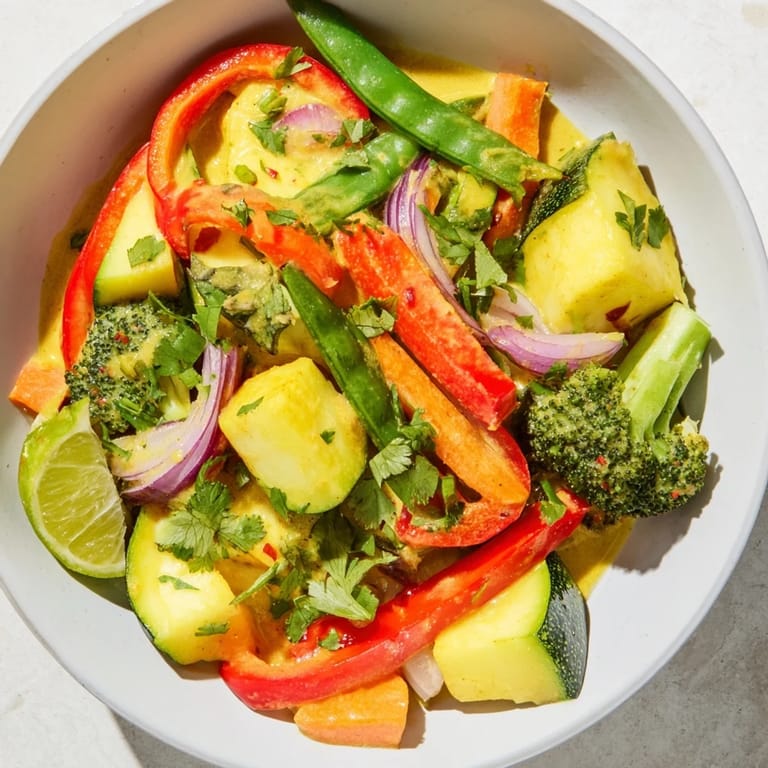
Save This curry has become my go-to when I want to feel capable in the kitchen without spending hours there. It reminds me that good food doesn't have to be complicated—it just has to be made with attention and served with warmth.
Recipe FAQs
- → What vegetables work best for this curry?
Bell peppers, carrots, zucchini, broccoli, and snap peas provide great texture and flavor, but you can also add cauliflower or mushrooms for variety.
- → How can I adjust the spiciness level?
Modify the amount of red curry paste to suit your taste, starting with less for a milder dish or more for added heat.
- → Can this dish be made protein-rich?
Yes, adding chickpeas or tofu during the simmering stage boosts protein content without changing the flavors.
- → What are good side pairings for this curry?
Steamed jasmine rice, quinoa, or soft naan bread complement the creamy, spiced sauce well.
- → How do I keep the vegetables vibrant and crisp?
Simmer vegetables just until tender; avoid overcooking to maintain bright colors and a slight crunch.