 Save
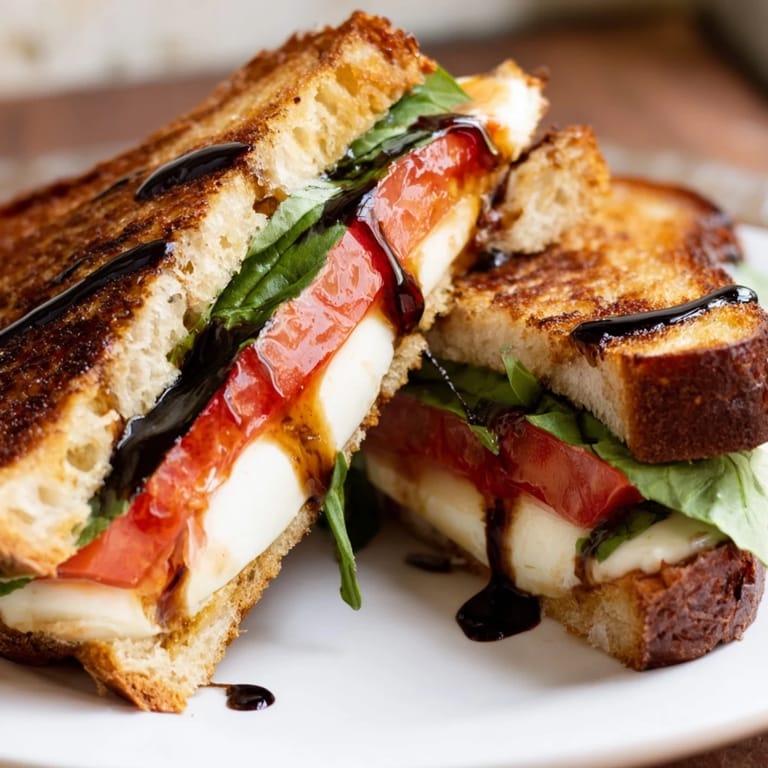
Save There's something about the smell of butter hitting a hot pan that made me rethink what a grilled cheese could be. One afternoon, I had fresh mozzarella and tomatoes from the farmer's market sitting on my counter, along with a handful of basil that was about to turn. Instead of making the usual sandwich, I grabbed sourdough and started layering—and suddenly this wasn't just lunch, it was a moment where two things I loved collided in the best way.
I made this for my roommate on a rainy Tuesday, and she literally stopped mid-bite to ask what was in it. That's when I knew I'd found something special—not because it's complicated, but because it tastes like someone really cared about putting it together.
Ingredients
- Sourdough or Italian bread: Use something with actual structure so it can handle the moisture from the tomato without getting soggy. Avoid pre-sliced sandwich bread—it just won't crisp up the same way.
- Fresh mozzarella cheese, sliced: Room temperature mozzarella melts faster and more evenly. If it's cold from the fridge, it'll seize up and get weird.
- Unsalted butter, softened: Softened is the key word here because you want it to spread easily without tearing the bread. Cold butter will rip your bread to shreds.
- Ripe tomato, thinly sliced: Season the tomato slices right after slicing—it draws out just enough liquid to flavor the sandwich without making it swim.
- Fresh basil leaves: Tear them instead of cutting if you can. It bruises the leaves less and the flavor stays brighter.
- Balsamic glaze: The thick, syrupy kind, not regular vinegar. Store-bought is fine and saves you time.
- Salt and black pepper: Don't skip seasoning the tomato layer. It's the difference between good and actually memorable.
Tired of Takeout? 🥡
Get 10 meals you can make faster than delivery arrives. Seriously.
One email. No spam. Unsubscribe anytime.
Instructions
- Butter your bread with intention:
- Spread softened butter on one side of all four slices. The butter-side against the pan is what creates that golden, crispy exterior you're after.
- Build your layers:
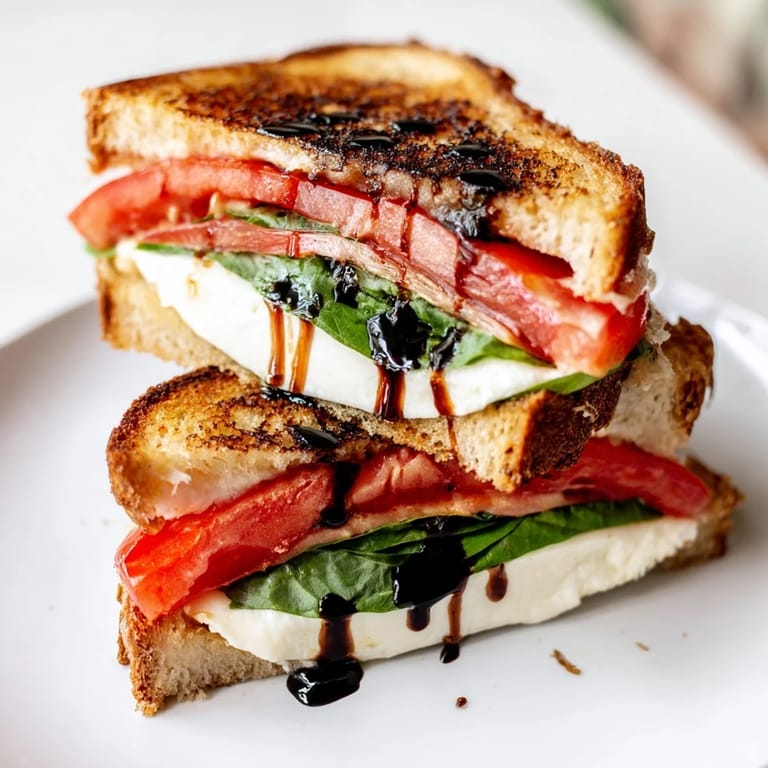
- On one buttered slice, layer mozzarella first, then tomato, then basil. The cheese acts as a barrier so the tomato doesn't make the bread soggy. Season with salt and pepper.
- Glaze before you close:
- Drizzle a small amount of balsamic glaze over the tomato and basil. This is where the Italian magic happens.
- Make the sandwich:
- Top with the second slice, butter-side up. You should have butter on the outside of both bread slices.
- Heat your pan properly:
- Medium heat is your friend here—not too hot, or the bread burns before the cheese melts. Let the pan get warm enough that a drop of water sizzles gently.
- Cook with patience and a light hand:
- Place the sandwich in the pan and cook for 3 to 4 minutes per side. Press down gently as it cooks so the cheese makes contact with the heat. You'll know it's ready when the bread is golden and you can see the cheese starting to peek out at the edges.
- Rest and finish:
- Let it rest for a minute after flipping. This gives the cheese a moment to fully meld. If you want extra drama, add another drizzle of balsamic glaze right before serving.
 Save
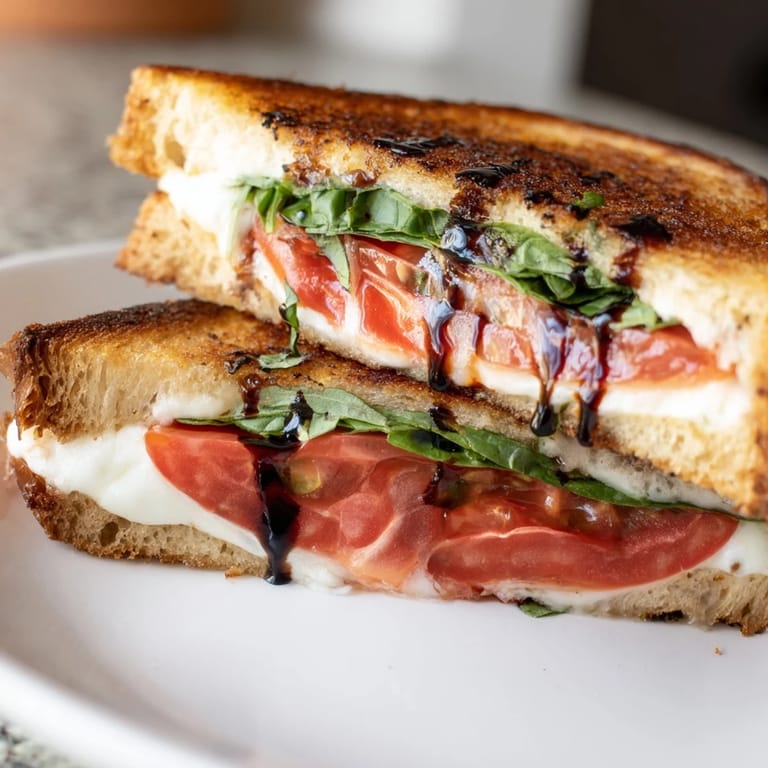
Save The moment when you bite through that golden crust and the warm cheese mingles with the cool, bright tomato and basil—that's the moment this sandwich stops being lunch and becomes a small, edible reminder that the best foods are often just good ingredients doing what they do best together.
The Science of a Perfect Grilled Cheese
A grilled cheese is really about managing moisture and heat. The butter creates a barrier between the bread and the pan, allowing the outside to crisp while the inside stays soft. The cheese needs enough time to actually melt, which is why medium heat matters more than you'd think. Too hot and your bread turns black while the cheese is still cold in the center. The tomato releases liquid as it sits, which is why seasoning and layering order matter—the cheese acts as a dam.
Why This Twist Works
A classic grilled cheese is comforting because it's simple and reliable. But it can taste a little one-note if you're not careful. Adding tomato gives you acidity, basil adds brightness and aroma, and balsamic brings a sweet-tangy depth that makes you pause and actually taste what you're eating. It's not reinventing the wheel—it's just giving yourself a reason to slow down and enjoy the moment.
Making It Your Own
Once you get comfortable with this version, you'll start seeing the possibilities. Some people add a thin layer of pesto between the cheese and tomato for an herbaceous kick. Others use ciabatta for a more substantial, airier crumb, or whole-grain bread if they want something earthier. A vegan version with plant-based butter and mozzarella works just as well if that's what you need. The template is flexible—trust what sounds good to you.
- Add a layer of pesto for extra herbal depth and a slight peppery kick.
- Try prosciutto or crispy pancetta if you want to go savory and rich instead of purely vegetarian.
- Use different bread shapes and textures to change how the sandwich feels in your hands and tastes in your mouth.
 Save
Save This sandwich is proof that sometimes the best meals come from paying attention to what you already have on hand and trusting your instincts. Make it when you want something warm and comforting but still feel a little thoughtful about what you're eating.
Recipe FAQs
- → What type of bread works best?
Sourdough or Italian bread offers the ideal texture and flavor, providing a sturdy base with a slightly tangy taste.
- → Can I substitute mozzarella?
Fresh mozzarella is preferred for its creaminess, but you can try other cheeses like provolone for a different flavor.
- → How do I achieve a crispy crust?
Use softened butter spread evenly on the bread and cook on medium heat, pressing gently to ensure even browning.
- → Is balsamic glaze essential?
While optional, balsamic glaze adds a tangy sweetness that complements the fresh ingredients beautifully.
- → How can I make this vegan-friendly?
Substitute plant-based butter and vegan mozzarella alternatives to keep the melt dairy-free while preserving flavor.